Category: Industry News

  • Beyond the Truck Roll: How Remote Resolution is Saving Trade Businesses 26% This Year

    [HERO] Beyond the Truck Roll: How Remote Resolution is Saving Trade Businesses 26% This Year

    The traditional trade model is broken.

    For decades, the standard response to every service call was simple: send a van. If a homeowner smelled a weird scent near the furnace, you sent a van. If a light switch flickered, you sent a van. If a thermostat looked “funny,” you sent a van.

    In 2026, that “van-first” mentality is the fastest way to kill your margins.

    Gas isn’t getting cheaper. Traffic isn’t getting lighter. Skilled technicians are harder to find than ever. Every time a truck leaves your shop, you’re betting $200 to $400 on a outcome you haven’t even diagnosed yet.

    We think there’s a better way. At Valortek Inc, we’ve been watching the data. This year, the numbers are clear. Trade businesses are saving an average of 26% on operating costs by embracing one specific shift.

    They’re going beyond the truck roll.

    The 20% Truth

    Let’s look at the numbers. They don’t lie.

    Our data shows that 20% of all service calls can be resolved without a technician ever stepping foot on a driveway.

    That’s one out of every five calls.

    Think about your schedule for last week. Imagine if 20% of those appointments didn’t require a truck roll. Imagine the fuel saved. Imagine the hours of drive time reclaimed.

    No wasted miles. No idle vans. Just faster resolutions.

    Most “problems” aren’t actually hardware failures. They’re user errors. They’re tripped breakers. They’re unlinked Wi-Fi modules. They’re dirty filters.

    These don’t need a master electrician or a senior HVAC tech. They need a pair of eyes and a clear instruction.

    Illustration of five service vans with one transforming into a digital signal to represent remote resolution.

    Remote Resolution: Not a Buzzword, a Bottom Line

    What is remote resolution? It’s exactly what it sounds like.

    It’s the ability to diagnose, troubleshoot, and solve a customer’s issue using digital tools. We’re talking about high-definition video feeds, augmented reality overlays, and smart diagnostic data: all delivered directly to your office.

    No fancy hardware. No complex setup. Just the phone in your customer’s pocket.

    By using Valortek’s remote resolution tools, you’re not just saving money. You’re buying time. In the trades, time is the only thing you can’t manufacture.

    When you solve a 20-minute problem in 20 minutes: rather than 20 minutes of work plus 90 minutes of driving: your capacity explodes. You can take on more high-value installs. You can give your techs a breather.

    You can grow without buying another $60,000 van.

    Why the Old Way is Costing You 26%

    Every truck roll is a gamble.

    You pay for the fuel. You pay for the insurance. You pay for the wear and tear. Most importantly, you pay for the technician’s time while they’re sitting in traffic listening to a podcast.

    That’s “non-billable” time. It’s the silent killer of trade businesses.

    When we talk about saving 26% this year, we’re looking at the total cost of operation. Businesses sticking to the old model are losing that 26% to inefficiency.

    No more “wait and see” scheduling. No more “hope we have the part” visits. Just precision.

    Even if a truck roll is eventually required, remote resolution makes it 10x more effective. You already know what’s wrong. You know exactly which part is needed. You send the right tech with the right tool the first time.

    One trip. One fix. 100% efficiency.

    Smartphone app showing remote HVAC diagnostics and troubleshooting checkmarks for trade business efficiency.

    The Customer Experience Shift

    We get it. You’re worried your customers will feel cheated. You think they’re paying for the “man in the van.”

    Actually, it’s the opposite.

    In 2026, your customers value their time more than your physical presence. They don’t want to take a half-day off work to wait for a 4-hour “window.” They don’t want a stranger in their house if they don’t have to.

    They want the problem gone. Now.

    When you offer a remote diagnostic session, you’re providing instant gratification. You’re solving their problem while they’re on their lunch break.

    That’s not “lesser” service. That’s premium service.

    No waiting. No windows. Just solutions.

    By the time your competitor has finally pulled into the driveway, you’ve already solved the problem, processed the payment, and sent the digital receipt. Who do you think they’re calling next time?

    Keeping Techs Happy (And Keeping Them)

    The labor shortage isn’t a myth. It’s a reality we all face every morning.

    Your best technicians are tired. They’re tired of the 12-hour days. They’re tired of the endless driving. They’re tired of arriving at a job only to find out the customer just forgot to turn the “on” switch.

    Remote resolution changes the culture of your shop.

    It allows your most experienced veterans to act as “remote experts.” Instead of breaking their backs in crawl spaces, they can sit in the office and guide junior techs through five jobs at once via video.

    It extends their careers. It leverages their brains, not just their brawn.

    No burnout. No turnover. Just a team that scales.

    When your technicians see that you value their time enough to avoid unnecessary trips, they stay. When they spend more time fixing things and less time staring at brake lights, they’re more productive.
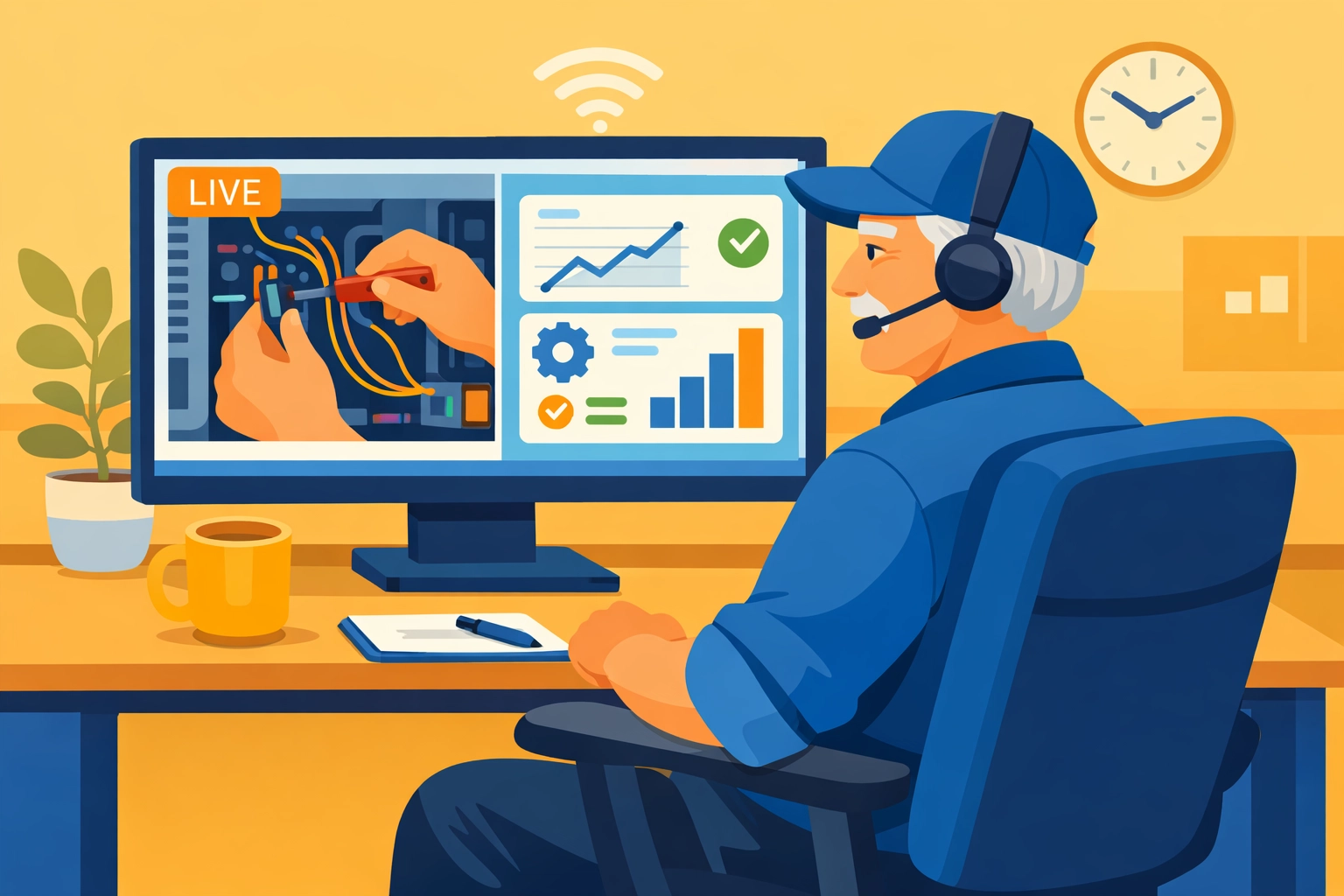
    Trade technician in an office using remote video tools and a data dashboard to support field operations.

    Simplicity is the Ultimate Sophistication

    Most software companies try to sell you a “platform.” They want you to buy a dozen different modules. They want to train your team for six weeks.

    We’re not that company.

    Valortek is built on the idea that trade software should be as simple as the tools in your belt. If it takes more than ten minutes to learn, it’s too complicated.

    No enterprise bloat. No useless features. Just the tools you need to stay profitable.

    We believe in transparency. We believe in getting straight to the point. Our remote resolution suite is designed to integrate into your workflow, not replace it.

    You don’t need a PhD to run a profitable plumbing business. You just need better visibility into your calls.

    The Math of 2026

    Let’s break down that 26% saving one more time.

    • Fuel and Maintenance: 8% reduction. Fewer miles means fewer oil changes and lower gas bills.
    • Labor Efficiency: 12% increase. Techs spend more time on billable work and less time commuting.
    • First-Time Fix Rate: 6% improvement. Knowing the problem before you arrive means you never show up without the right part.

    Total: 26% back in your pocket.

    What would you do with a 26% increase in your bottom line? Hire that office manager you’ve been needing? Upgrade your equipment? Finally take a vacation?

    That money is currently leaking out of your tailpipes. It’s time to plug the leak.
    Bar chart made of trade tools trending upward to represent profit growth and savings for trade businesses.

    Stop Rolling. Start Resolving.

    The world has changed. The “truck roll” is no longer the default: it’s the last resort.

    In an era of rising costs and shrinking labor pools, the most successful trade businesses will be the ones that work smarter. They’ll be the ones that use data to decide when to drive and when to dial in.

    We’re here to help you make that transition.

    We aren’t another faceless tech giant. We’re a small team dedicated to making trade businesses more efficient. We’ve seen what happens when owners stop guessing and start knowing.

    The results are always the same: higher profits, happier techs, and loyal customers.

    Ready to see what 20% fewer truck rolls looks like for your business?

    No more guessing. No more wasting. Just growing.

    Start Your Free Trial

    Questions? Contact us – we’re happy to help you decide.

  • The Big Beautiful Bill and Your Trade Business: How 2026 Tax Changes Impact Your Bottom Line

    [HERO] The 'Big Beautiful Bill' & Your Trade Business: How 2026 Tax Changes Impact Your Bottom Line

    The tax landscape just changed.

    The “One Big Beautiful Bill” Act: signed into law last July: is finally hitting your books this quarter. For most trade business owners, tax season usually feels like walking through a minefield. You’re worried about what you missed. You’re worried about what you owe.

    We’re here to change that.

    The 2026 tax changes aren’t just small tweaks. They are massive shifts in how you handle depreciation, employee pay, and equipment investments. If you’re still using a spreadsheet or a generic accounting tool from 2015, you’re likely leaving thousands of dollars on the table.

    No more guessing. No more manual calculations. Just a streamlined path to a better bottom line.

    The Big Win: Permanent Bonus Depreciation

    For years, trade businesses lived in a state of “will they or won’t they” regarding bonus depreciation. You’d buy a new service van or a high-end diagnostic kit and hope the tax laws favored you that year.

    The Big Beautiful Bill made bonus depreciation permanent.

    This is a game-changer for plumbing, HVAC, and electrical companies. It means you can deduct the full cost of eligible equipment in the first year you put it into service. You don’t have to wait five or seven years to see the tax benefit.

    We’ve built this logic directly into the Valortek Finance app. When you log a new asset, our system automatically flags it for the correct depreciation schedule. You see your projected tax savings in real-time.

    No more waiting for your CPA to give you the “good news” in April. You’ll know exactly how that new fleet investment impacts your cash flow the moment you make it.

    Illustration of a service van and tools inside a gear piggy bank representing trade tax savings.

    Recruiting Power: The Tip and Overtime Deductions

    Finding skilled labor in 2026 is still a challenge. The labor shortage hasn’t gone away, but the tax code is finally helping you fight back.

    The new law introduces two massive deductions for your team:

    • The Tip Deduction: You can deduct up to $25,000 per employee for tips.
    • The Overtime Premium: You can deduct up to $12,500 per employee for overtime premium pay.

    Why does this matter? It makes your jobs more attractive. You can offer higher take-home pay through performance-based tips and overtime without getting crushed by payroll taxes.

    Most software can’t handle these specific 2026 phase-outs and income thresholds. They treat every dollar of income the same. Valortek doesn’t.

    Our Finance app automatically categorizes tip and overtime income against the new $150,000/married $300,000 MAGI limits. We track which employees qualify and which don’t. You get the deduction. Your employees get the cash. Everyone wins.

    Vehicle Interest: Keeping Your Fleet on the Road

    Your trucks are your office. In 2026, the cost of financing those trucks is finally getting the recognition it deserves.

    The Big Beautiful Bill allows for a deduction of vehicle interest payments up to $10,000. There are phase-outs if your income is over $100,000 (or $200,000 for joint filers), but for most growing trade businesses, this is a direct injection of capital back into the business.

    We’re not another bloated ERP. We don’t make you enter the same data in five different places. When you link your business vehicle loans to Valortek, our Finance app isolates the interest payments. It compares them against your current income levels and applies the deduction automatically.

    No messy math. No manual data entry. Just real-time visibility.

    Valortek company logo

    Rural Growth and Opportunity Zones

    Are you thinking about expanding? 2026 is the year to do it, especially in rural areas.

    The legislation made Opportunity Zones permanent. Even better, it added a 30% step-up in basis benefit for rural investments. If you’re building a new warehouse or a satellite office in an qualifying area, the tax savings are astronomical.

    We believe in growth. We also believe that growth shouldn’t be a tax nightmare. Valortek’s consulting team helps you identify these zones, while our software tracks the investment basis from day one.

    We provide the “why” and the “how.” You provide the vision.

    Higher Standard Deductions for 2026

    Even on a personal level, the numbers are shifting in your favor. Standard deductions have climbed to $16,100 for single filers and $32,200 for those filing jointly.

    Whether you operate as a sole proprietor or an S-corp, these numbers matter. They define your “break-even” point for the year.

    Most business owners we talk to are flying blind. They don’t know their real-time tax liability until it’s too late to make adjustments. Valortek Finance solves this. We give you a “Tax Readiness” dashboard that updates every time a technician closes a job or a bill gets paid.

    Financial growth chart with trade icons showing real-time business tax readiness and tracking.

    Why Automation is Non-Negotiable in 2026

    The complexity of the Big Beautiful Bill is its biggest drawback. The benefits are there, but the rules are dense.

    If you try to manage the $12,500 overtime premium deduction on a legal pad, you will fail. If you try to track permanent R&D expensing for your custom solar installs in a generic spreadsheet, you will leave money on the table.

    We built Valortek to be the antidote to complexity.

    We’re not here to replace your CPA. We’re here to make them love you. When you hand over a Valortek report, it’s not a box of receipts. It’s a clean, categorized, and law-compliant data set that reflects the 2026 tax reality.

    The Valortek Approach: No Fluff. Just Results.

    Most business consulting firms want to sell you a 50-page strategy deck. We’d rather give you a tool that works.

    We’ve spent the last year updating our algorithms to reflect every line of the Big Beautiful Bill. When the law changed on July 4th, our developers were already at work. By the time 2026 rolled around, our users were already prepared.

    No hidden fees. No long-term contracts that trap you. Just a finance tool designed specifically for the trades.

    The plumbing, electrical, and HVAC industries are the backbone of the economy. You deserve software that respects the work you do. You deserve to keep more of the money you earn.

    Looking Ahead: The 2028 Horizon

    It’s important to remember that while many of these changes are permanent, some: like the tip and overtime deductions: are set to expire after 2028.

    That gives you a three-year window to maximize your recruitment and retention. You need to act now to build the team that will carry you through the next decade.

    Valortek doesn’t just look at today. We help you plan for the “cliff” in 2028. We help you build a financial foundation that remains rock-solid, even when the tax laws shift again.

    Professional in a work vest with a telescope symbolizing long-term financial planning for trades.

    Ready to Simplify Your Finances?

    You didn’t start an HVAC or electrical business to become a tax expert. You started it to build something.

    Let us handle the numbers. You handle the growth.

    The Big Beautiful Bill is a massive opportunity for your trade business. Don’t let it become a massive headache. With Valortek Finance, you get the benefits of the law without the burden of the paperwork.

    Clean data. Automated deductions. Better margins.

    That’s the Valortek way.

    Start Your Free Trial

    Questions? Contact us – we’re happy to help you decide.

  • 7 Mistakes You are Making with Your HVAC Scheduling Software (And How to Fix Them)

    Running an HVAC business is a balancing act. You are managing a fleet of trucks, a team of technicians with varying skill levels, and a customer base that only calls when they are already stressed. Most owners think the right software will solve their chaos.

    But here is the truth: software is just a tool. If you use it poorly, you just automate your mistakes.

    We see it every day at Valortek. Great companies are losing thousands of dollars a month because their scheduling process is broken. They are overpaying for bloated platforms like Housecall Pro while their technicians are stuck in traffic and their dispatchers are drowning in manual data entry.

    No more “guesstimating.” No more wasted gas. No more angry customers.

    Here are the seven most common mistakes HVAC owners make with their scheduling software and exactly how to fix them.

    1. Manual Routing Without Real Optimization

    Most dispatchers look at a map and pick the technician who looks “closest.” It seems logical, but it’s costing you a fortune. When you assign jobs based on a visual guesstimate rather than true geographic proximity, your technicians spend more time behind the wheel than in front of a furnace.

    Mid-sized HVAC companies lose between $3,000 and $5,000 every single month just in wasted fuel and lost productivity. That is the cost of “near enough.”

    The Fix: You need route optimization that actually thinks. Modern scheduling tools use AI to cluster appointments by location. This isn’t just about the shortest distance; it’s about the smartest sequence. When your software handles the logic, your techs see more customers.

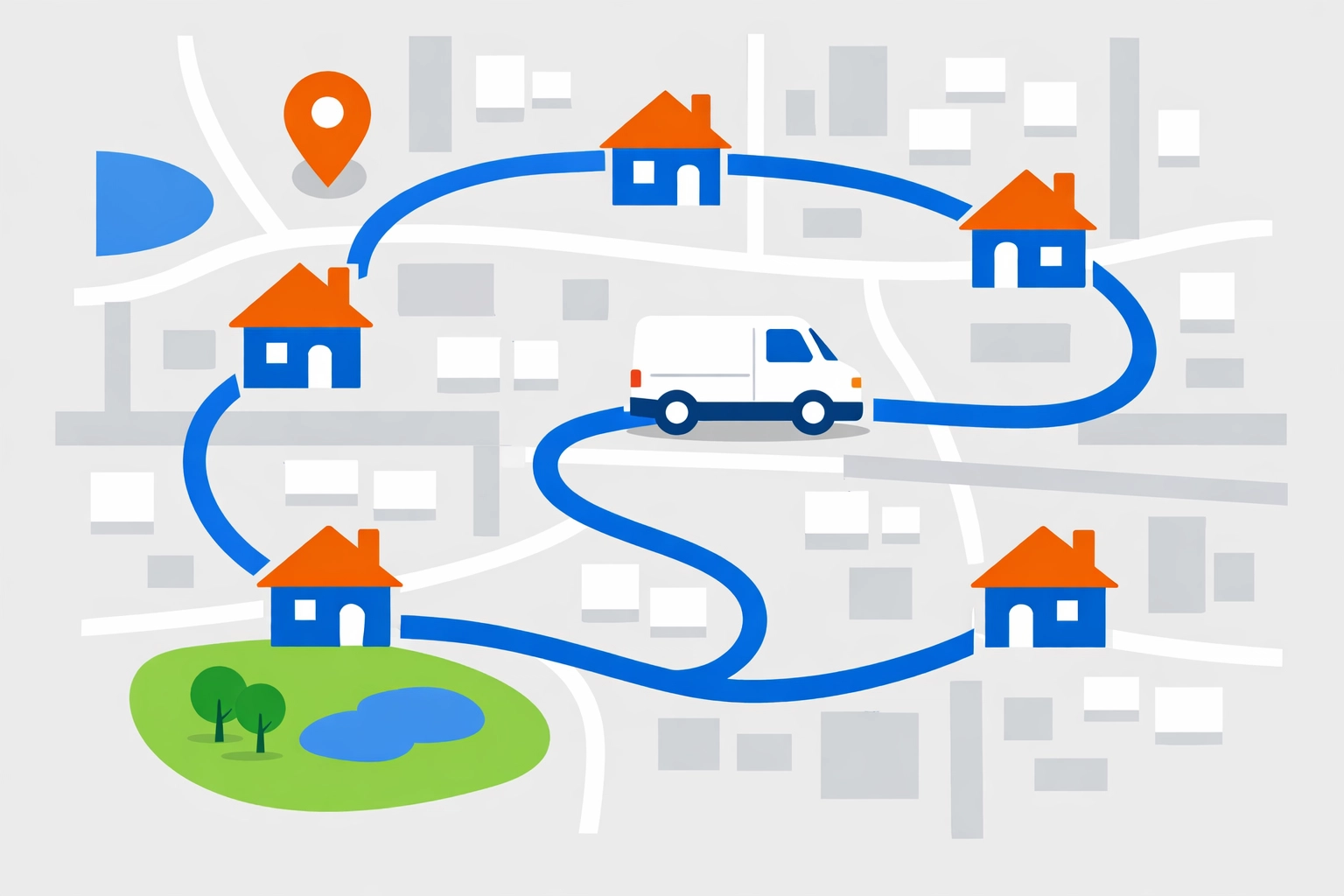
    Illustration of optimized HVAC technician routing on a city map showing efficient job sequencing.{width=”90%”}

    2. Ignoring the “Skill Gap” in Assignments

    Not every technician is built for every job. Sending a junior tech to troubleshoot a complex commercial VRF system is a recipe for disaster. It leads to longer job times, frustrated employees, and: worst of all: the dreaded callback.

    If a four-hour install turns into an eight-hour ordeal because the tech was out of their depth, your entire day’s schedule collapses. You pay overtime, you miss your afternoon appointments, and your reputation takes a hit.

    The Fix: Stop relying on your memory. Your software should maintain detailed skill profiles for every person on your team. When a high-complexity job comes in, the system should only suggest technicians who have the “Expert” tag for that specific equipment. Right person, right job, the first time.

    Flat illustration of an HVAC dispatcher matching jobs to technicians by skill level (icons for apprentice, pro, expert).{width=”90%”}

    3. The “One Hour” Appointment Fallacy

    Using fixed time estimates for every service call is a lie you tell your schedule. A routine maintenance check on a three-year-old unit is not the same as a diagnostic on a twenty-year-old system in a cramped attic.

    When you schedule every call for a 60-minute block, you are setting your team up for failure. One complication throws off every subsequent appointment for the rest of the day.

    The Fix: Use data, not guesses. At Valortek, we believe in building buffer time into your day. Better yet, look for software that uses historical data to predict job duration based on the equipment age and customer history. If a specific house always takes two hours, your schedule should reflect that automatically.

    4. Disconnected Parts and Inventory

    There is nothing more expensive than a “return trip.” When a technician arrives on-site only to realize the required capacitor or blower motor isn’t on the truck, you’ve just doubled your drive time and halved your profit on that job.

    Many HVAC owners keep their scheduling and their inventory in two different worlds. One doesn’t know what the other is doing.

    The Fix: Integrate your inventory. Your scheduling platform should be able to “reserve” parts for a job the moment it is booked. If the part isn’t in stock, the dispatcher should see a red flag before the tech even starts the engine.

    Organized HVAC service van interior with a checkmark showing parts are in stock for scheduled repairs.{width=”90%”}

    5. Double Booking and the Manual Sync Shuffle

    If your office staff is manually copying data from a calendar into an accounting tool, you are asking for errors. Manual processes lead to overlapping assignments.

    A missed appointment doesn’t just cost you the revenue of that job: it costs you between $100 and $500 in lost overhead, rescheduling time, and brand damage. In 2026, there is no reason for a technician to show up at a locked door because the office “forgot to update the app.”

    The Fix: Centralize everything. You need a real-time source of truth where the field and the office see the exact same data at the exact same second. No lag. No “I’ll call you back when the system refreshes.”

    6. Operating in a Data Silo

    Many HVAC businesses use one tool for scheduling, one for “marketing,” and then try to force everything into QuickBooks at the end of the month. This creates a “manual bridge.” Your staff becomes the bridge, spending hours every week re-keying invoices and customer details.

    This slows down your billing cycle. If you aren’t invoicing the moment the job is done, you are hurting your cash flow for no reason.

    The Fix: You don’t need a generic software suite; you need an HVAC-specific setup. Look for a system that handles service agreements, real-time dispatching, and billing in one flow. When the tech hits “Complete” on their tablet, the invoice should be ready for the customer to pay on the spot.

    Flat illustration of a central data hub syncing HVAC dispatching software between office and field devices.{width=”90%”}

    7. Overpaying for Bloated “Enterprise” Features

    This is the mistake that hurts the most. Many owners get talked into platforms like Housecall Pro or ServiceTitan. These are powerful tools, but they are often overkill for a growing trade business.

    You end up paying hundreds of dollars a month for features you never touch. You’re paying for their massive marketing budget and their complex enterprise overhead. You wanted a tool to help you schedule jobs, but you ended up with a second mortgage.

    The Fix: Choose a partner, not just a vendor. At Valortek, we provide the same high-level scheduling, routing, and dispatching power but at a fraction of the cost.

    No hidden fees. No 12-month lock-in contracts. Just the tools you need to run a profitable HVAC company.

    Flat illustration comparing “bloated” vs “simple” HVAC software pricing: big stack of apps and dollar signs vs one clean app and lower price tag.{width=”90%”}

    Why Valortek is Different

    We aren’t a massive corporation with a call center in another country. We are a team of business consultants who understand the trades. We know that if your software is too hard to use, your techs won’t use it.

    We built our operations platform to be minimalist and effective.

    • Smart Routing: Save on gas.
    • Skill Matching: Eliminate callbacks.
    • Simple Billing: Get paid faster.
    • Fair Pricing: Half the cost of the “big guys.”

    You don’t need more complexity. You need more clarity. You need to know that when you look at your screen, your business is running the way it should.

    If you are tired of fighting with your current software or you are still trying to run your multi-truck empire off a Google Calendar, it is time for a change. Let’s get your technicians where they need to be, without the headache.

    HVAC technician using a digital tablet to manage jobs and track business growth at a customer home.{width=”90%”}

    Our team is ready to show you how to streamline your HVAC operations. We don’t do “sales pitches.” We do solutions.

    Ready to see how we can save you hours of admin time every week?

    Start Your Free Trial

    Questions? Contact us – we’re happy to help you decide.


    Authored by the Valortek Admin Team. To learn more about how we handle your data, see our Privacy Policy.

  • The Electrician Advantage: Real-World Problems AI Cannot Touch

    AI can talk about electricity. You deal with it.
    No guesses. No vibes. Just voltage, code, and consequences.

    There’s a lot of noise right now about AI “replacing trades.”
    We’re not buying it.

    Not because AI is useless.
    Because real electrical work isn’t a clean dataset.

    It’s cramped attics. Weird remodels. Mixed circuits. Half-labeled panels.
    And customers who swear “it just started doing that yesterday.”

    This post is simple: the stuff you do every day that AI can’t touch.
    And why that advantage matters for your business.


    AI is great at patterns. Electrical problems aren’t patterns.

    AI wins when the inputs are clean. Electrical systems almost never are.
    No perfect diagrams. No consistent installs. No “standard” anything.

    A model can learn from thousands of textbook cases.
    But your Tuesday job is a Frankenstein system built across three decades.

    Think about what you actually troubleshoot:

    • A flickering light that only happens when the dryer kicks on
    • A GFCI that trips “randomly” after rain
    • A remodel where someone tied neutrals together because it “worked”
    • A service upgrade where half the labeling doesn’t match reality

    That’s not a multiple-choice test.
    That’s a field puzzle.

    You don’t just identify the problem. You define the problem.
    AI can’t do that reliably without perfect sensors, perfect documentation, and perfect history.

    And those don’t exist in most buildings.


    Troubleshooting is judgment. Not lookup.

    The best electricians don’t memorize more. They reason better.
    No script. No checklist-only thinking. Just decisions that fit the situation.

    You notice the small stuff:

    • Heat where there shouldn’t be heat
    • A smell that means “stop right now”
    • A buzzing that isn’t “normal transformer hum”
    • A breaker that’s warm but not tripped (yet)

    That’s experience.
    That’s context.

    AI can recommend a likely cause.
    You decide what’s safe to test, what’s safe to open, and what’s safe to leave alone until power is isolated.

    No instincts. No caution. Just output.
    That’s the limit.


    Real job sites are messy. AI hates messy.

    Electrical work happens in real places. Not lab conditions.
    And real places are full of constraints.

    You deal with:

    • Access issues (tight crawlspaces, finished ceilings, blocked panels)
    • Existing damage (water, rodents, corrosion, DIY fixes)
    • Old materials (knob-and-tube, aluminum branch wiring, brittle insulation)
    • “Just make it work” requests that violate code

    AI can’t “see” the job site the way you do.
    Even if it has a camera, it still can’t feel heat, tension, vibration, or resistance the way a human can.

    And it definitely can’t negotiate the tradeoffs:

    • “We can fish this wire, but the drywall repair won’t be pretty.”
    • “We can replace the device, but the box is undersized.”
    • “We can add a circuit, but your panel is at capacity.”

    That’s not math.
    That’s craft.

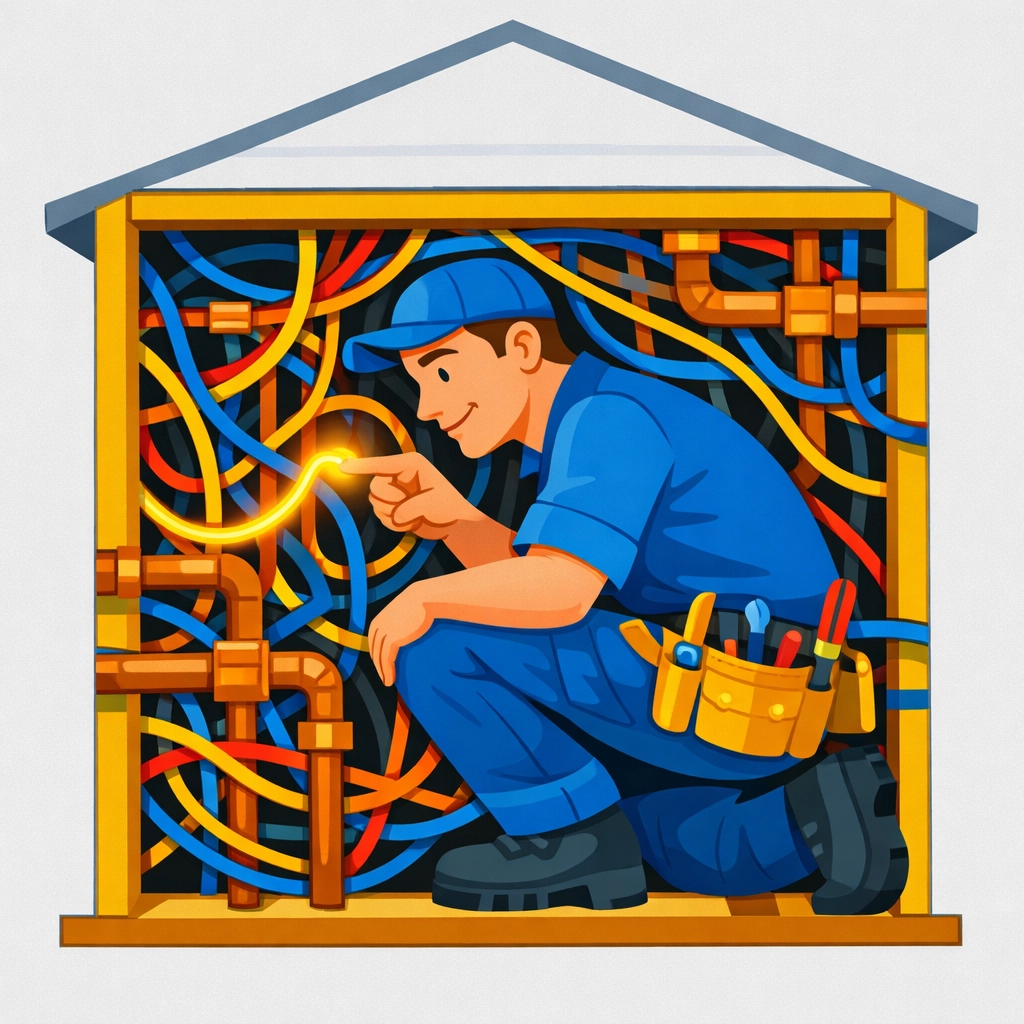
    Electrician troubleshooting complex wiring in a tight wall space, showing human skill in electrical problem-solving.


    Electrical code isn’t just rules. It’s interpretation.

    AI can quote code. You apply it.
    Huge difference.

    The NEC is detailed, but job sites aren’t.
    And local AHJs don’t all enforce the same way.

    You’re constantly balancing:

    • Code requirements
    • Manufacturer specs
    • Load calculations
    • Site constraints
    • Inspection expectations
    • Customer budget (without cutting corners)

    AI can pull the “right” paragraph.
    But when the panel is in a closet, the framing is wrong, and the customer wants it done today, you’re the one making it safe and compliant.

    No accountability. No inspection. Just suggestions.
    That’s not enough for real work.


    Physical labor is the job. AI can’t lift, pull, drill, or sweat.

    Let’s be blunt: electricity is not solved on a keyboard.
    It’s solved with tools, hands, and time.

    AI can’t:

    • Pull wire through a packed conduit run
    • Set anchors in concrete
    • Replace a service mast in wind and snow
    • Terminate conductors correctly under torque specs
    • Cut, bend, mount, and level actual gear
    • Work safely on ladders and lifts
    • Move through a job without damaging finished surfaces

    Even the “robot electrician” idea falls apart fast.
    Because every building is different, every wall is different, every surprise is different.

    No muscles. No mobility. Just talk.
    Talk doesn’t fix a failed neutral.


    Safety isn’t optional. And AI can’t own it.

    Electricians don’t just fix problems. You prevent disasters.
    That’s the part outsiders miss.

    A lot of electrical work is risk management:

    • Arc flash exposure
    • Fault current realities
    • Lockout/tagout discipline
    • Proper PPE choices
    • Knowing when to stop and re-plan

    AI doesn’t feel risk.
    It doesn’t get tired. It doesn’t get rushed. It doesn’t get complacent.

    But it also doesn’t care if it’s wrong.

    You do.

    Because “wrong” can mean:

    • Fire
    • Injury
    • Liability
    • Failed inspection
    • A customer who never calls you again

    No stakes. No consequences. Just probability.
    And probability is a terrible safety plan.


    The customer side is half the job. AI can’t do trust.

    You’re not just wiring circuits. You’re managing people.
    Anxiety, urgency, confusion, skepticism. All of it.

    Customers ask things like:

    • “Is this dangerous?”
    • “Is this going to happen again?”
    • “Why is it so expensive?”
    • “Can you do it today?”
    • “Are you sure we need a new panel?”

    AI can answer.
    But it can’t read the room.

    You can.

    You know when to slow down and explain.
    You know when to draw a quick diagram on a notepad.
    You know when to say, “I’m not leaving this like this.”

    That’s trust.
    And in the trades, trust is your marketing.


    What AI can do for electricians (and we’re fine admitting it)

    We’re not anti-AI. We’re anti-hype.
    No fear. No fantasy. Just useful tools.

    AI is solid at:

    • Summarizing notes into clean job descriptions
    • Drafting customer-facing explanations (that you review)
    • Organizing photos by job and room
    • Spotting trends across lots of jobs (callbacks, parts usage, time sinks)
    • Helping you write faster estimates and follow-ups

    But notice the pattern: AI supports the work. It doesn’t replace it.

    The win is simple.
    You stay in control. You stay accountable. You stay the pro.

    AI handles the busywork.


    The real risk isn’t AI. It’s admin overload.

    Most electricians don’t lose time to the tools. You lose time to the office.
    No offense to “software.” But most of it is built for someone else.

    Here’s what we see over and over:

    • Your schedule is in one place
    • Customer info is in another
    • Estimates are in a spreadsheet
    • Invoices are in accounting software
    • Photos are on your phone
    • Notes are… somewhere
    • And every handoff costs you time

    That’s where businesses leak money.
    Not because the work is hard. Because the workflow is fragmented.

    And that’s where we come in.


    We’re not another “enterprise platform.” We’re the ops layer you actually use.

    Valortek is built to make the business side of your trade simpler.
    No bloated dashboards. No “digital transformation” speeches. Just the basics done right.

    What we care about:

    • Clear scheduling
    • Clean job records
    • Fast estimates and invoices
    • Less re-typing the same info
    • Better visibility on what’s profitable
    • Fewer surprises at the end of the month

    You already have the electrician advantage.
    We help you run it like a business.

    If you want to learn more about how we handle data and privacy, it’s here: https://www.valortek.com/privacy


    The bottom line: your value is in the messy middle

    AI can’t crawl into the attic, read the panel, and make the call.
    You can.

    AI can’t balance safety, code, customer expectations, and physical reality in real time.
    You do that every day.

    So if you’re worried about being “replaced,” don’t be.
    Worry about being buried in admin while you’re out doing the hard work.

    Let software do the paperwork.
    Let humans do the trade.


    Start Your Free Trial

    Questions? Contact us – we’re happy to help you decide.

  • HVAC Diagnostics: Why Your Local Pro Still Beats AI Every Time

    AI is getting better at HVAC diagnostics.
    It’s also not climbing into your attic.

    No ladders. No gauges. No smell test.
    Just data.

    And that’s the whole point of this post.

    We’re not “anti-AI.”
    We’re anti-fantasy.

    If you run an HVAC business, you’ve probably heard the pitch: “AI will diagnose the issue before you arrive.”
    Sometimes it can help.
    A lot of times it can’t.

    Let’s break down where AI is genuinely useful, where it falls apart, and why the best shop in town is still the one with solid techs and good judgment, plus the right tools.


    AI is a tool. Not a technician.

    AI shines when the system is already instrumented.
    Sensors. Telemetry. Clean history. Consistent runtime data.

    That’s not most residential calls.

    Most service work is messy:

    • The homeowner changed settings three times.
    • The filter is a pet hair brick.
    • The outdoor unit is half buried in cottonwood fluff.
    • The thermostat wiring is “creative.”
    • The condensate line is doing its best impression of a swamp.

    AI doesn’t see any of that unless someone measures it, reports it, and feeds it into the system.

    No hands. No eyes. No context.
    Just an algorithm making guesses.

    And in HVAC, guessing gets expensive fast.


    What AI can do well (and you should use it for)

    Let’s be fair. AI isn’t useless.
    Used right, it can make you faster and tighter.

    Here’s where it helps.

    1) It spots patterns in data you’d never stare at all day

    If you’ve got a building automation system, smart thermostats, or solid runtime history, AI can flag trends:

    • Short cycling patterns
    • Abnormal discharge temps
    • Rising static pressure over weeks
    • Compressor run-time drift
    • Weird load patterns by time of day

    Humans can find these.
    We just don’t have the time to babysit charts.

    2) It speeds up troubleshooting

    Some facilities using AI-based fault detection have reported meaningful reductions in troubleshooting time and HVAC operating cost, because the system flags “check this first” faster than a person can.

    AI becomes the second set of eyes.
    Not the final call.

    3) It enables predictive maintenance (when the inputs are real)

    If you’ve got consistent sensor data, predictive alerts can reduce breakdowns.

    That’s valuable in commercial and industrial work.
    It’s less reliable in “my AC stopped and my toddler’s melting” work.

    So yes: AI can be a boost.
    But it needs one thing to work.

    Good inputs.

    And that’s where reality shows up.


    The big limitation: AI can’t inspect anything

    Diagnostics isn’t just “reading the symptoms.”
    It’s verifying the cause.

    AI doesn’t:

    • Check a blower wheel for buildup
    • Put eyes on a cracked heat exchanger
    • Hear a failing bearing
    • Smell a scorched contactor
    • Feel a vibrating line set
    • Notice the return is undersized and starving the system

    And it can’t do the most important part of the job:

    It can’t decide what matters and what doesn’t when the evidence conflicts.

    That’s not a software problem.
    That’s a “you need a human there” problem.

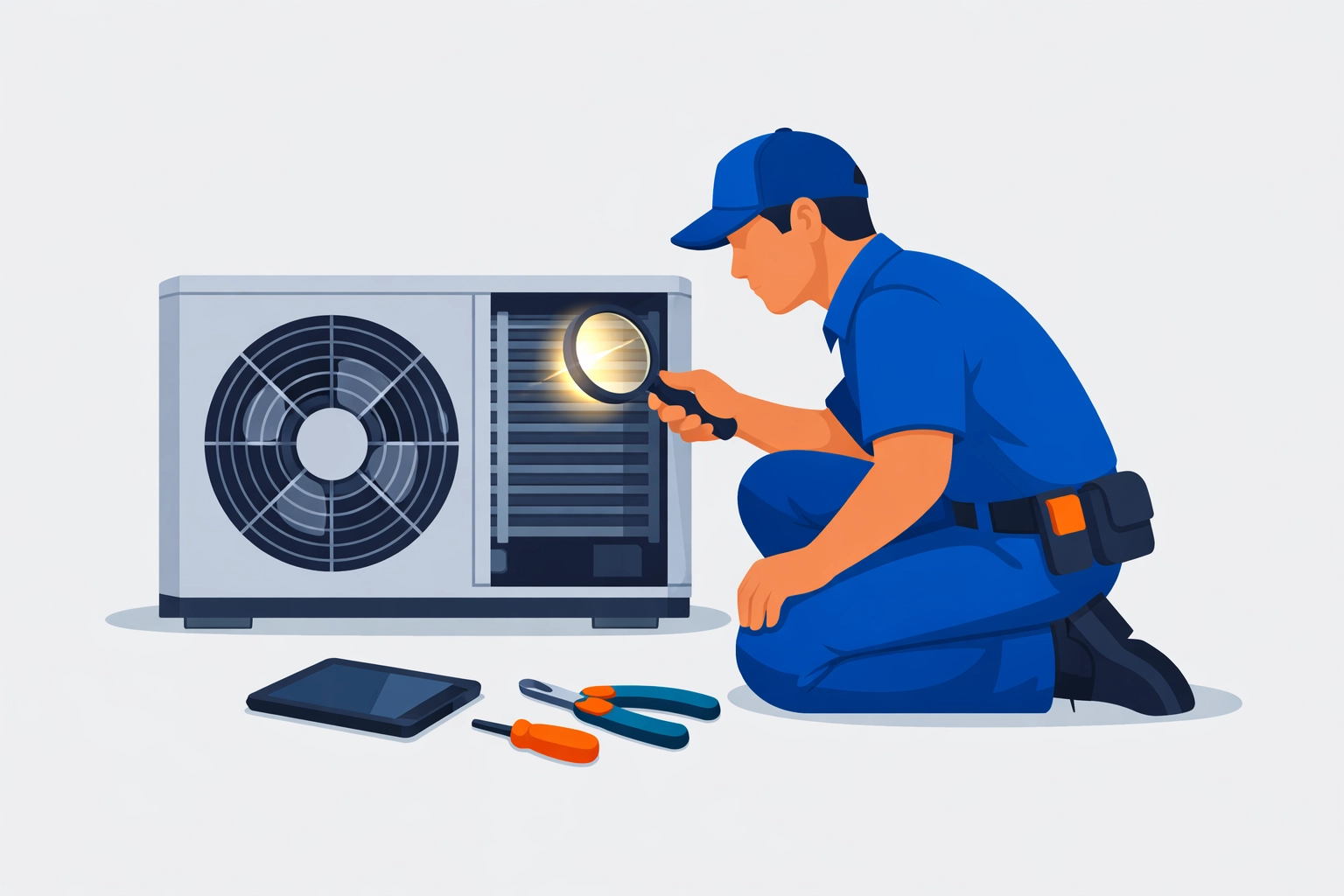
    HVAC technician performing manual AC unit inspection with a magnifying glass for precise diagnostics.


    HVAC is physical. Diagnostics are physical.

    A lot of AI hype assumes HVAC is like software.
    It’s not.

    HVAC systems live in the real world:

    • Dust
    • Water
    • Sun
    • Rodents
    • Bad ductwork
    • Bad installs
    • “Handyman specials”
    • Power issues
    • Home additions with zero load calculation

    Even if AI could perfectly interpret your sensor readings, it still wouldn’t know:

    • The condenser is recirculating hot air because it’s boxed in
    • The return is pulling attic air through a gap
    • The supply trunk is leaking into a wall cavity
    • The coil is freezing because airflow is low, not because refrigerant is low
    • The thermostat is in direct sunlight

    Most failures aren’t “mysterious.”
    They’re contextual.

    And context is what humans are good at.


    The data problem: AI only knows what you measure

    AI needs data.
    Most HVAC calls don’t have it.

    Even on higher-end systems, the data might be:

    • Incomplete (missing sensors)
    • Noisy (bad calibration, drift)
    • Misleading (wrong assumptions)
    • Disconnected (no unified history across equipment)
    • Stale (no recent service notes)

    Garbage in. Garbage out.
    That’s not a slogan. That’s Tuesday.

    And if you’re relying on AI as the first and only brain, you’ll end up with:

    • Wrong parts ordered
    • Wrong diagnosis sold
    • More callbacks
    • Less trust
    • Lower close rates

    You don’t want to be the shop known for “the algorithm said so.”


    HVAC diagnostics aren’t one problem. They’re multiple problems stacked.

    AI tends to do best when one cause leads to one effect.
    HVAC failures often have chains.

    Example: “No cooling.”

    • Low airflow from a dirty filter
    • Which caused coil icing
    • Which caused liquid floodback risk
    • Which caused poor superheat readings
    • Which triggers a technician to think “refrigerant issue”
    • Which leads to topping off instead of fixing airflow
    • Which leads to another callback in two weeks

    AI might catch coil temp anomalies.
    But it won’t automatically understand the messy human behavior around it:

    • Homeowner replaces filter with the wrong size
    • Tech is under time pressure
    • System is oversized
    • Ducts were never balanced

    Diagnostics is not just physics.
    It’s people.


    The “last mile” is where AI breaks

    Even if AI points you in the right direction, the final step still needs a pro:

    • Confirming readings with instruments
    • Verifying airflow
    • Checking electrical under load
    • Inspecting mechanical condition
    • Deciding repair vs replace
    • Explaining tradeoffs to the customer

    This is the part customers remember.

    They don’t remember your dashboard.
    They remember whether you fixed it, how you explained it, and whether it stayed fixed.

    No script. No chatbot. Just trust.
    And trust is earned in person.


    Safety and liability: AI doesn’t sign the invoice

    HVAC isn’t just comfort.
    It’s safety.

    • Gas leaks
    • CO risk
    • Electrical faults
    • Overheated components
    • Combustion air issues
    • Venting issues

    AI can flag anomalies.
    It can’t take responsibility.

    Your tech is the one who decides:

    • “This is unsafe.”
    • “We shut it down.”
    • “Here’s why.”
    • “Here’s the next step.”

    If you’ve ever had to make that call in a living room with a worried homeowner, you know:
    that’s not an algorithm moment.

    That’s a judgment moment.


    “But what about remote diagnostics?”

    Remote diagnostics are real.
    And they can be great.

    Here’s the honest take:

    • Remote diagnostics work best in commercial environments.
    • They work best when the site is already heavily instrumented.
    • They work best when the equipment is standardized.
    • They work best when maintenance is consistent.

    Residential is the opposite of that.

    So if someone’s telling you AI can replace dispatch, replace techs, and replace on-site work…
    they’re selling you a story.

    No truck. No tools. No problem?
    Not in HVAC.


    Where AI helps your HVAC business without pretending to replace you

    This is where we like to live: practical tools that don’t insult your intelligence.

    AI can help in areas adjacent to diagnostics, places where speed and consistency matter, and the risk of “AI hallucinating” won’t fry a compressor.

    ✅ Better triage at intake

    AI can help you standardize what questions get asked on a call:

    • “Is the outdoor unit running?”
    • “Any ice on the line?”
    • “Any burning smell?”
    • “When did it start?”
    • “Any recent work done?”

    Not replacing your dispatcher.
    Just making intake tighter.

    ✅ Cleaner notes and better handoffs

    Tech notes matter.
    AI can help summarize, structure, and clean up notes so:

    • The next tech isn’t guessing
    • Your office can invoice faster
    • You can spot repeat issues

    ✅ Predictive reminders (filters, maintenance, warranties)

    AI isn’t diagnosing the compressor.
    It’s reminding customers to do the basics that prevent breakdowns.

    That’s not hype.
    That’s revenue and fewer emergency calls.

    ✅ Inventory and parts forecasting

    If you track parts usage, AI can help predict what to stock.

    Not magic.
    Just math at scale.


    The best diagnostic system is still a great process

    Here’s what wins in the real world.

    No buzzwords. No “digital transformation.” Just fundamentals.

    A diagnostic workflow your techs actually follow

    • Verify the complaint
    • Check airflow first
    • Check electrical second
    • Check refrigerant last (and only after airflow is confirmed)
    • Confirm with measurements, not vibes
    • Document before/after readings

    A consistent way to capture job data

    If you want AI to help later, you need consistent inputs now:

    • Model/serial
    • Installed date (if known)
    • Photos
    • Static pressure readings (when relevant)
    • Delta T
    • Superheat/subcooling (when relevant)
    • Parts replaced
    • Root cause notes (not just “fixed”)

    AI can’t create discipline.
    But discipline can create data.

    And data can actually help you scale.


    Customers don’t want AI. They want certainty.

    Homeowners don’t call you because they want innovation.
    They call because they want their house comfortable again.

    They want:

    • A clear answer
    • A fair price
    • A fix that lasts
    • A tech who seems competent and calm

    AI can support that.
    It can’t be that.

    The shops that win with AI will be the ones who use it quietly, behind the scenes, to reduce waste, without pretending it replaces craftsmanship.

    No robot techs. No remote miracles. Just better service.
    That’s the lane.


    How we think about it at Valortek

    We’re not another bloated “platform” built for enterprise facilities teams.
    We’re not trying to replace your techs with prompts and dashboards.

    We build tools that help your operation run cleaner:

    • Better scheduling
    • Better job tracking
    • Better customer visibility
    • Better follow-up
    • Better internal accountability

    No complexity for the sake of complexity.
    No features you’ll never use.
    Just a system your team can actually stick with.

    If you want to learn more about who we are, you can poke around here: https://valortek.com


    The bottom line

    AI can flag.
    It can suggest.
    It can accelerate.

    But it can’t crawl into a tight attic and tell you the return’s undersized.
    It can’t look a customer in the eye and explain why replacement is the right call.
    It can’t keep your reputation intact when the easy answer is wrong.

    So yes: use AI.
    Just don’t outsource your judgment.

    That judgment is your edge.
    And your local pros? They’re still the difference.


    Start Your Free Trial

    Questions? Contact us – we’re happy to help you decide.

  • Locksmiths vs. Robots: Why AI Will Not Be Opening Doors Anytime Soon

    You’ve seen the headlines. AI is writing code. AI is diagnosing diseases. AI is even making “art” that looks like a fever dream. It feels like every job on the planet is one software update away from disappearing.

    But then there’s you. You’re standing on a porch at 2 AM. It’s freezing. The lock you’re looking at was manufactured in 1974 and has been painted over six times. The cylinder is seized, the door is sagging, and the homeowner is hovering over your shoulder.

    Can ChatGPT pick that lock? No. Can a robot from a Silicon Valley lab navigate that mess? Not a chance.

    At Valortek Inc, we deal with the digital side of things, but we know where the real work happens. We’re here to tell you why your trade is safe.

    No robots. No algorithms. Just human skill.

    The Tactile Paradox

    AI is great at processing data. It can scan billions of lines of code in seconds. But it has one massive, glaring weakness. It doesn’t have hands.

    And no, robotic “grippers” don’t count. Locksmithing isn’t just about turning a key. It’s about the “feel.”

    When you’re picking a lock, you’re listening with your fingers. You feel the slight click of a pin setting. You feel the resistance of a tension wrench. You know exactly when to push and when to let off.

    This is what we call physical intuition. It’s a feedback loop between your brain and your muscles that takes years to master. AI lacks the sensory nuance to understand the difference between a pin that’s set and a pin that’s just stubborn.

    No sensors. No haptic feedback. Just your touch.

    Locksmith using a pick and tension wrench to open a brass lock with physical intuition.

    The “Real World” Isn’t a Lab

    If every door was perfectly square and every lock was brand new, maybe a robot could compete. But the real world is a nightmare of physics and poor maintenance.

    Doors warp in the humidity. Foundations shift, making latches misaligned. People use the wrong lubricants (looking at you, WD-40 enthusiasts).

    An AI needs a controlled environment to succeed. It needs predictable inputs. A locksmith thrives in the unpredictable. You walk up to a job and immediately notice that the frame is bowed. You realize the strike plate is 2mm too low. You adjust your approach on the fly.

    AI can’t improvise. It follows a script. If the script says “turn left” and the door requires a “jiggle-then-lift-then-turn,” the AI fails.

    You aren’t just a technician. You’re a problem solver in a world that refuses to be neat.

    The Legacy Hardware Reality

    The tech world loves to talk about “Smart Locks.” They want everything connected to the cloud. They want facial recognition and palm vein scanning.

    And sure, those things are growing. Research shows the smart lock market is booming. But here is the secret: someone still has to install them. And someone definitely has to fix them when the battery dies or the Wi-Fi drops.

    Even more importantly, look around. Most of the world is still running on mechanical hardware. There are millions of commercial buildings and homes using locks designed decades ago.

    Big Tech doesn’t care about a 50-year-old mortise lock. They want to sell you a subscription to a doorbell camera. As long as there is old brass and steel in the world, there is a need for a human who knows how it works.

    No updates. No cloud. Just heavy-duty hardware.

    Trust Can’t Be Programmed

    Locksmithing is about more than just opening doors. It’s about trust.

    When someone loses their keys or gets locked out after a breakup, they aren’t just looking for a tool. They’re looking for a professional. They need to know that the person standing at their door is licensed, insured, and ethical.

    Would you trust a faceless robot with the keys to your life? Probably not.

    There is a human element to security that AI can never replicate. You provide peace of mind. You offer a sympathetic ear when a customer is stressed. You make calls on the spot about whether a situation seems “off” or potentially illegal.

    AI doesn’t have a gut feeling. You do.

    Valortek company logo

    Why We Care at Valortek Inc

    You might wonder why a business consulting firm like Valortek Inc is talking about lock-picking and door frames.

    It’s simple. We believe in the power of the trades. We know that while AI is a great tool for managing your back office, it’s a terrible replacement for your front-line skills.

    Our goal is to help you use technology to make your life easier: not to replace you. We want you out in the field doing what you do best, while our systems handle the “boring” stuff like scheduling, billing, and customer data.

    We aren’t another software company trying to automate your job away. We’re partners who want to help you scale your expertise.

    No fluff. No complex jargon. Just better business.

    The Future is Hybrid

    Does AI have a place in your shop? Absolutely.

    It can help you optimize your routes so you aren’t crisscrossing town in traffic. It can help you predict when your tools need maintenance. It can even help you answer basic customer questions on your website while you’re elbow-deep in a safe.

    But it will never be the one holding the tension wrench.

    The future of locksmithing isn’t a robot taking your job. It’s a highly skilled locksmith using smart tools to run a more profitable, efficient business.

    You handle the physical world. Let us help you handle the digital one.

    Professional locksmith with a toolkit next to a digital gear representing smart business efficiency.

    The Verdict

    AI is a wizard at math. It’s a pro at data. It’s a genius at patterns.

    But it’s a total amateur at life.

    It doesn’t understand the nuance of a stuck latch. It doesn’t understand the urgency of a 3 AM lockout. And it definitely doesn’t have the “physical intuition” that defines your career.

    So, take a breath. Your job isn’t going anywhere. In fact, as the world gets more digital, your physical skills become even more valuable. You are the bridge between the digital “smart” world and the physical “secure” world.

    Stay sharp. Keep learning. And remember that a robot can’t replace a master’s touch.

    No gimmicks. No fears. Just the trade.

    If you’re ready to spend less time on your computer and more time on your craft, we should talk. We help tradespeople like you streamline their operations so the business runs itself while you’re out opening doors.

    You do the hard part. We’ll do the smart part.

    Start Your Free Trial

    Questions? Contact us – we’re happy to help you decide.

  • Big Tech is Watching: How Google and Apple Track Your Business Data

    You download an app to manage your plumbing business. You think it’s a tool. Google and Apple think it’s a data goldmine.

    Every time you tap, scroll, or log a job, a digital footprint is created. For small trade businesses, this isn’t just about “privacy” in an abstract sense. It’s about your business intelligence being harvested by the two biggest companies on earth.

    No secrets. No shadows. Just data.

    The Myth of the “Free” Business App

    We’ve all seen the free apps in the Play Store or the App Store. They promise to organize your schedule or track your mileage for zero dollars.

    But there is always a price. If you aren’t paying with a subscription, you’re paying with your data.

    Google and Apple aren’t charities. They are ecosystems designed to keep you inside their walls. They want to know what you do, who you talk to, and how much money your business makes.

    No free lunches. No hidden gifts. Just a data exchange you never signed up for.

    How Google Vacuums Your Information

    Google’s business model is simple: they sell your attention. To do that effectively, they need to know everything about you.

    If you use an Android device for your business, Google is tracking your every move. Through the Play Store, they see which apps you use and how often you open them. Through Google Maps, they know exactly where your service vans are parked.

    They use this information to build a profile. They know your trade, your service area, and your growth trajectory.

    What Google is collecting:

    • Location History: Every job site you visit.
    • Search Queries: What tools or supplies you’re looking for.
    • App Usage: How much time you spend in your CRM vs. your social media.
    • Email Content: If you use Gmail, your invoices and receipts are being scanned for keywords.

    They don’t do this to help you. They do it to sell better ads to your competitors.

    Illustration of a smartphone collecting GPS and trade tool data, representing Google tracking business activity.

    Apple: The “Privacy” Company?

    Apple likes to position itself as the “good guy.” They run ads telling you that “Privacy is a human right.”

    Don’t be fooled. While Apple doesn’t rely on ad revenue the same way Google does, they still collect a massive amount of data.

    Apple’s goal is to sell hardware and services. They track your App Store purchases, your Siri interactions, and your Apple Maps searches to keep you hooked on their hardware.

    They use their “Privacy” features as a weapon against Google. By blocking Google’s tracking, Apple forces developers to use Apple’s own systems. It’s not about protecting you; it’s about controlling the flow of information.

    No altruism. No heroics. Just a different kind of tracking.

    The App Store Toll

    When you download a business app, you’re entering a controlled environment. Both Google and Apple act as “gatekeepers.”

    They see every transaction you make through an app. If you’re a locksmith using an app that processes payments, Big Tech is watching the volume of those payments.

    They collect data on:

    1. Financial Health: How much are you billing?
    2. Customer Retention: How often do your customers return?
    3. Operational Efficiency: How fast do you close tickets?

    This data is incredibly valuable. In the wrong hands, or even in the “aggregated” hands of Big Tech, it can be used to predict market trends that favor large corporations over small, local trades.

    Why Trade Businesses Should Care

    You might think, “I’m just a guy with a truck. Why does Google care about my data?”

    They care because data is the new oil.

    When Big Tech knows that HVAC repairs are spiking in a specific zip code, they raise the price of local service ads. When they see a specific plumbing software gaining traction, they might launch a competing feature.

    Your data is being used to tilt the playing field.

    No fair play. No level ground. Just an algorithmic advantage for the highest bidder.

    Valortek company logo

    The 2025/2026 Shift: Fingerprinting and Regulation

    As of late 2025 and early 2026, the battle for your data has intensified.

    Apple recently doubled down on blocking “fingerprinting”, a sneaky way companies track you even when you say “no.” This has caused a massive rift between Apple and Google’s Chrome team.

    Meanwhile, the European Union’s Digital Markets Act (DMA) has forced these companies to be more transparent. But “transparency” usually just means a 50-page legal document that no one reads.

    They make the rules. They own the stores. You just live in them.

    Is Your Business App Spying on You?

    Not all apps are created equal. Some are designed to be “lean” and respect your boundaries. Others are “heavy,” requesting permissions they don’t need.

    Does your calculator app really need access to your contacts? Does your flashlight app need your GPS location?

    Probably not.

    Every permission you grant is a straw in your business’s data drink. If an app asks for more than it needs to do its job, it’s probably selling the leftovers.

    App icons and a padlock with an eye monitoring trade tools, representing invasive business app permissions.

    How to Protect Your Business Data

    You can’t go off the grid completely. You need technology to compete. But you can be smarter about it.

    1. Audit Your Permissions: Go into your phone settings today. See what apps have access to your location and microphone. Turn off anything that isn’t essential.
    2. Use Privacy-Focused Browsers: Switch from Chrome to something that doesn’t track your every click.
    3. Choose Your Partners Wisely: Work with companies that have clear, simple privacy policies. If the policy is a maze of legal jargon, they’re hiding something.
    4. Limit “Sign in with Google/Apple”: It’s convenient, but it links all your accounts together. Use a dedicated email for your business tools.

    No fluff. No complicated tech. Just basic digital hygiene.

    The Valortek Approach

    At Valortek, we think the “Big Tech” way of doing business is broken.

    We aren’t interested in harvesting your data to sell ads. We aren’t interested in tracking your location to build a profile. We’re a small team building tools for people who actually do the work.

    We believe in transparency. If we collect data, it’s to make your experience better: not to line the pockets of a billionaire in Silicon Valley.

    No enterprise bloat. No hidden agendas. Just honest software for the trades.

    Privacy is Power

    In 2026, information is the most valuable asset you own. Your customer list, your job history, and your pricing models are your competitive edge.

    Don’t give them away for a “free” app.

    When you choose your tech stack, look for partners, not predators. Understand that every “accept” button you click has a consequence.

    You work hard for your business. Make sure your data works for you, not for Google and Apple.

    Contractor standing behind a protective shield to represent secure business data management for trades.

    Final Thoughts for the Trade Owner

    The landscape of business data is changing. Between new regulations and the ongoing war between Apple and Google, it’s easy to feel overwhelmed.

    Don’t be.

    You don’t need to be a cybersecurity expert to protect your business. You just need to be aware. Ask questions. Look at the fine print. And most importantly, don’t assume that because an app is popular, it’s safe.

    We’re here to help you navigate the noise. We believe in the power of small businesses and the importance of keeping your data in your hands.

    Ready to take control?

    Start Your Free Trial

    Questions? Contact us – we’re happy to help you decide.

  • Can AI Fix a Leaky Pipe? The Human Element in Plumbing

    Everyone is talking about AI.

    It writes emails. It creates digital art. It might even be helping you schedule your next service call. But there is one thing AI will never do.

    It will never crawl under a kitchen sink to fix a burst pipe.

    No software. No algorithm. Just grit and a pipe wrench.

    In the trades, the physical world is the ultimate gatekeeper. Whether you’re a plumber, an electrician, an HVAC tech, or a locksmith, your job requires something a computer simply doesn’t have: a body and a brain that works together in real-time.

    At Valortek, we believe technology should support your business, not pretend it can replace your hands.

    The Physical Reality Check

    AI lives in the cloud. You live in crawl spaces.

    Plumbing is a contact sport. It requires manual dexterity. It requires the ability to squeeze into tight corners, climb shaky ladders, and manipulate heavy tools with precision.

    Current AI technology lacks a physical form that can navigate a standard American home. Think about your last job. You probably had to navigate around a stack of boxes, avoid a sleeping dog, and reach behind a water heater that was installed backward in 1982.

    No robot can do that.

    To make a robot that could navigate a “normal” house, we’d have to rebuild every house to fit the robot’s map. That isn’t happening. Your ability to move through unpredictable environments is your greatest asset.

    No sensors. No pre-programmed paths. Just human movement.

    A professional plumber navigating a tight crawlspace to perform a manual pipe repair.

    Intuition is Not an Algorithm

    AI works on patterns. It looks at a million photos of a leak and tries to guess where the water is coming from.

    You don’t guess. You listen. You feel the vibration in the wall. You smell the dampness in the basement.

    Years of experience have given you an intuition that an algorithm can’t replicate. We call it a “gut feeling,” but it’s actually your brain processing thousands of variables at once.

    An electrician doesn’t just see a tripped breaker. They sense the underlying tension in an outdated panel. A locksmith doesn’t just see a stuck bolt; they feel the resistance in the cylinder.

    AI needs perfect data to work. The trades are rarely perfect.

    You deal with the “what ifs.” You deal with the “I’ve never seen this before, but I know how to fix it.” AI fails the moment it sees something it hasn’t been trained on.

    The Chaos of the Real World

    If every plumbing system followed a perfect blueprint, AI might stand a chance. But they don’t.

    Homes are built by different people in different decades. They’ve been renovated, patched, and modified. Most of the time, the original plans are long gone or were never followed in the first place.

    This is where the human element shines.

    You are a creative problem solver. When a pipe doesn’t line up with the new fixture, you don’t crash. You adapt. You find a work-around. You use your spatial reasoning to visualize a solution that doesn’t exist on a screen.

    No blueprints. No schematics. Just on-the-spot ingenuity.

    Human hands applying expert problem-solving skills to complex plumbing pipe assembly.

    Why “Good Enough” Doesn’t Work in Trades

    In the world of AI, an 80% success rate is often considered a win. If an AI writes a blog post and gets 80% of the facts right, an editor can fix the rest.

    In plumbing, 80% means your house is still flooding.

    In electrical work, 80% means a fire hazard.

    In HVAC, 80% means a frozen coil in the middle of July.

    The trades require 100% precision. There is no “beta version” of a gas line repair. You get it right the first time, or people get hurt and property gets destroyed.

    Human judgment is about risk management. You know when a pipe is too corroded to save. You know when a furnace is a safety risk rather than a simple repair. AI doesn’t understand the consequences of being wrong. It just calculates probabilities.

    You carry the weight of responsibility. A computer carries nothing.

    Trust Cannot Be Automated

    When a customer calls a plumber at 2:00 AM, they aren’t just looking for a fix. They are looking for peace of mind.

    They are letting a stranger into their home during a moment of crisis. They want to see a professional who looks them in the eye and says, “I’ve got this.”

    AI can’t build rapport. It can’t empathize with a homeowner whose basement is ruined. It can’t explain a complex repair in a way that makes a customer feel safe.

    Service is about relationships. At Valortek, we know that your brand isn’t just your logo; it’s the trust you build on every doorstep. No matter how advanced technology gets, people will always prefer a person over a program when their home is on the line.

    No bots. No auto-replies. Just real human connection.

    A plumber and homeowner shaking hands to build professional trust and human connection.

    AI is a Tool, Not a Replacement

    We aren’t saying technology is useless. Far from it.

    At Valortek Inc, we help trade businesses use tech to work smarter. But we use it for what it’s good at: the “boring” stuff.

    AI is great at:

    • Scheduling your appointments so you don’t have to play phone tag.
    • Predicting when a customer’s HVAC unit might need maintenance based on age.
    • Organizing your invoices so you actually get paid on time.
    • Routing your trucks so you spend less time in traffic.

    By letting technology handle the back-office chaos, you are free to do what only you can do: the actual work.

    Think of AI like a high-end power tool. It makes the job faster and easier, but it still needs a master craftsman to hold the handle.

    We’re not another “enterprise” consulting firm trying to sell you a dream of a fully automated business. We’re people who understand that your value is in your hands and your head.

    The Future of the Trades

    The “AI Revolution” is making a lot of white-collar workers nervous. Copywriters, coders, and data entry clerks are worried about their jobs.

    If you’re a plumber, an electrician, or a technician, you should feel confident. Your skills are more valuable now than ever. As more of the world moves into the digital space, the people who can actually maintain the physical world become the most essential workers in society.

    You can’t download a new faucet. You can’t 3D print a functional sewer line in an emergency.

    The human element isn’t a weakness. It’s your superpower.

    Our job at Valortek is to make sure your business side is as sharp as your technical side. We help you streamline your operations so you can focus on the leaks, the wires, and the customers.

    No fluff. No jargon. Just a better way to run your trade.

    Start Your Free Trial

    Questions? Contact us – we’re happy to help you decide.

  • 7 Mistakes Small Trade Businesses Make with Software (And How to Avoid Losing $1,000+ Per Year)

    Look, I’ve seen it happen a hundred times.

    A plumber picks fancy software. An electrician subscribes to three different tools. A locksmith manually enters every invoice instead of using integrations.

    And then they wonder why their margins are so tight.

    Here’s the thing: most small trade businesses bleed money through bad software decisions. We’re talking $1,000, $2,000, sometimes more every year. Just… gone.

    Let me walk you through the seven biggest mistakes I see, and how to avoid them without overthinking it.

    1. You’re Paying for Features You’ll Never Use

    This is the big one.

    You sign up for software built for 50-person operations. You’re a team of three. Maybe just you.

    The software has multi-location support. Team hierarchy tools. Advanced reporting dashboards that take a PhD to understand.

    You needed something to track invoices. That’s it.

    Small business owner overwhelmed by unnecessary software features and expensive monthly subscription costs

    The fix: Match the tool to your actual size. If you’re a sole trader or running a crew of 2-5 people, you don’t need enterprise features. You need simple profit tracking, invoicing, and maybe scheduling.

    That’s what we built at Valortek, software sized for real trade businesses, not Fortune 500 companies.

    One HVAC guy told me he was paying $89/month for five user seats. He worked alone. That’s over $1,000 a year for… nothing.

    Stop paying for ghosts.

    2. Subscription Creep Is Killing You

    You subscribed to a CRM two years ago. Used it for three months. Forgot about it.

    It’s still charging your card.

    Then there’s the project management tool you tried once. The estimating software you never set up properly. The invoice app you replaced but never canceled.

    Research shows companies waste 29% of their software budget on tools they barely touch. For small trades, that’s real money.

    The fix: Do a subscription audit right now. Seriously, open your bank statements and list every recurring charge.

    Cancel anything you haven’t used in 30 days. No exceptions.

    One small contractor saved $1,200 yearly by cutting just one outdated subscription. Imagine finding three or four of those.

    3. You Skipped the Training (And Now Everything’s Wrong)

    “I’ll figure it out as I go.”

    No. You won’t.

    Accounting software isn’t hard, but it’s not mind-reading either. If you don’t know how to categorize expenses correctly, you end up with a mess that’s expensive to fix later.

    Multiple unused software subscriptions draining small business budget with recurring monthly charges

    The fix: Spend two hours learning the basics before you go live. Most software companies offer free training videos or webinars.

    Two hours now saves you from paying your accountant to untangle six months of incorrect entries later.

    We make training dead simple at Valortek because we know you’ve got jobs to run. Quick videos, plain English, no fluff.

    4. You Trust the Software Too Much

    Your accounting software connects to your bank. It sees transactions and automatically suggests categories.

    “Oh, this charge is probably office supplies.”

    Sometimes it’s right. Sometimes it’s wildly wrong.

    If you just click “accept” on everything without looking, your books become fiction.

    The fix: Review each transaction before categorizing it. Takes an extra 30 seconds per entry. Saves you from reporting the wrong income to the IRS or missing legitimate deductions.

    The software is guessing. You’re the only one who actually knows what that $247 charge was for.

    5. You’re Still Doing Manual Entry Like It’s 1997

    You grab receipts. You type numbers into spreadsheets. You manually create invoices one by one.

    Every manual entry is a chance to miss something, fat-finger a number, or just forget entirely.

    The fix: Use software with real integrations. Bank feeds that import transactions automatically. Tools that pull customer data without retyping everything.

    Manual data entry versus automated software integration comparison for trade business efficiency

    Modern software should connect to your bank, your payment processor, and your vendors. If you’re copying and pasting between three different apps, you’re working too hard.

    At Valortek, we built integrations first because we’re not interested in making you do robot work.

    6. Your Expense Tracking Is a Dumpster Fire

    You lose receipts. You forget to record mileage. You can’t remember if that parts run was for the Johnson job or the Martinez job.

    Come tax time, you’re scrambling to reconstruct three months of expenses from memory and bank statements.

    This isn’t just annoying: it’s expensive. Missed deductions mean higher taxes. Poor expense tracking means you can’t see which jobs are actually profitable.

    The fix: Track expenses as they happen, not at month-end. Use software that lets you snap receipt photos from your phone and categorize on the spot.

    Reconcile your accounts weekly. Catch problems early when they’re easy to fix.

    Good expense tracking isn’t about being perfect. It’s about being consistent enough that nothing falls through the cracks.

    7. You Picked Software That Won’t Scale

    Your software works fine when you’re doing 20 jobs a month.

    Then you get busier. 40 jobs. 60 jobs. Suddenly the tool starts breaking down. It’s slow. It can’t handle the volume. Reports take forever to load.

    Now you’re stuck switching systems right when you’re at your busiest.

    The fix: Pick software that can grow with you from day one. Cloud-based tools that handle increasing transaction loads without slowing down.

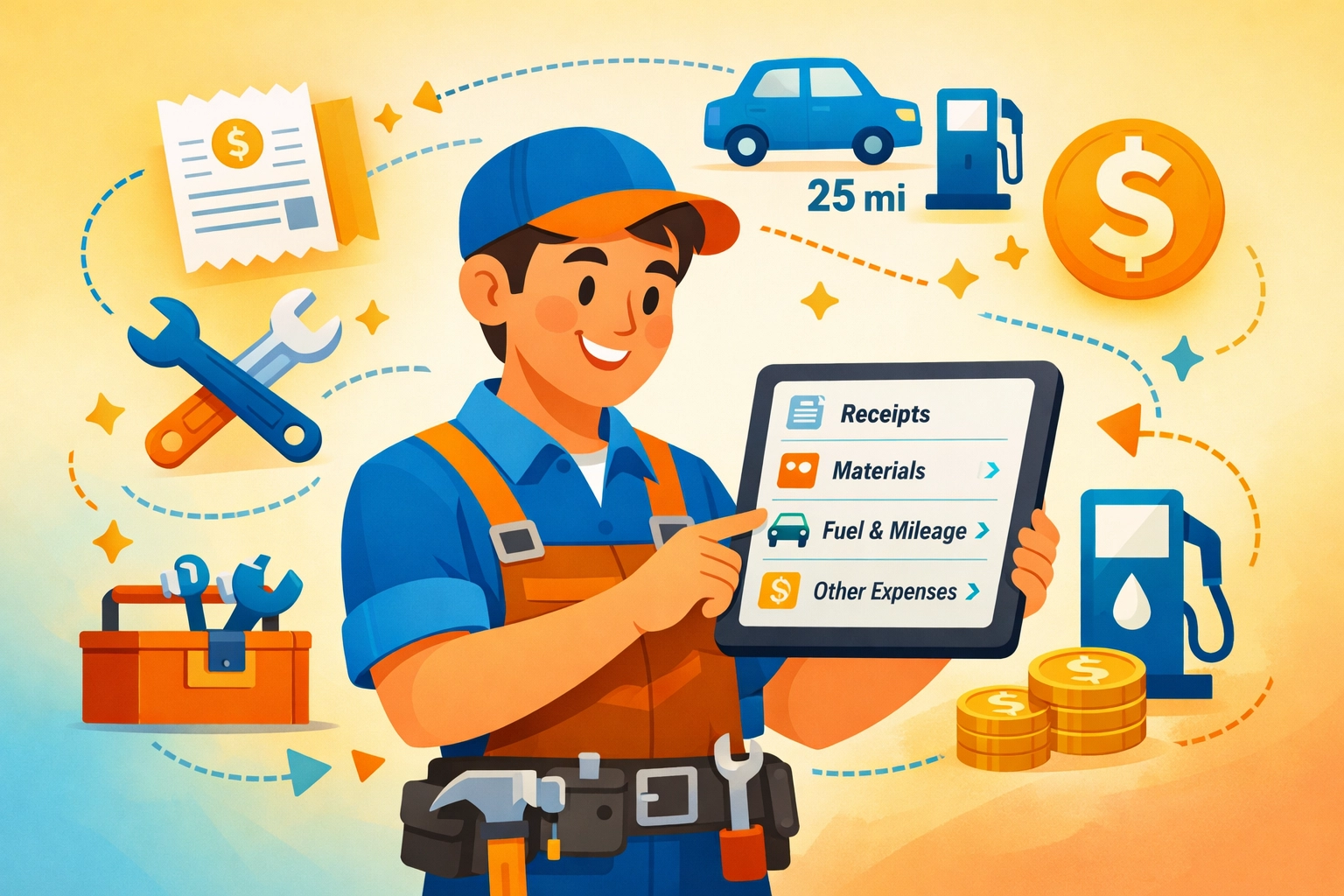
    Trade business owner using mobile expense tracking software with receipt and mileage management

    You don’t need to plan for running a 100-person operation tomorrow. But your software should handle 3x your current volume without problems.

    We designed Valortek to scale naturally because we’ve seen too many contractors get trapped by tools that worked fine at first, then became bottlenecks.

    The Real Cost of These Mistakes

    Let’s do the math quickly.

    Unused subscriptions: $600/year
    Overpaying for enterprise features: $500/year
    Accountant time fixing errors: $400/year
    Missed tax deductions from poor tracking: $800/year
    Time wasted on manual entry (at your hourly rate): $500/year

    That’s $2,800 down the drain. Every single year.

    For doing nothing different except choosing the wrong tools and using them badly.

    How Valortek Avoids All This

    We’re not another bloated software company trying to sell you features you don’t need.

    No enterprise pricing. No user seat gouging. No “contact us for a quote” nonsense.

    Just straightforward tools built for trade businesses that actually work in the field.

    Simple training. Real integrations. Software that scales without surprise charges.

    We know what plumbers, electricians, HVAC techs, and locksmiths actually need because we talk to them every day. We’re not guessing.

    Your software should make your life easier, not drain your bank account while creating more work.

    Start Your Free Trial

    Questions? Contact us – we’re happy to help you decide.

  • QuickBooks Just Raised Prices Again (Feb 2026): 5 Contractor-Friendly Alternatives That Include Payroll

    QuickBooks raised prices again. February 1st, 2026. Effective immediately.

    If you’re a contractor running a small HVAC, plumbing, electrical, or locksmith business, you just got hit with another price hike you didn’t ask for. Pro Plus jumped from $999 to $1,149 annually. Premier Plus went from $1,399 to $1,609. Enterprise editions? Some packages increased over 50%.

    And payroll costs more too. Basic Payroll climbed from $550 to $640 per year, plus $7 per employee per month. Enhanced Payroll increased from $700 to $805 annually, with the same per-employee fee.

    This isn’t the first time. It won’t be the last.

    Here’s the truth: you’re paying for features you don’t use, locked into a pricing model built for enterprise accounting departments, not three-person HVAC crews.

    QuickBooks price increase displayed on laptop with rising charts and invoices

    Why QuickBooks Keeps Raising Prices (And Why Contractors Keep Paying)

    QuickBooks is the default. That’s their advantage.

    Your accountant uses it. Your bookkeeper knows it. You set it up five years ago and haven’t thought about switching because, frankly, migrating accounting data sounds like a nightmare.

    But here’s what’s actually happening. You’re paying $1,149+ per year for invoicing, job costing, and maybe payroll. You’re not using 70% of the features. Inventory tracking? Multicurrency? Advanced reporting? You don’t need it.

    You need to invoice customers. Track job costs. Pay your crew. That’s it.

    The February 2026 price increase is just QuickBooks flexing. They know switching costs are high. They know you’re busy running jobs, not comparing software. So they raise prices and send you an email with 30 days’ notice.

    What the February 2026 Price Hike Actually Costs You

    Let’s break this down in real numbers.

    Pro Plus single user: You’re now paying $1,149 per year. That’s $95.75 per month. Add one extra user seat at $230 annually, and you’re at $1,379 total, or $114.92 per month.

    Want payroll? Add QuickBooks Payroll Basic at $640 per year, plus $7 per employee per month. For a three-person crew, that’s an additional $892 per year. Total annual cost: $2,271, or $189.25 per month.

    Premier Plus with payroll for three employees: You’re looking at $2,501 per year, or $208.42 per month.

    And you haven’t added a single third-party app for scheduling, customer communications, or mobile invoicing yet.

    Contractor choosing between complex accounting software and simple contractor-friendly alternative

    5 Contractor-Friendly QuickBooks Alternatives (With Payroll Included)

    No enterprise bloat. No feature lists longer than your arm. Just software built for contractors who need invoicing, scheduling, and payroll in one place.

    1. Valortek ($149/month, all-in)

    We built Valortek because we were tired of watching contractors overpay for software they don’t use.

    No tiered pricing. No per-user fees. No add-on costs for payroll.

    $149 per month gets you invoicing, job scheduling, payroll for unlimited employees, and customer management. That’s it. One price, one login, one system.

    We’re not trying to be QuickBooks. We’re not trying to serve every industry. We built this for trade contractors running teams of 1–10 people who need simple, reliable tools that actually work on a job site.

    2. Jobber (Starting at $129/month + payroll add-on)

    Jobber is popular with home service businesses. Good mobile app. Solid scheduling features. Invoicing is clean.

    But payroll is an add-on through Gusto, which starts at $40 per month plus $6 per employee. So your all-in cost is closer to $200+ per month for a small crew.

    Still cheaper than QuickBooks. Still complex to set up.

    3. Housecall Pro (Starting at $169/month, payroll extra)

    Housecall Pro has a loyal following in the HVAC and plumbing world. Strong marketing tools. Customer reviews. Text notifications.

    Payroll integration costs extra. You’ll pay $49 per month base plus $5 per employee through their Gusto partnership. For three employees, that’s $218 per month total.

    Good product. Expensive for what you get.

    Contractor stressed by multiple software logins vs relaxed using simple invoicing solution

    4. ServiceTitan (Custom pricing, typically $500+/month)

    ServiceTitan is built for larger operations. If you’re running 15+ trucks and need advanced dispatch, revenue optimization, and call center integration, it’s worth a look.

    If you’re a two-person electrical contractor, it’s overkill. Pricing starts around $500 per month and goes up from there. Payroll is extra.

    5. Workiz (Starting at $115/month, payroll through third party)

    Workiz is simple. Clean interface. Good for solo operators or very small teams.

    But payroll isn’t included. You’ll need to connect a third-party service, which adds cost and complexity. And once you hit three or four employees, you’ve outgrown the platform.

    What You’re Really Paying For (And What You’re Not)

    Let’s be honest about what contractors actually need.

    You need to create invoices and get paid. You need to schedule jobs and track which tech is where. You need to pay your crew on time without manual calculations. You need customer contact info in one place so you’re not digging through text messages.

    You don’t need 47 different reports. You don’t need multi-entity consolidation. You don’t need foreign currency exchange rates or advanced inventory modules.

    QuickBooks charges you for all of it anyway. Every tier. Every add-on. Every “feature” you’ll never click on.

    The alternatives listed above are better. They’re cheaper. But most still follow the same playbook: base price, then add-ons, then per-user fees, then integration costs.

    We built Valortek differently. One price. Everything included. No surprises.

    Small business contractor using simple invoicing software at desk with confidence

    Why We Charge $149/Month (And How We Keep It There)

    No sales team. No venture capital pressure to 10x revenue every quarter. No enterprise features you’ll never touch.

    We’re a small team building software for contractors who just want tools that work. We charge $149 per month because that covers our costs, pays our people fairly, and keeps us profitable enough to keep the lights on.

    We don’t have tiered pricing because we don’t believe in it. You shouldn’t pay more just because you hired another technician. You shouldn’t lose features because you picked the “starter” plan.

    You get invoicing, scheduling, payroll, and customer management. Unlimited users. Unlimited jobs. One login for your whole crew.

    That’s the deal. It doesn’t change when QuickBooks raises prices again next year.

    Making the Switch (Without Losing Your Mind)

    Switching accounting software is annoying. We get it.

    You’ve got years of customer data, job history, and financial records in QuickBooks. The thought of migrating all that makes you want to just eat the price increase and move on.

    Here’s the reality: you’re going to pay the higher price every year from now on. The February 2026 increase is permanent. Next year, there’ll be another one.

    If you’re paying $2,200 per year now for QuickBooks Pro Plus with payroll, you’ll save $1,412 in your first year with Valortek. That’s $1,412 you can spend on tools, marketing, or just keeping in your pocket.

    Most contractors make the switch over a weekend. Export your customer list. Set up your first few jobs. Run one payroll cycle as a test.

    It’s not as bad as you think.

    Before and after switching from expensive QuickBooks to affordable contractor software

    What Happens Next

    QuickBooks will raise prices again. Maybe in 2027. Maybe sooner.

    You can keep paying. Or you can switch to software built for contractors, priced for real businesses, without the enterprise nonsense.

    We’re not going to pressure you with a sales call or a limited-time discount. We’re just going to keep building software that works, keep our pricing at $149 per month, and keep showing up for contractors who are tired of overpaying.

    If you want to see what Valortek looks like, visit valortek.com and take a look around. No demo request form. No mandatory sales call. Just information.

    And if you want to stick with QuickBooks, that’s fine too. We’re not here to trash-talk competitors. We’re here to build a better option for contractors who want one.

    The choice is yours.

    Start Your Free Trial

    Questions? Contact us – we’re happy to help you decide.