{width="90%"}
Running an HVAC business is a balancing act. You are managing a fleet of trucks, a team of technicians with varying skill levels, and a customer base that only calls when they are already stressed. Most owners think the right software will solve their chaos.
But here is the truth: software is just a tool. If you use it poorly, you just automate your mistakes.
We see it every day at Valortek. Great companies are losing thousands of dollars a month because their scheduling process is broken. They are overpaying for bloated platforms like Housecall Pro while their technicians are stuck in traffic and their dispatchers are drowning in manual data entry.
No more "guesstimating." No more wasted gas. No more angry customers.
Here are the seven most common mistakes HVAC owners make with their scheduling software and exactly how to fix them.
1. Manual Routing Without Real Optimization
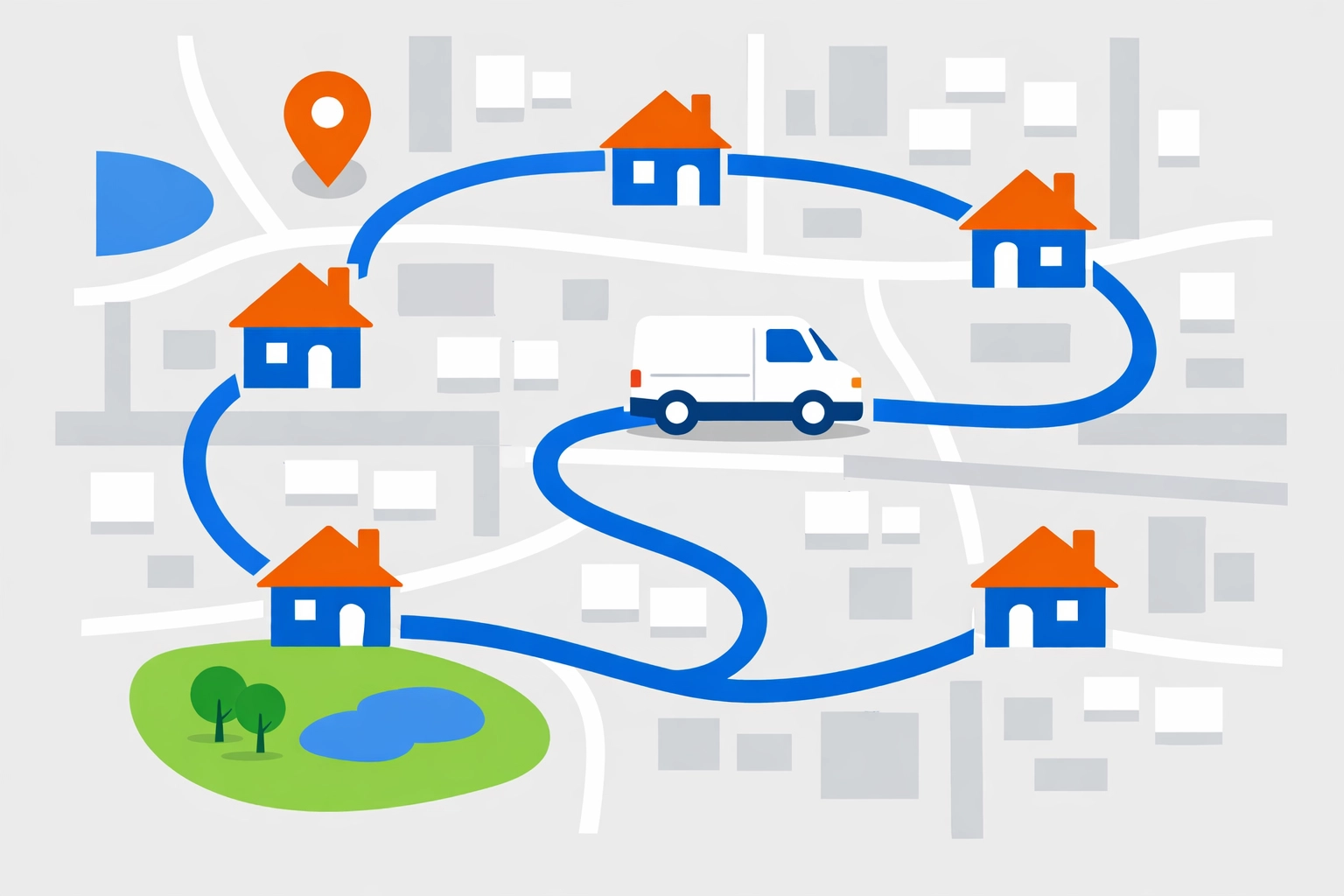
Most dispatchers look at a map and pick the technician who looks "closest." It seems logical, but it’s costing you a fortune. When you assign jobs based on a visual guesstimate rather than true geographic proximity, your technicians spend more time behind the wheel than in front of a furnace.
Mid-sized HVAC companies lose between $3,000 and $5,000 every single month just in wasted fuel and lost productivity. That is the cost of "near enough."
The Fix: You need route optimization that actually thinks. Modern scheduling tools use AI to cluster appointments by location. This isn't just about the shortest distance; it's about the smartest sequence. When your software handles the logic, your techs see more customers.
 {width="90%"}
2. Ignoring the "Skill Gap" in Assignments
Not every technician is built for every job. Sending a junior tech to troubleshoot a complex commercial VRF system is a recipe for disaster. It leads to longer job times, frustrated employees, and: worst of all: the dreaded callback.
If a four-hour install turns into an eight-hour ordeal because the tech was out of their depth, your entire day's schedule collapses. You pay overtime, you miss your afternoon appointments, and your reputation takes a hit.
The Fix: Stop relying on your memory. Your software should maintain detailed skill profiles for every person on your team. When a high-complexity job comes in, the system should only suggest technicians who have the "Expert" tag for that specific equipment. Right person, right job, the first time.
 {width="90%"}
3. The "One Hour" Appointment Fallacy
Using fixed time estimates for every service call is a lie you tell your schedule. A routine maintenance check on a three-year-old unit is not the same as a diagnostic on a twenty-year-old system in a cramped attic.
When you schedule every call for a 60-minute block, you are setting your team up for failure. One complication throws off every subsequent appointment for the rest of the day.
The Fix: Use data, not guesses. At Valortek, we believe in building buffer time into your day. Better yet, look for software that uses historical data to predict job duration based on the equipment age and customer history. If a specific house always takes two hours, your schedule should reflect that automatically.
4. Disconnected Parts and Inventory
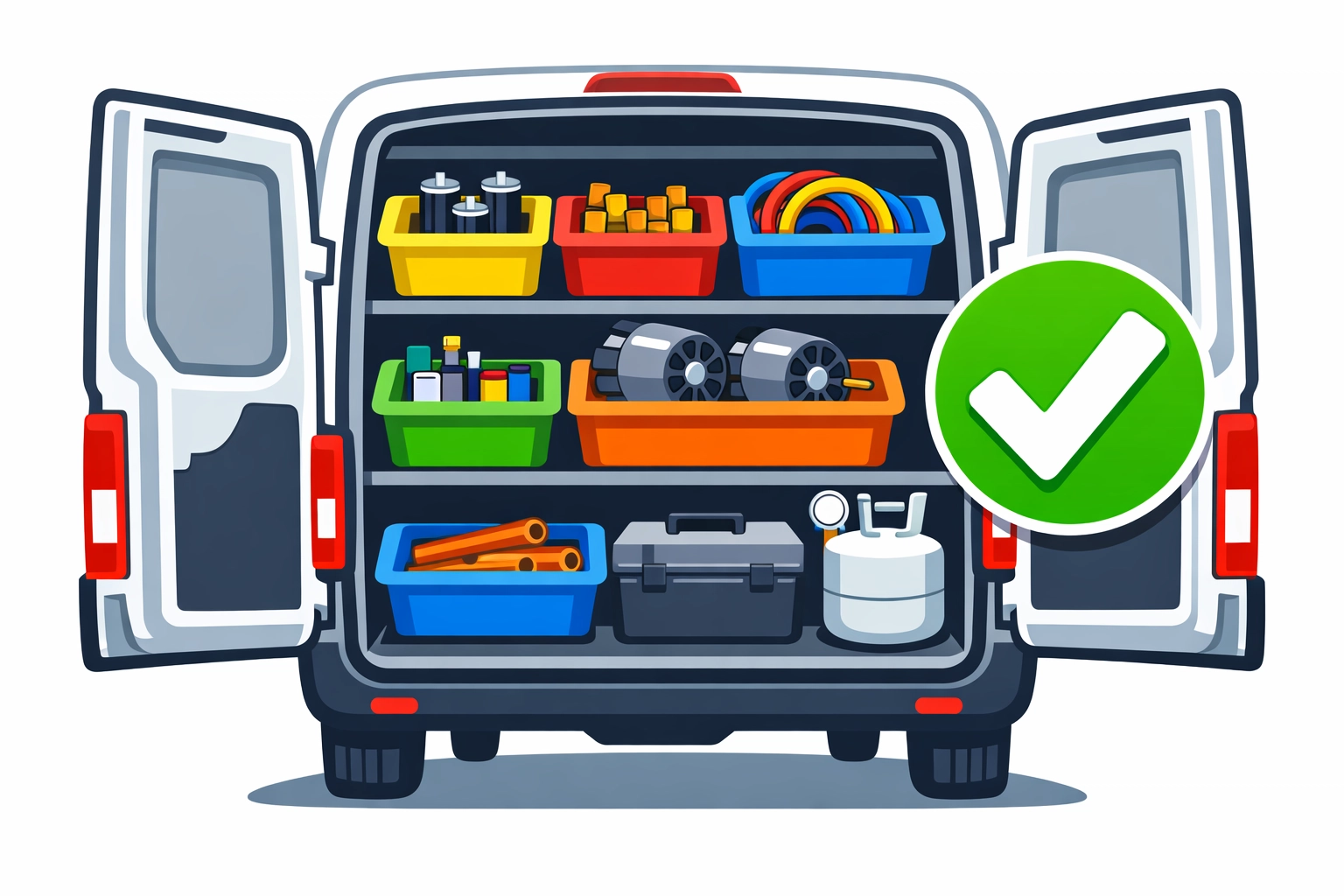
There is nothing more expensive than a "return trip." When a technician arrives on-site only to realize the required capacitor or blower motor isn't on the truck, you've just doubled your drive time and halved your profit on that job.
Many HVAC owners keep their scheduling and their inventory in two different worlds. One doesn't know what the other is doing.
The Fix: Integrate your inventory. Your scheduling platform should be able to "reserve" parts for a job the moment it is booked. If the part isn't in stock, the dispatcher should see a red flag before the tech even starts the engine.
 {width="90%"}
5. Double Booking and the Manual Sync Shuffle
If your office staff is manually copying data from a calendar into an accounting tool, you are asking for errors. Manual processes lead to overlapping assignments.
A missed appointment doesn't just cost you the revenue of that job: it costs you between $100 and $500 in lost overhead, rescheduling time, and brand damage. In 2026, there is no reason for a technician to show up at a locked door because the office "forgot to update the app."
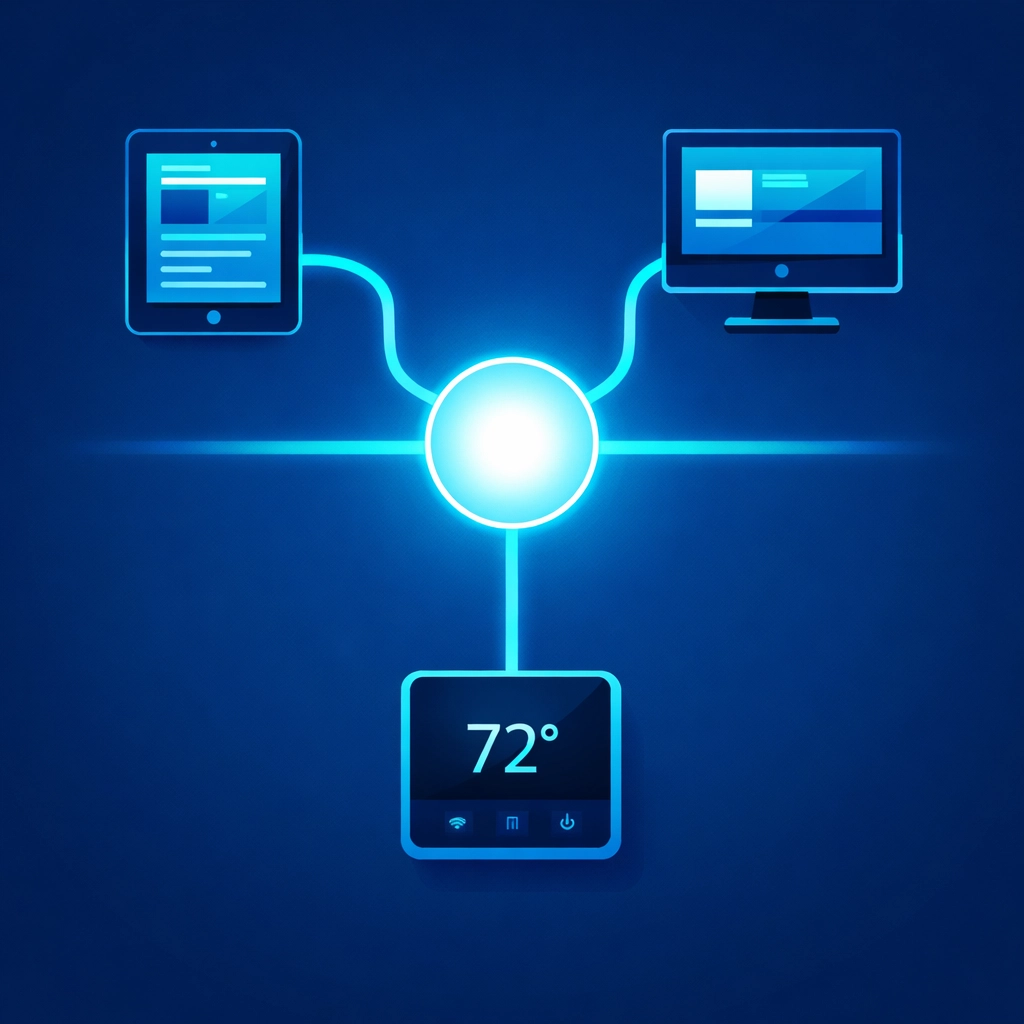
The Fix: Centralize everything. You need a real-time source of truth where the field and the office see the exact same data at the exact same second. No lag. No "I'll call you back when the system refreshes."
6. Operating in a Data Silo
Many HVAC businesses use one tool for scheduling, one for "marketing," and then try to force everything into QuickBooks at the end of the month. This creates a "manual bridge." Your staff becomes the bridge, spending hours every week re-keying invoices and customer details.
This slows down your billing cycle. If you aren't invoicing the moment the job is done, you are hurting your cash flow for no reason.
The Fix: You don't need a generic software suite; you need an HVAC-specific setup. Look for a system that handles service agreements, real-time dispatching, and billing in one flow. When the tech hits "Complete" on their tablet, the invoice should be ready for the customer to pay on the spot.
 {width="90%"}
7. Overpaying for Bloated "Enterprise" Features
This is the mistake that hurts the most. Many owners get talked into platforms like Housecall Pro or ServiceTitan. These are powerful tools, but they are often overkill for a growing trade business.
You end up paying hundreds of dollars a month for features you never touch. You're paying for their massive marketing budget and their complex enterprise overhead. You wanted a tool to help you schedule jobs, but you ended up with a second mortgage.
The Fix: Choose a partner, not just a vendor. At Valortek, we provide the same high-level scheduling, routing, and dispatching power but at a fraction of the cost.
No hidden fees. No 12-month lock-in contracts. Just the tools you need to run a profitable HVAC company.
 {width="90%"}
Why Valortek is Different
We aren't a massive corporation with a call center in another country. We are a team of business consultants who understand the trades. We know that if your software is too hard to use, your techs won't use it.
We built our operations platform to be minimalist and effective.
- Smart Routing: Save on gas.
- Skill Matching: Eliminate callbacks.
- Simple Billing: Get paid faster.
- Fair Pricing: Half the cost of the "big guys."
You don't need more complexity. You need more clarity. You need to know that when you look at your screen, your business is running the way it should.
If you are tired of fighting with your current software or you are still trying to run your multi-truck empire off a Google Calendar, it is time for a change. Let’s get your technicians where they need to be, without the headache.
 {width="90%"}
Our team is ready to show you how to streamline your HVAC operations. We don't do "sales pitches." We do solutions.
Ready to see how we can save you hours of admin time every week?
Questions? Contact us – we're happy to help you decide.
Authored by the Valortek Admin Team. To learn more about how we handle your data, see our Privacy Policy.
Leave a Reply