Category: Uncategorized

  • The Data Broker Economy: Who’s Buying Your Trade Business’s Location Data?

    The Data Broker Economy: Who’s Buying Your Trade Business’s Location Data?

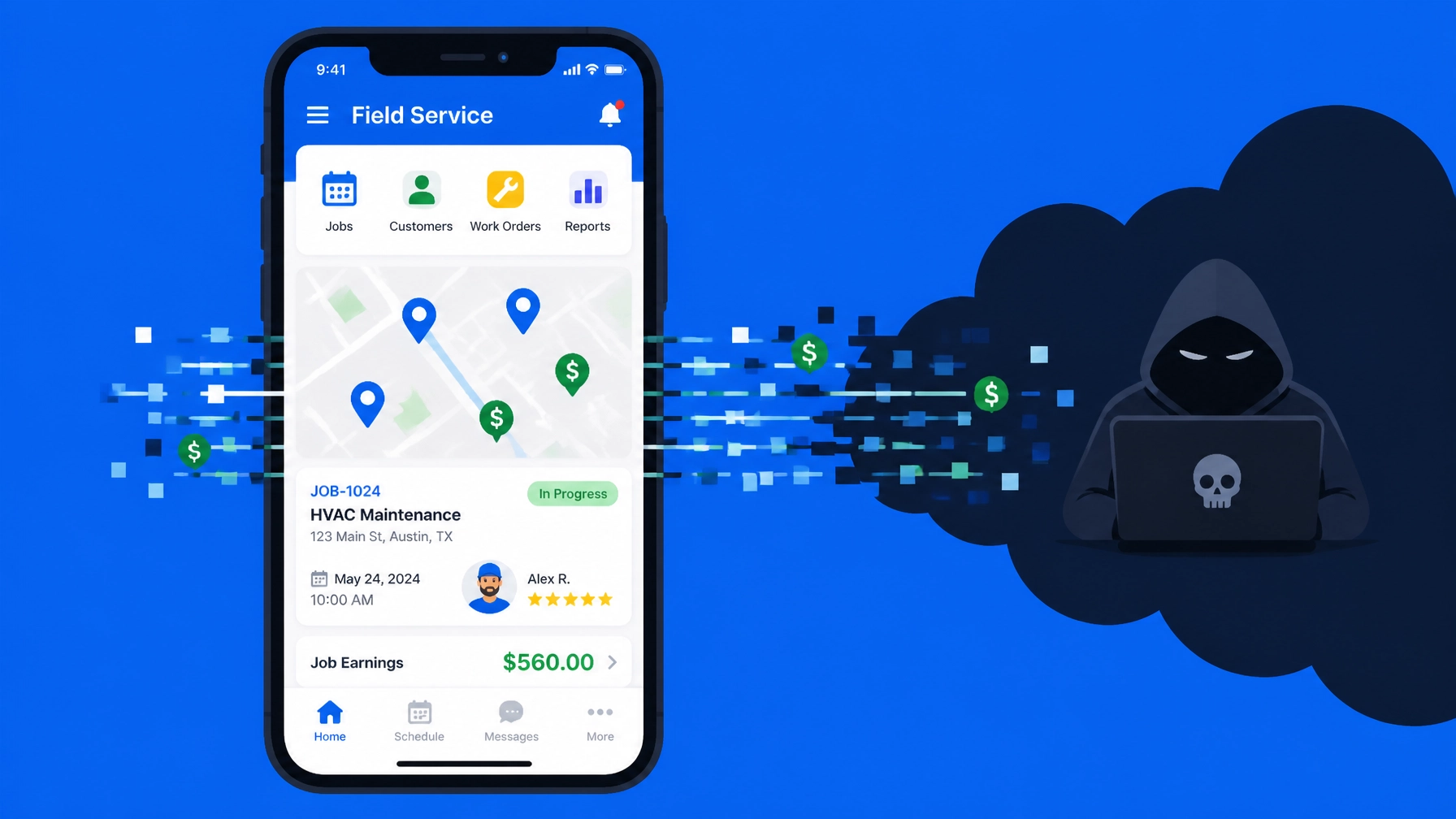
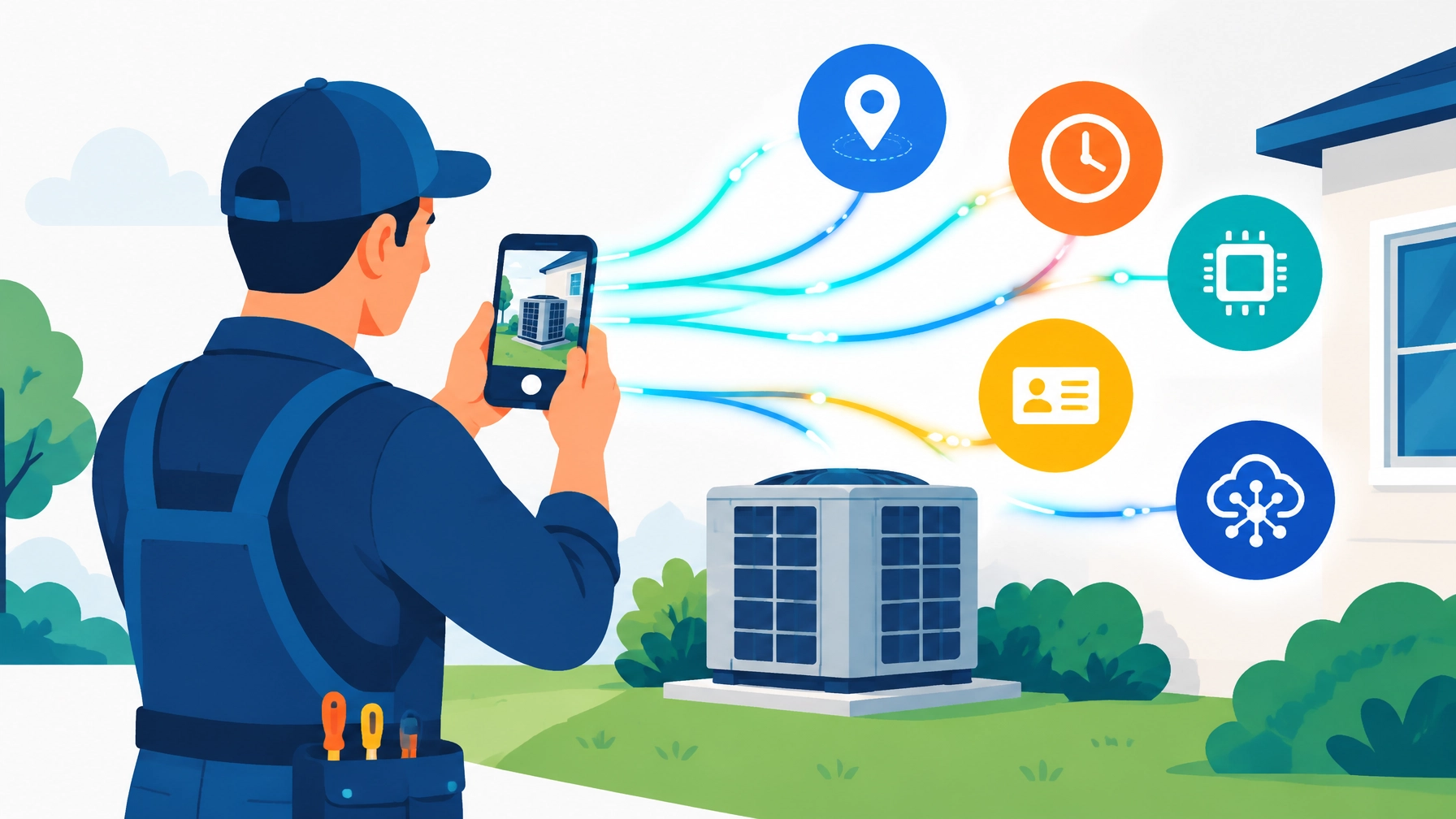
    Your phone knows where your trucks are.

    It knows which neighborhoods you serve. Which supply house you visit. How long you stay at a customer’s address. When your team starts work. When the last job ends.

    And someone else may own that data.

    Not you. Not your customer. A data broker.

    No hacking required. No dramatic breach required. Just an app, a tracker, and a privacy policy most people never read.

    This is the next problem small trade businesses need to understand.

    What is a data broker?

    A data broker is a company that collects information about people and businesses, organizes it, and sells access to that information.

    Think of it like a wholesale market for personal and business data.

    Apps collect pieces of information. Brokers combine those pieces. Buyers use the finished profiles for advertising, pricing, risk analysis, lending, and competition research.

    No single location point tells the whole story.

    A long-term route history does.

    Your location data can reveal:

    • Where your technicians live
    • Which neighborhoods generate the most jobs
    • How many calls you handle each day
    • Which commercial accounts you visit
    • When your business is busiest
    • Where your vehicles stop between jobs
    • How far your service area extends

    That’s valuable information.

    The journey of your data

    The path is usually simple.

    1. App

    You use an app for scheduling, routing, time tracking, payments, customer management, or team communication.

    The app asks for permissions.

    Location. Contacts. Device information. Usage data.

    You approve access because the app needs some of those features to work.

    2. SDK or tracker

    The app may contain third-party software called an SDK.

    You don’t need to remember the technical name. Think of an SDK as a plug-in installed inside the app.

    It may help show ads, measure usage, analyze behavior, or connect the app to another service.

    The problem is that some SDKs can collect data in the background.

    In August 2026, TechCrunch reported that Android apps may be sharing precise location data with advertisers and data brokers without developers realizing the setting was enabled.

    The report cited Electronic Frontier Foundation research. Some advertising SDKs inherit the app’s location permission. Once you approve location access, the tracker may receive it too.

    No separate warning. No clear second choice. Just one permission that opens more doors than you expected.

    3. Broker

    The tracker sends data to a third party.

    That third party may combine it with information from other apps, websites, public records, advertising systems, and commercial databases.

    Your route becomes a pattern.

    Your pattern becomes a profile.

    Your profile becomes a product.

    4. Buyer

    The broker sells access to buyers.

    That can include:

    • Advertisers targeting businesses or neighborhoods
    • Insurers estimating risk or activity
    • Lenders evaluating business behavior
    • Competitors studying service territories and demand
    • Government agencies purchasing location intelligence

    No direct relationship with you. No conversation with you. Just a transaction involving information created by your work.

    A small business scenario

    Let’s say Maya owns a four-person electrical company.

    She uses an app for electrician scheduling software, GPS time tracking, dispatching, and invoicing. Her technicians use the app from their phones.

    The app works well. Maya approves location access because she wants accurate arrival times and route visibility.

    A year later, a competitor launches a new service area.

    The competitor starts advertising heavily in the same neighborhoods Maya serves. It also approaches two commercial property managers that Maya visits regularly.

    Then Maya notices something else.

    The competitor’s new service area mirrors her busiest routes. Its advertising runs during the exact hours when her team is most active.

    Maya asks how they know.

    She eventually learns that a third-party tracker inside the app was sending location data to an advertising company. That data was combined with other records and made available to commercial buyers.

    Maya’s customer list may not have been sold as a spreadsheet.

    The result can still be almost as revealing.

    Routes, timing, addresses, and visit patterns can expose how a small business operates.

    No enterprise analytics team. No complex espionage. Just data leaving an app every day.

    Regulators are finally paying attention

    The FTC has made it clear that this isn’t a theoretical risk.

    In January 2025, the Federal Trade Commission finalized an order against Mobilewalla. The order banned the company from selling sensitive location data and restricted how it could use data collected through online advertising auctions.

    The same month, the FTC finalized an order against Gravy Analytics and Venntel. The companies were prohibited from selling, disclosing, or using sensitive location data, except in limited national security or law enforcement situations.

    In May 2026, the FTC announced a Kochava settlement and proposed order that would prohibit Kochava and its subsidiary from selling or sharing sensitive location data without affirmative express consent.

    That’s meaningful progress.

    It also comes late.

    Regulatory action can stop future conduct. It can require deletion. It can force better consent practices.

    It can’t guarantee that every copy, profile, report, or inference created from old data disappears.

    No rewind button. No perfect cleanup. Just a reminder that prevention matters more than recovery.

    Privacy labels don’t stop brokers

    App store labels help. They don’t solve the problem.

    Google Play’s Data safety section asks developers to disclose what data their apps collect and share.

    Apple’s App Privacy labels show whether data is linked to you or used to track you.

    Those labels are summaries.

    They don’t create a wall around your data. They don’t stop a tracker from sending information to a service provider. They don’t tell you every buyer who may eventually receive an aggregated profile.

    They also depend heavily on developer disclosures.

    That’s important because developers may not understand everything an embedded SDK does. The August TechCrunch report showed exactly how that gap can happen.

    No label means “your data stays inside the app.”

    No label means “nobody else can use it.”

    Just a disclosure that may be difficult to interpret and even harder to verify.

    Our commitment to data sovereignty

    We believe your business data should serve your business.

    Not advertisers. Not data brokers. Not competitors.

    Valortek is building tools for small trade businesses that need practical control over their operations. Our Operations app helps locksmiths, plumbers, HVAC companies, electricians, and appliance repair businesses manage schedules, jobs, routes, invoices, payments, and teams.

    We don’t sell, rent, or trade personal information to third parties for their marketing purposes. Our privacy policy explains what we collect, why we collect it, and when information may be shared with service providers.

    Our security practices include encryption in transit and at rest, access controls, authentication requirements, regular security updates, and secure cloud storage.

    The Operations app also supports offline work. Your team can continue handling jobs when service drops, then sync when the connection returns.

    Our Finance app extends that control to payroll, bill payments, tax planning, cash flow forecasting, advisor access, and budget tracking.

    No data marketplace. No hidden resale model. Just software built around your company’s work.

    That’s what we mean by data sovereignty.

    Cut your business out of the broker economy

    You can take action today.

    ✅ Audit app permissions

    Review location, contacts, photos, microphone, and background activity permissions.

    Turn off anything the app doesn’t truly need.

    ✅ Check every app your team uses

    Look beyond your main field service management software.

    Review route apps, time clocks, payment apps, messaging tools, mileage trackers, and free utility apps.

    Free often means your data is part of the business model.

    ✅ Ask direct questions

    Ask each software provider:

    • Do you sell or rent customer data?
    • Do you share precise location data?
    • Which third-party SDKs or trackers are installed?
    • Can I disable analytics and advertising collection?
    • Where is my business data stored?
    • What happens to my data when I cancel?
    • Can I export and delete my data?

    Vague answers are useful answers.

    They tell you to keep looking.

    ✅ Limit precise location access

    If an app only needs location during a job, don’t give it permanent background access.

    Use the narrowest permission that supports the feature.

    ✅ Avoid unnecessary advertising SDKs

    If you’re choosing an app, ask whether it includes advertising trackers.

    A professional business tool shouldn’t need to monetize your route history.

    ✅ Read the privacy policy’s sharing section

    Skip straight to “Information Sharing and Disclosure.”

    Look for words like:

    • Advertising
    • Data partners
    • Affiliates
    • Analytics
    • Marketing purposes
    • Location intelligence
    • Business transfers

    You don’t need to be a lawyer.

    You need to know who gets your information.

    ✅ Choose software with clear ownership rules

    The best software for plumbers, electricians, HVAC contractors, locksmiths, and appliance repair companies should make data handling easy to understand.

    No confusing maze. No “it depends” answer.

    When comparing a Housecall Pro alternative, ask what happens to your data after the trial, after cancellation, and after an employee leaves.

    When comparing a QuickBooks alternative for contractors, ask whether financial records are used for anything beyond providing the service.

    Good field service scheduling software should help you run your company without turning your company into a product.

    That applies to HVAC scheduling software. Electrician scheduling software. Appliance repair scheduling software. Locksmith business software. Invoicing software for contractors.

    Your routes are not advertising inventory.

    Your customer history is not a broker’s product.

    Your financial records are not a lender’s shortcut.

    Take control of the data your business creates

    Your phone knows where your trucks are.

    That doesn’t mean the rest of the data economy should know too.

    No hidden buyers. No unclear permissions. Just software and policies that respect the work you’ve built.

    We’re a small team building for small businesses. We think your data should stay connected to your company.

    For questions about Valortek’s data practices, contact us at info@valortek.us.

    Start Your Free Trial

    Questions? Contact us – we're happy to help you decide.

  • Your Apps Are Selling Your Data: App Store Privacy Risks Every Small Trade Business Owner Should Know

    Your Apps Are Selling Your Data: App Store Privacy Risks Every Small Trade Business Owner Should Know

    Most trade business owners think the App Store is a fortress.

    You download a scheduling app for your plumbing business. You assume Apple or Google checked it out. You assume your data is safe behind that little "Get" button.

    That assumption is expensive.

    The truth? App stores check for malware and viruses. They don't check if the developer is quietly selling your technicians' location history to a data broker. They don't check if your customer’s invoice totals are being scraped to build a profile of your business's health.

    No security. No privacy. Just the illusion of safety.

    We’re not here to scare you. We’re here to wake you up. If you're a locksmith, plumber, or HVAC tech, your data is your most valuable asset. It’s time you started protecting it.

    The "Free" App Trap

    We’ve all seen them. The "free" or $10/month field service management software.

    How do they pay their developers? How do they keep the servers running?

    They aren't running a charity. If you aren't paying for the product, you are the product. Your data: where you go, who you visit, and how much you charge: is worth more than a monthly subscription.

    No honesty. No transparency. Just a hidden price tag.

    When you use "cheap" software, you might be saving $100 a month. But you're losing control of your business intelligence. You're handing your competitor’s marketing agency a map of every neighborhood you’ve dominated this year.

    A Cautionary Tale: The Leak at Joe’s Plumbing

    Meet Joe. Joe runs a successful plumbing outfit with six trucks.

    To save a few bucks, Joe downloaded a trendy new scheduling app from the Play Store. It looked great. It was easy to use. It even handled his invoicing software for contractors needs for a fraction of the cost of the big guys.

    Six months later, Joe noticed something strange.

    His regulars were getting targeted ads from a massive regional competitor. The ads weren't random. They were offering "Emergency Leak Repair" exactly two days after Joe's techs had visited those same houses for inspections.

    Joe’s app was selling "anonymized" location data.

    The data brokers didn't need Joe's name. They just needed the GPS coordinates and the timestamps. They saw Joe's trucks sitting at specific addresses for two hours. They knew a job was happening. They sold that "intent data" to the highest bidder.

    Joe didn't just lose a few customers. He lost his competitive edge.

    No loyalty. No protection. Just profit at your expense.

    The Location Tracking Nightmare

    As an owner, you need to know where your techs are. You need HVAC scheduling software or locksmith business software that keeps the team moving.

    But does the app developer need to know?

    Most mobile apps request "Always Allow" location access. Once they have it, they can track that device 24/7.

    • Precise Location: They know exactly which house your tech is at.
    • Coarse Location: They know the general neighborhood.
    • Background Tracking: They know where your tech goes after work.

    This isn't just a privacy risk for your employees. It's a business risk. If a data broker knows your service routes, they know your market share. They know which zip codes are underserved. They know exactly where to send their next direct mail campaign.

    Financial Scraping: Your Margins are Public

    It’s not just about where you are. It’s about what you’re making.

    Many "affordable" apps use data scraping to look at your financial health. They see your job totals. They see your payroll. They see your debts.

    Apple and Google have "Privacy Labels," but these are often self-reported by the developer. A developer might say they don't share "Payment Info," but they might still collect "Other Financial Info."

    What is "Other Financial Info"? It’s your business's lifeblood.

    It’s the average ticket price for your electrician scheduling software. It’s the frequency of your high-ticket installs. It’s the data that banks and predatory lenders use to target you with high-interest loans when they see your cash flow dip.

    No respect. No boundaries. Just data mining.

    Why Valortek is Different: Data Sovereignty

    We built Valortek because we were tired of seeing small businesses treated like cattle.

    We don't sell your data. We don't track your techs for our own gain. We don't scrape your invoices to build marketing profiles.

    We believe in Data Sovereignty. That means your data belongs to you. Period.

    Our field service management software is designed to keep your business private. We provide the tools you need to run your operations: scheduling, invoicing, and job management: without the spyware.

    No spying. No selling. Just service.

    We aren't trying to be the "cheapest" app by selling your soul on the side. We’re offering a Housecall Pro alternative that actually costs less because our business model is simple: you pay for the software, and we provide the software.

    How to Protect Your Trade Business Today

    You don't have to be a tech genius to protect your data. You just have to be intentional.

    1. Check the Labels: Before downloading any best software for plumbers or HVAC tools, read the "App Privacy" section. Look for "Data Used to Track You." If location is on that list, run.
    2. Audit Permissions: Go into your team’s phone settings right now. Change location access from "Always" to "While Using the App."
    3. Ask the Vendor: Send an email to your current software provider. Ask them plainly: "Do you sell or share any anonymized data with third-party brokers?" If they give you a 10-page legal document instead of a "No," you have your answer.
    4. Switch to Sovereignty: Choose a partner that respects your boundaries.

    Your business is built on trust. Your customers trust you to be in their homes. You should be able to trust the tools in your pocket.

    The Valortek Promise

    We are a small team. We are real people.

    We know that for a locksmith or an appliance repair pro, every dollar counts. That’s why we offer revolutionary pricing: $99/month for our Operations app.

    We give you more features for half the cost of the "big guys." And we do it without snooping in your files or tracking your trucks.

    It’s time to stop paying for software with your privacy.

    Start owning your data. Start growing your business. Start with Valortek.

    Start Your Free Trial

    Questions? Contact us – we're happy to help you decide.

  • Is Your App Store Privacy Policy Bad for Business? Why Data Sovereignty Matters for Trade Pros

    You downloaded a new app to help run your locksmith business. It was free. Or maybe it was just a few dollars. Either way, it felt like a win. You put in your customer list. You started tracking your jobs. You felt organized.

    But you didn't read the fine print. Nobody does. That fine print is where your business data goes to die. Or rather, it’s where your data goes to be sold, tracked, and used against you.

    We’re not talking about hackers in dark basements. We’re talking about the platforms you trust every day. Apple and Google. They run the stores. They set the rules. And those rules often favor their bottom line, not your privacy.

    No hidden fees. No secret trackers. Just honest business. That’s what you deserve. But it’s not always what you get.

    The "Nutrition Labels" You Aren't Reading

    Apple calls them "App Privacy Details." Google calls them "Data Safety" labels. Think of them like the nutrition labels on a box of cereal. They tell you what’s inside. But instead of sugar and fat, they list your location, your contacts, and your financial info.

    Most trade pros ignore these labels. You’re busy. You’ve got a leak to fix or a circuit to wire. You just want the app to work. But these labels are a window into how much of your business is being scraped.

    Did you know many "free" invoicing apps track your location even when you aren't using the app? They say it’s for "analytics." We say it’s unnecessary.

    No stalking. No profiling. Just tools.

    When you see a label that says "Data Linked to You," it means the app is building a profile of your business. They know who your customers are. They know where you go. They might even know how much you’re charging. This isn't just "tech stuff." This is your competitive advantage being handed over to a database.

    Why Big Tech Wants Your Location

    Your van is your office. Your route is your secret sauce. If you’re an HVAC tech, your location data tells a story. It shows which neighborhoods are growing. It shows which parts of town have the oldest units.

    Google and Apple love this story. They want to sell that story to advertisers.

    Imagine your biggest competitor suddenly starts running ads in the exact neighborhood you just serviced. Is it a coincidence? Maybe. Or maybe the "free" scheduling app you used sold your aggregate location data to an ad network.

    No selling leads. No sharing routes. Just privacy.

    Data sovereignty means you own the story of your business. It means your movements through the city belong to you, not to a server in Silicon Valley. If an app needs your GPS to find a job site, that’s fine. If it needs your GPS to "improve user experience" while you’re at lunch, that’s a red flag.

    The Financial Scraper Trap

    Many trade pros are moving away from spreadsheets. That’s good. But many are moving into "budget" finance apps that come with a hidden cost. These apps often use third-party tools to "scrape" your bank data.

    They see your payroll. They see your taxes. They see your profit margins.

    Why does a simple calculator app need to see your bank balance? It doesn't. But by collecting this data, these companies can build a financial profile of the "small trade business" market. They can then sell insights to lenders, insurance companies, or even your suppliers.

    No prying eyes. No data scraping. Just security.

    We believe your finances are your business. Period. When you use a tool that isn't built on the principles of data sovereignty, you aren't the customer. You’re the product. Your financial struggles and successes are just data points for someone else’s algorithm.

    What is Data Sovereignty?

    It sounds like a big, corporate buzzword. It isn't. Data sovereignty is a simple concept. It means your data is subject to the laws of the country where it was collected. More importantly, it means you have the final say over what happens to it.

    Most apps store your data in "the cloud." But the cloud is just someone else’s computer. Often, that computer is in a different country with different laws.

    If you’re a plumber in the US, why is your customer’s address sitting on a server in a region with no privacy protections? It shouldn't be.

    No overseas loopholes. No legal grey areas. Just control.

    Data sovereignty matters because it protects you from "scope creep." Today, it’s just "anonymous usage data." Tomorrow, it’s a change in the Terms of Service that allows the platform to train an AI on your customer communication. If you don't own the data, you don't own the future of your business.

    How Valortek is Different

    We built Valortek because we were tired of seeing small businesses get bullied by big software. We saw plumbers paying $300 a month for tools that sold their data on the side. We saw locksmiths using spreadsheets because they didn't trust the "free" apps.

    We decided to do things differently.

    • We don't sell your data. Not now. Not ever.
    • We don't track your location unless it's strictly for a job you're currently on.
    • We believe in radical transparency. Our pricing is simple ($99/month). No "data mining" discounts.
    • We prioritize security. Your data is encrypted and stored according to strict sovereignty standards.

    No corporate games. No hidden agendas. Just Valortek.

    We’re a small team. We’re just people who want to help you grow. We know that if we treat your data with respect, you’ll trust us to help run your business. That’s the only way we want to win.

    Stop Being the Product

    The "App Store" model is designed to make data collection easy. It’s designed to make you click "Accept" without thinking. But as a business owner, you have to think. You have to protect your assets. And your data is your most valuable asset.

    Check your settings. Look at those privacy labels. Ask yourself: "Why does this app need this?"

    If the answer isn't "to help me do my job," then it’s probably "to help them make more money." You’ve worked too hard to build your trade to let it be sold off in pieces to the highest bidder.

    Ready to switch to a platform that actually cares about your privacy? We're here when you're ready.

    Start Your Free Trial

    Questions? Contact us – we're happy to help you decide.