Blog

  • The Real Cost of Housecall Pro + QuickBooks (And Why 80% of Small Trades Are Overpaying)

    {width="90%"}

    Most locksmiths, plumbers, and electricians think they need Housecall Pro. They think they need QuickBooks. They think they need both to work together.

    They are wrong.

    In 2026, the "best-of-breed" software stack is actually a trap. It is a trap that costs the average small trade business over $1,000 in unnecessary fees every single year. We see it every day at Valortek. We see hard-working business owners paying for two subscriptions when they only need one.

    No more hidden fees. No more messy syncs. Just the truth about your bank account.

    The Integration Tax

    Let’s talk about the Housecall Pro "Basic" plan. It looks cheap on the website. But there is a catch.

    If you want to sync your jobs to QuickBooks Online, you can’t stay on the Basic plan. You are forced to upgrade to the Essentials tier. That jump alone takes you from $59 a month to $149 a month.

    You haven’t even paid for QuickBooks yet. You are just paying Housecall Pro for the permission to talk to QuickBooks.

    That is the "Integration Tax." It is a $1,080 annual penalty for wanting your software to talk to each other.

    The Math Doesn’t Lie

    Let’s break down the annual cost for a small team of 2–5 people.

    The Housecall Pro Stack:

    • Housecall Pro Essentials: $149/month ($1,788/year)
    • QuickBooks Online Essentials: $60/month ($720/year)
    • Add-ons (Sales proposals, etc): $80/month ($960/year)
    • Total: $3,468 per year.

    The Valortek Approach:
    At Valortek, we believe in simplicity. We don’t charge you a premium just to keep your books. We don't force you into tiers that unlock basic functionality.

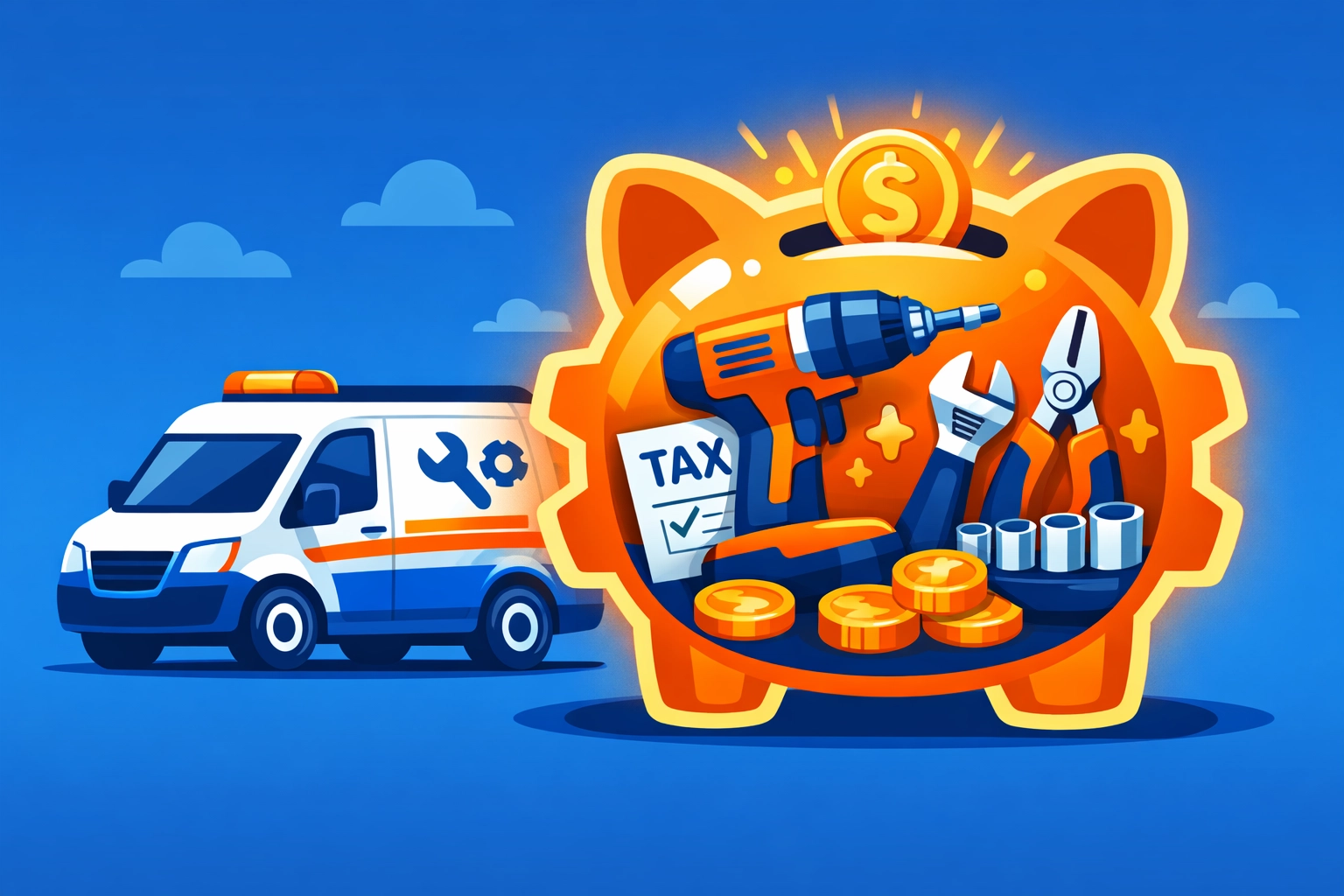
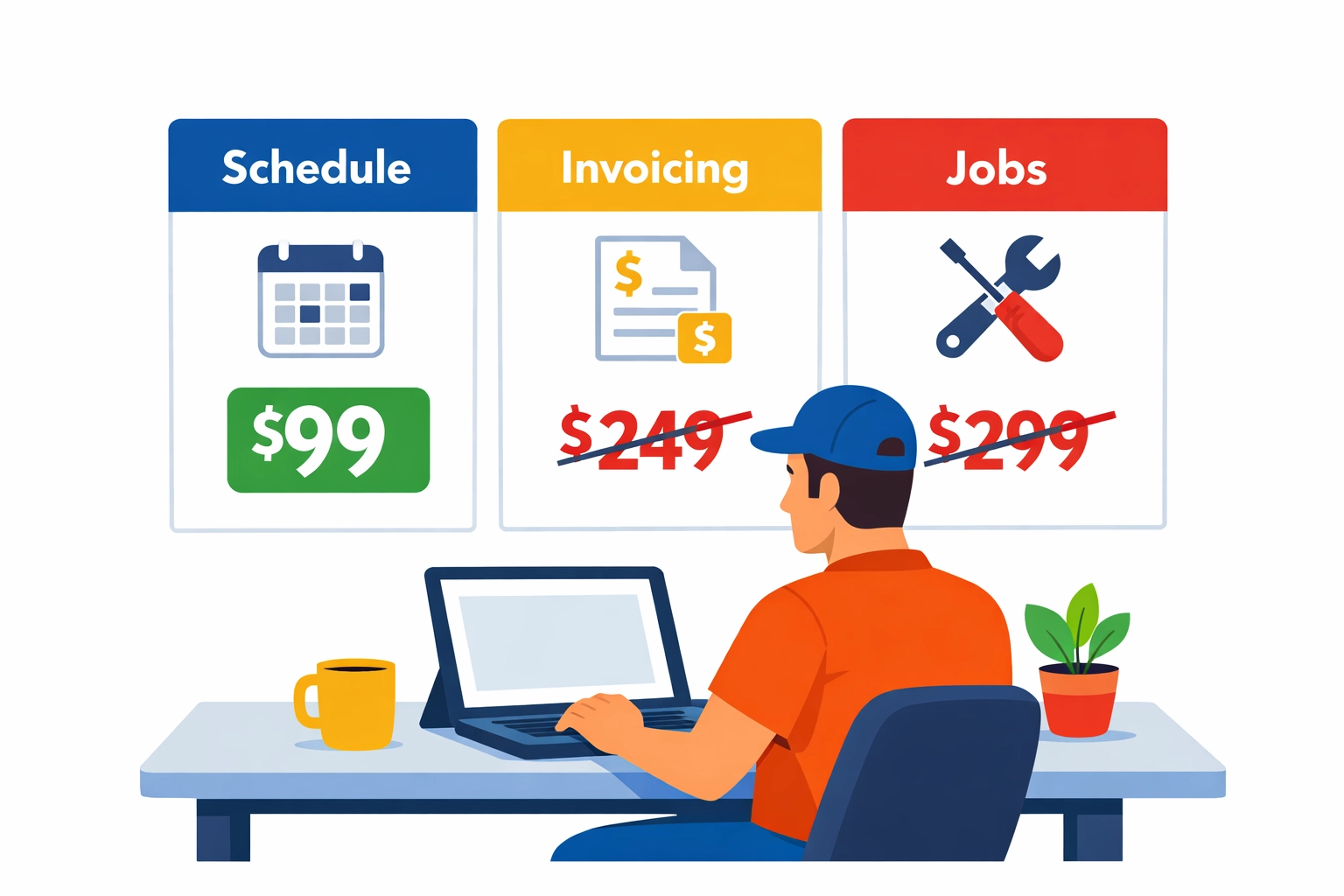
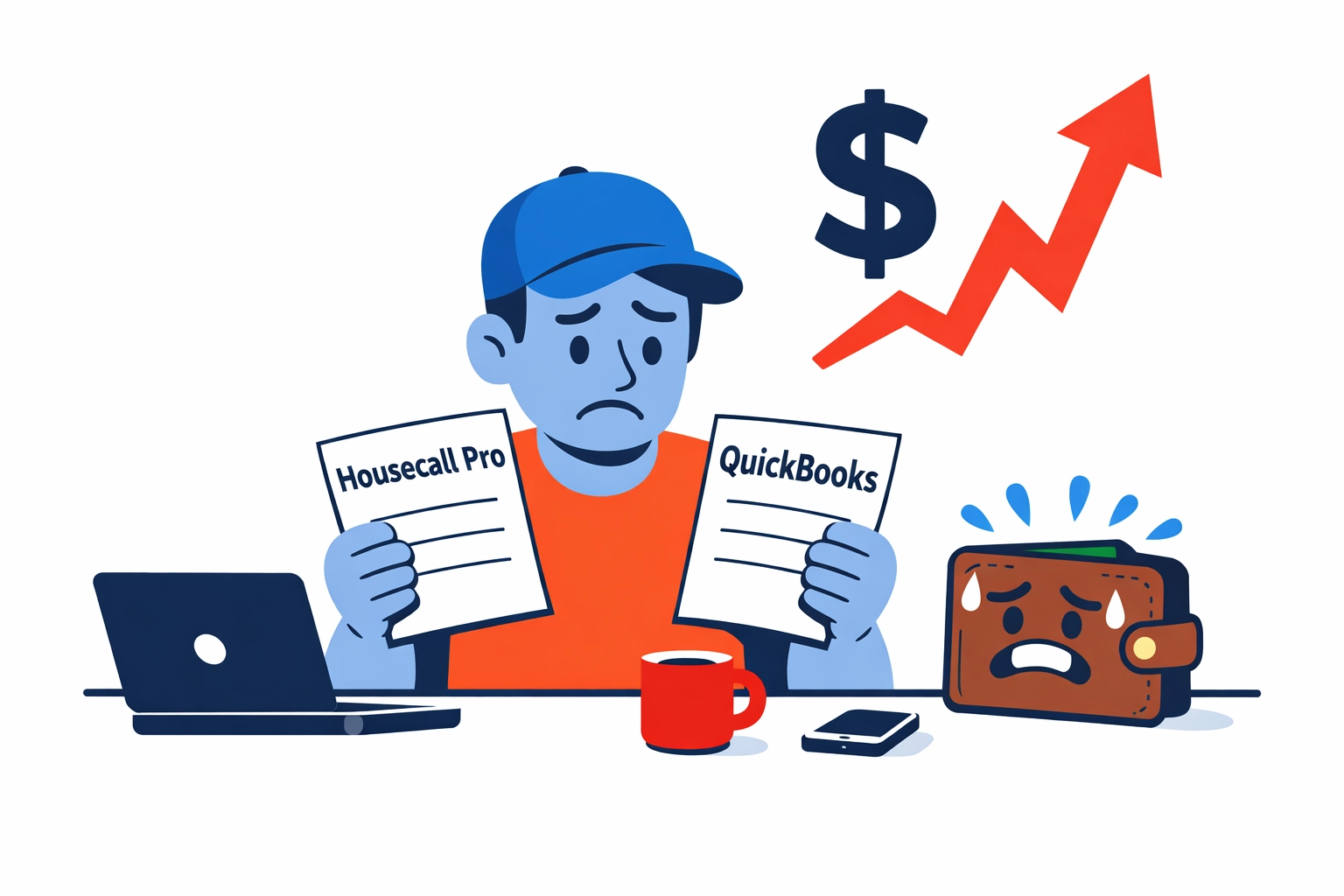
    Trade business owner looking at two software bills labeled Housecall Pro and QuickBooks with an inflated total.{width="90%"}

    When you add it all up, the average plumber or electrician is overpaying by at least $1,200 annually just on software subscriptions. That is money that could go toward a new van, better tools, or a well-deserved vacation.

    Electrician standing by a piggy bank representing savings on trade business software fees.{width="90%"}

    Why the "Sync" is Killing Your Productivity

    It isn't just about the money. It is about the time.

    No software integration is perfect. When you use Housecall Pro and QuickBooks together, you are managing two separate databases.

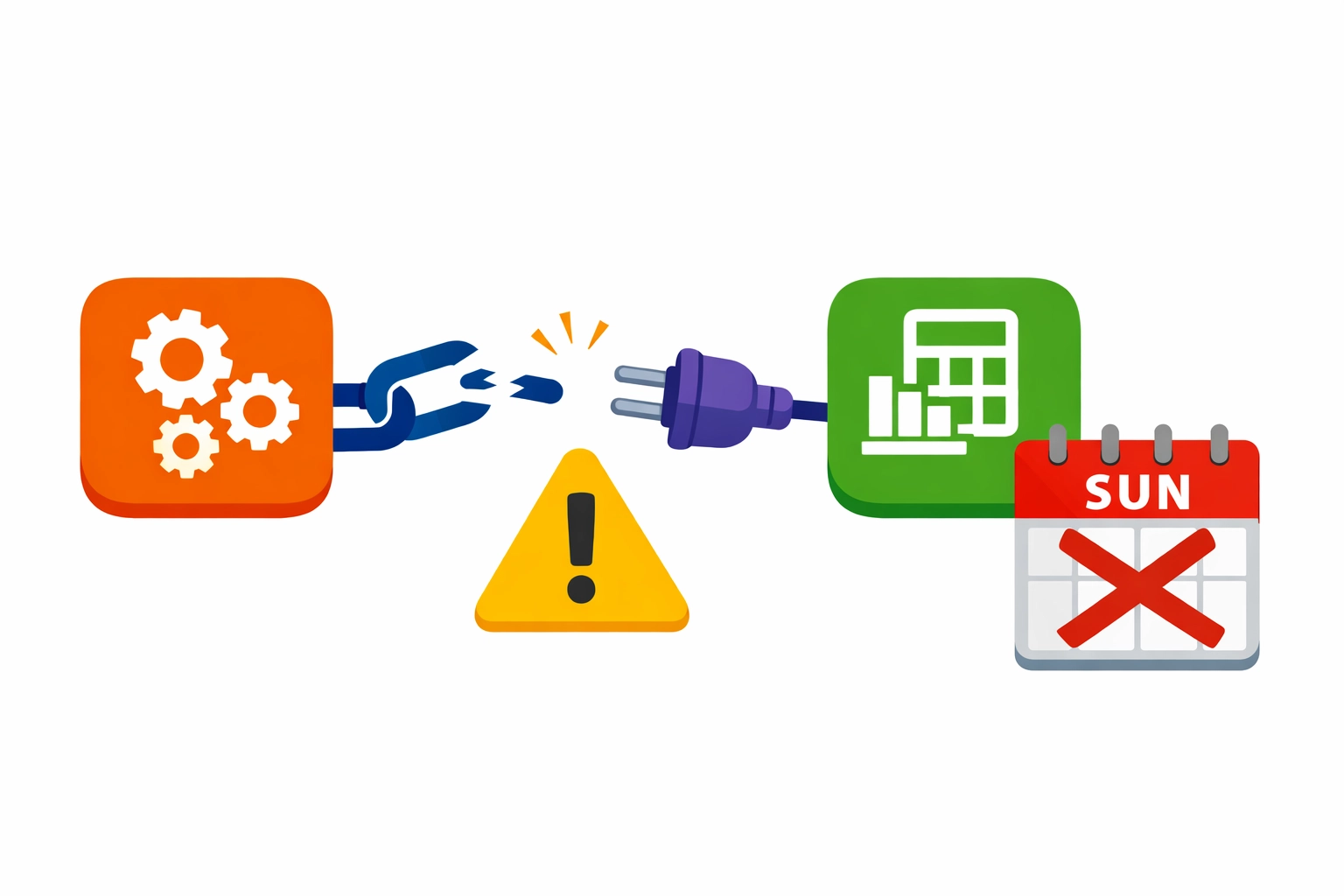
    Broken connector between two app icons with a warning symbol and a Sunday calendar crossed out to show the sync headache.{width="90%"}

    You have a customer list in HCP. You have a customer list in QB. You have an invoice in HCP. You have an invoice in QB.

    What happens when the sync breaks?

    • Duplicate customers appear in your accounting software.
    • Payments are marked as paid in your field tool but remain "open" in your books.
    • Sales tax rates don't match between the two systems.
    • Your Sunday nights are spent "reconciling" data instead of resting.

    No double entry. No manual matching. No Sunday night headaches.

    We built Valortek Inc to solve the data problem at the source. By keeping your operations and your financial data in one unified system, the "sync" becomes obsolete. The data is already where it needs to be.

    The Hidden $1,000 Tax Prep Hole

    Ask your CPA how much they charge to clean up a messy QuickBooks file.

    Most small trades don't realize that their software is making their accountant's job harder. When Housecall Pro pushes data into QuickBooks incorrectly, your accountant has to spend hours "cleaning" the books at the end of the year.

    If your CPA charges $150 an hour, and they spend an extra day fixing your "integrated" data, you just lost another $1,200.

    80% of small trades are overpaying because they are paying for software that creates more work for their professionals.

    Valortek company logo featuring a bold blue “V” inside a square icon{width="90%"}

    Locksmiths: The Cost of Complexity

    For a solo locksmith or a two-person team, every dollar counts. You are out on the road, jumping from re-keys to emergency lockouts. You don't have an office manager. You are the office manager.

    Do you really need a $300-a-month software stack?

    No enterprise bloat. No complex workflows. Just a way to get paid and track your profit.

    Locksmiths often find that the "Max" plans offered by big industry players are full of features they will never use. You are paying for a call center module when you only need a digital invoice. You are paying for a "Sales Proposal Tool" add-on when you just need to quote a high-security deadbolt.

    Plumbers and Electricians: The Complexity Trap

    Plumbers and electricians often have more complex parts and inventory needs. Housecall Pro tries to handle this, but then it has to push that inventory data to QuickBooks.

    This is where the wheels fall off.

    QuickBooks inventory management is notoriously difficult for field service. When the two systems try to sync "COGS" (Cost of Goods Sold), the numbers often get scrambled.

    You end up with a balance sheet that says you have $50,000 in copper pipe that doesn't actually exist.

    At Valortek, we provide business consulting that looks at the whole picture. We don't just sell you a tool; we help you fix the process.

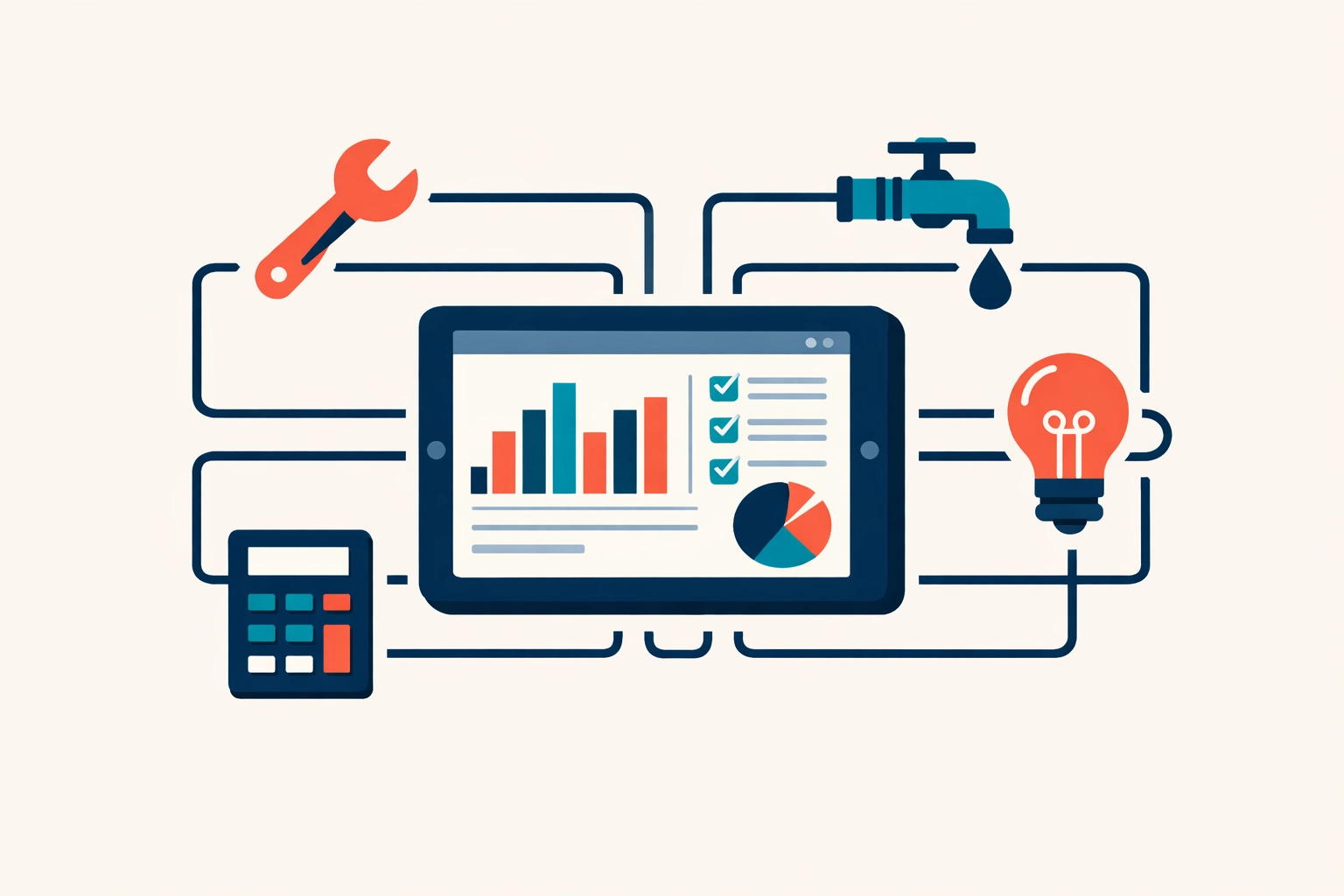
    Unified digital dashboard connecting plumbing and electrical operations with accounting tools.{width="90%"}

    Stop Paying for Features You Don't Use

    Housecall Pro is a massive company. They have thousands of employees and massive marketing budgets.

    Who pays for that? You do.

    They build features for "Enterprise" companies with 50 vans. Then they force you to pay for those features by bundling them into your subscription tiers.

    We are a small team. We work with small teams. We don't have a 500-person sales floor to support. That means we don't have to overcharge you to stay in business.

    No fancy corporate retreats. No Super Bowl ads. Just clean code and honest pricing.

    The Reality of 2026

    The world has changed. In 2026, you shouldn't have to be a "Software Integrator" just to run a plumbing business.

    The promise of the "Cloud" was that everything would work together perfectly. The reality is that we've just created more subscriptions to manage.

    If you are a locksmith, plumber, or electrician, take five minutes today. Look at your bank statement. Add up your Housecall Pro bill and your QuickBooks bill. Then add the "cleanup" fees from your tax preparer.

    If that number is over $2,500 a year, you are in the 80% that is overpaying.

    We Can Help

    We aren't just another software company. We are Valortek Inc, and we specialize in business consulting for the trades.

    We help you strip away the waste. We help you simplify your tech. We help you keep more of the money you earn.

    Ready to see how much you can save?

    No pressure. No long-term contracts. Just a better way to run your business.

    Start Your Free Trial

    Questions? Contact us – we're happy to help you decide.

  • Stop Wasting 10 Hours a Week: How AI Cuts Field Service Admin Without the Hype

    You didn’t start an HVAC or plumbing business because you loved paperwork. You started it because you’re good at the trade. You like fixing things. You like helping people.

    But as your business grows, the "admin tax" starts to pile up.

    Every Sunday night, you’re staring at a stack of invoices. Every Monday morning, you’re playing phone tag with three different techs and five frustrated customers. It feels like you’re running a call center, not a service company.

    Most field service owners lose at least 10 hours a week to pure administrative noise. That’s 40 hours a month. That’s an entire work week gone.

    We’re here to help you take that week back. And no, you don’t need a $50,000 enterprise software suite to do it. You don’t need a degree in data science. You just need AI that actually works for the trades.

    The Admin Problem is a Growth Killer

    Admin isn't just boring. It’s expensive.

    When you spend two hours a day manually entering data into QuickBooks or re-typing customer addresses into a calendar, you aren't growing. You're idling.

    No new leads. No billable hours. Just busy work.

    Small teams of 1 to 10 employees feel this the most. You don't have a dedicated "dispatch department" or a "billing squad." You have a spouse helping out or maybe one person in the office trying to do it all.

    When the admin load gets too heavy, things start to break.

    • Technicians show up at the wrong house.
    • Parts aren't ordered on time.
    • Invoices get forgotten.

    It’s a cycle of chaos that keeps small businesses small.

    Stop the Hype: What AI Actually Is

    Before we go further, let's clear the air.

    When most people talk about AI, they show you robots or sci-fi interfaces. They talk about "machine learning models" and "neural networks."

    We don’t care about any of that. And neither should you.

    In the world of field service, AI is just a smarter set of hands. It’s software that can read, remember, and react.

    No more manual data entry. No more clicking "copy and paste" fifty times a day. No more guessing which tech is closest to a job.

    At Valortek Inc, we focus on the grounded reality of your workday. We use AI to kill the repetitive tasks that drain your energy.

    No fluff. No buzzwords. Just more time in your day.

    Valortek company logo

    Flat illustration of automated work orders reducing paperwork for a small field service team.

    1. Automated Work Order Processing

    Think about the last time a new lead came in through your website or via text.

    What happened? You probably had to read the message, look up the customer in your database, manually create a job, and then type in the service details.

    AI changes that.

    Modern field service tools can now read an incoming request and automatically populate a work order. It identifies the service type (e.g., "Leaking Water Heater"), the urgency, and the customer’s history.

    No manual typing. No "oops, I got the address wrong." Just a ready-to-dispatch job waiting for your approval.

    Research shows that automating these repetitive administrative tasks allows office staff to focus on complex responsibilities rather than data entry. It’s the difference between being a "typist" and being a "manager."

    2. Solving the Scheduling Jigsaw Puzzle

    Scheduling is a nightmare.

    Tech A is in the middle of a job that’s taking longer than expected. Tech B just finished early. A "Priority 1" emergency call just came in across town.

    Usually, this means 20 minutes of frantic phone calls and moving blocks around a digital calendar.

    AI handles this in real-time.

    It looks at traffic patterns, technician skill sets, and current job progress. If a tech is running late, the system can automatically adjust the afternoon schedule and send a text to the next customer.

    No more "Where are you?" calls. No more angry customers waiting on a porch. Just a smooth, optimized route that saves gas and time.

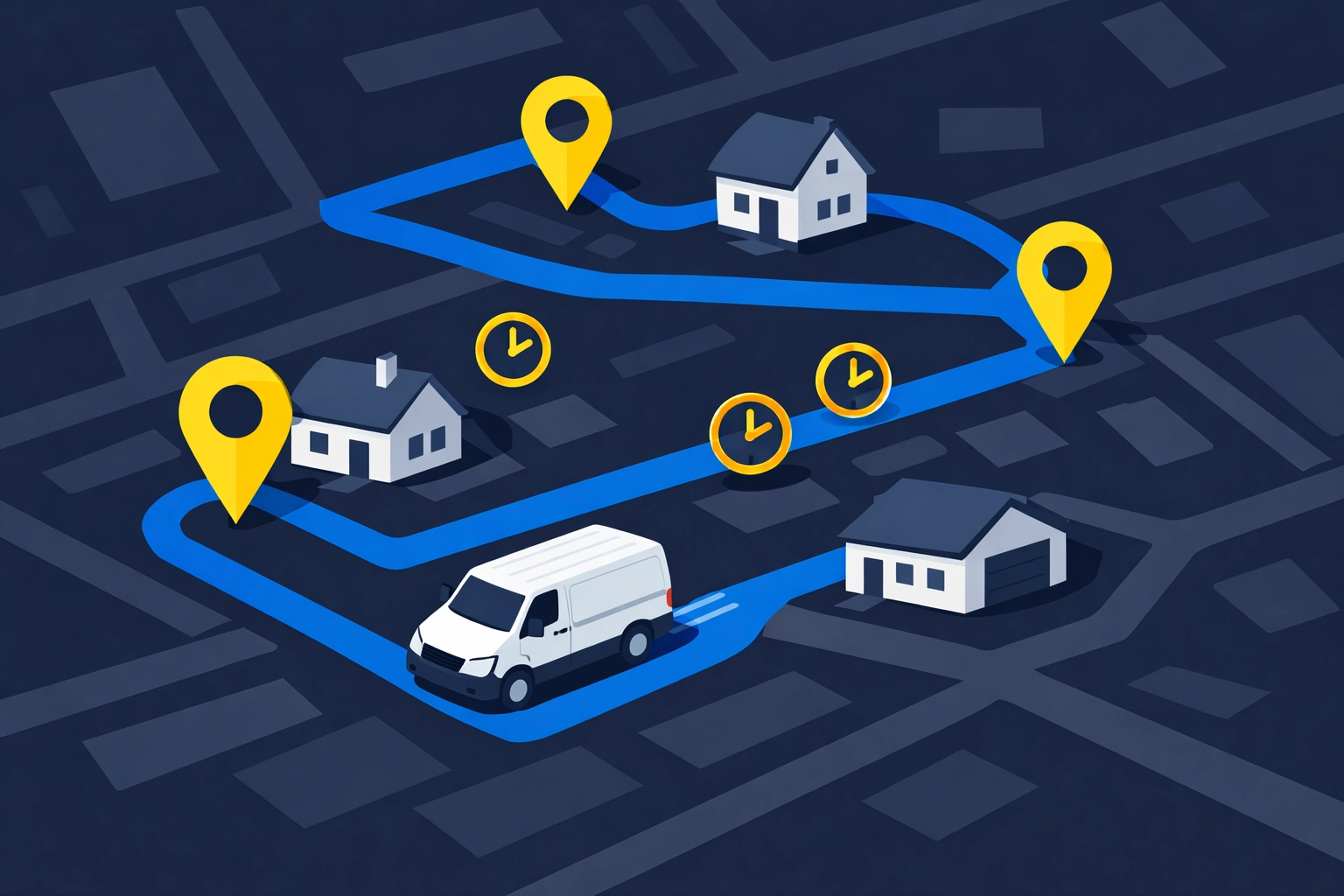
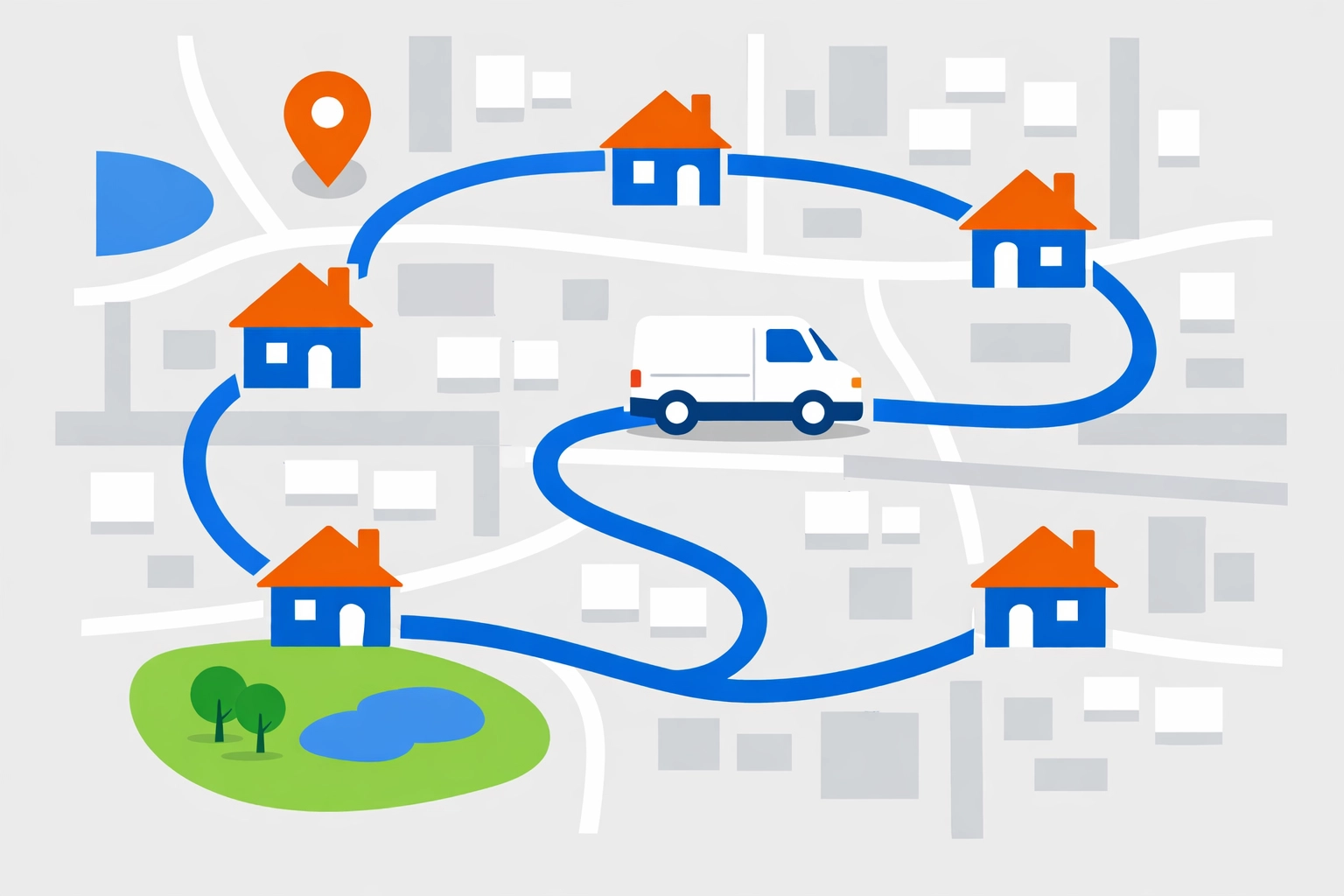
    Illustration of a service van following an optimized route on a map for efficient field service scheduling.

    3. The "Perfect" Pre-Work Brief

    One of the biggest time-wasters in the field is the "information gap."

    A technician arrives at a job. They don't know what model of furnace the customer has. They don't know that the last guy who was there three months ago found a cracked heat exchanger. They spend 15 minutes digging through old notes or calling the office.

    AI can automatically compile "pre-work briefs."

    Before the tech even puts the truck in gear, the AI draws from your historical data and knowledge base. It gives the tech a summary:

    • "Customer has a 2018 Carrier unit."
    • "Last service was Nov 2025."
    • "Previous technician noted the filter was severely clogged."

    The tech arrives prepared. They look like a pro. The job gets done faster.

    4. Reducing the Customer Service Burden by 80%

    Most of your office phone calls are the same three questions:

    1. "When will the tech be here?"
    2. "How much is the diagnostic fee?"
    3. "Can I reschedule?"

    Handling these calls manually is a massive time sink.

    Real-world data shows that implementing smart automated communication can reduce the workload for customer service staff by up to 80%.

    AI-driven chatbots and automated SMS sequences can handle the "low-value" questions. If a customer wants to reschedule, they click a link and do it themselves. If they want to know where the tech is, they check a live map.

    You only pick up the phone when it actually matters.

    5. Invoicing That Doesn't Require a Weekend

    If you’re still waiting until Friday to "catch up on billing," you’re losing money.

    The longer you wait to send an invoice, the longer it takes to get paid.

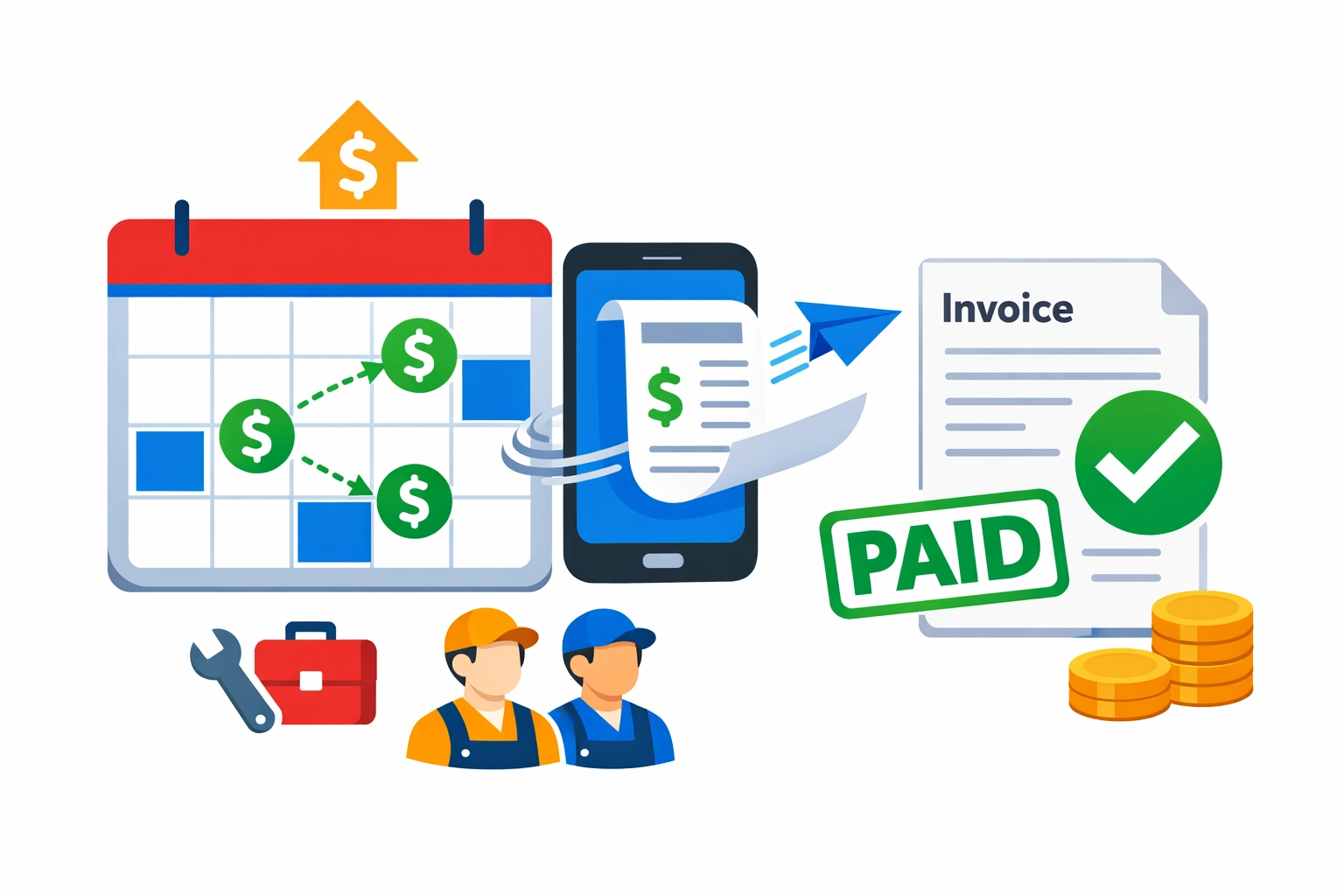
    With AI-integrated job management, the invoice is generated the second the tech hits "Complete." The system pulls the parts used, the labor hours recorded, and the tax rates for that specific zip code.

    The tech shows the customer the tablet, gets a signature, and the invoice is sent before the truck leaves the driveway.

    No manual calculations. No "remind me what parts we used." Just cash flow.

    Mobile tablet displaying a completed digital invoice for faster field service billing and payments.

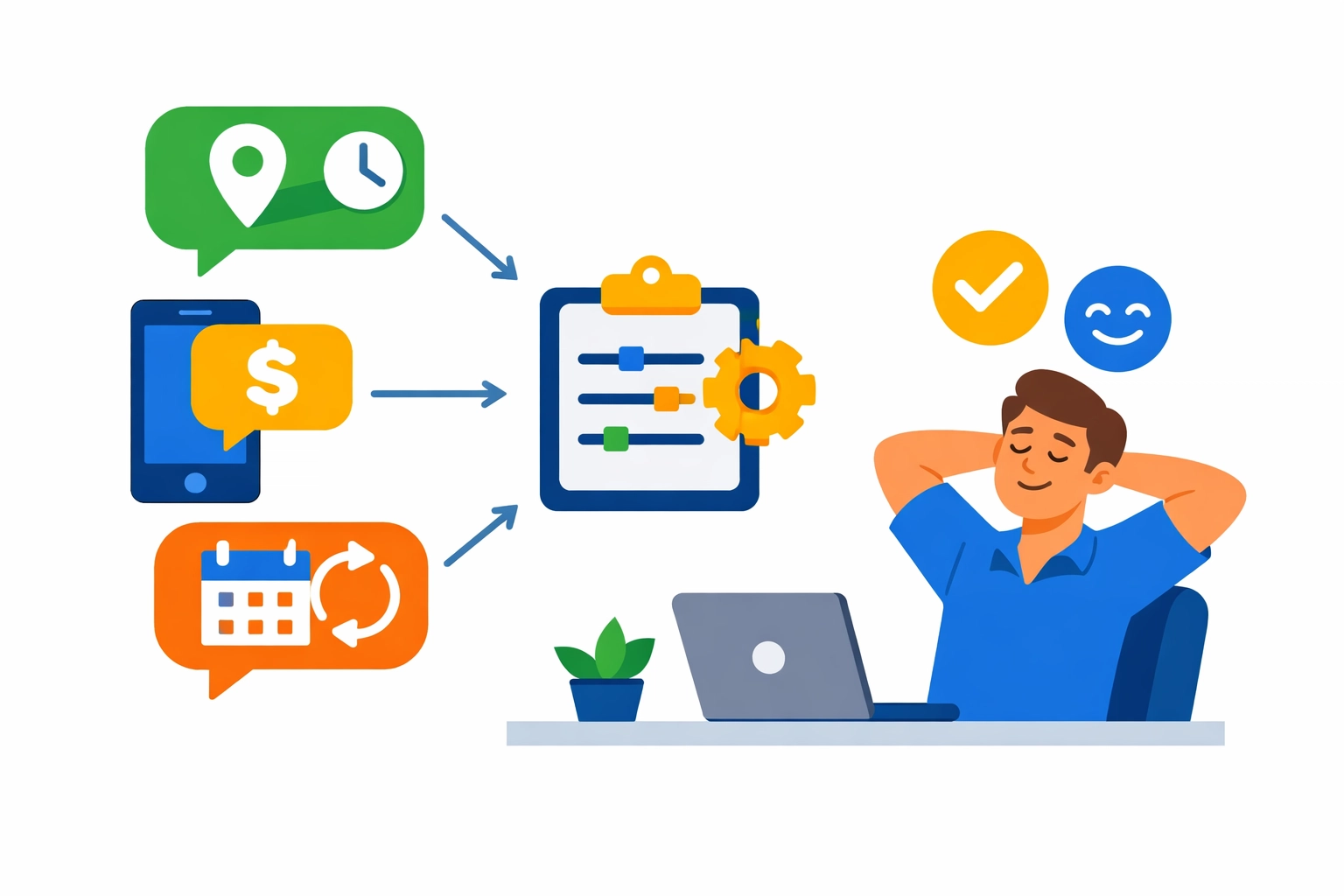
    Flat illustration of automated customer SMS and chat handling common scheduling and pricing questions.

    The Valortek Philosophy: Simple Over Complex

    We’ve seen the "big name" software options out there.

    They’re full of buttons you’ll never click. They charge you hundreds of dollars a month for features you don't need. They take six months to set up.

    We don't do that.

    We believe software should be invisible. It should sit in the background and make your life easier, not give you a new full-time job managing the software itself.

    No enterprise bloat. No confusing dashboards. Just clean, efficient job management.

    We’re a small team, just like you. We value transparency and honesty. We’re not trying to sell you a "digital transformation." We’re trying to give you 10 hours of your life back.

    How to Get Started Without the Headache

    You don't have to automate everything overnight. In fact, you shouldn't.

    Start with one thing. Maybe it’s automated appointment reminders. Maybe it’s digital invoicing.

    Once you see the time savings, you’ll never go back to the old way. You’ll find that you’re less stressed. You’re more profitable. And you might actually get to enjoy a Sunday evening without thinking about a spreadsheet.

    Ready to see how grounded, practical AI can change your business?

    We built Valortek to be the solution we wanted for ourselves. Simple. Powerful. Fairly priced.

    You can read more about how we handle your information in our privacy policy, or learn more about our team on our author page.

    The "admin tax" is optional. It’s time to stop paying it.

    Start Your Free Trial

    Questions? Contact us – we're happy to help you decide.

  • The Play Store Privacy Gap: Is Your Trade Business Data Safe?

    Your trade business runs on apps now.
    Scheduling. Estimates. Payments. Photos. GPS. Texts.

    And most of those apps come from one place.
    Google Play.

    Here’s the uncomfortable part.
    Google Play is great at distribution. It’s not the same thing as protection.

    No paranoia. No conspiracy. Just reality.
    If you install random apps to “run the business,” you’re handing over more than you think.

    The “Privacy Gap” is simple

    Google Play requires disclosures.
    It doesn’t guarantee behavior.

    No magic badge. No automated truth serum. Just developer promises.

    Apps must fill out the Data Safety section.
    They’re supposed to disclose what they collect, share, and secure.

    That’s useful.
    But it’s not the same as “your business data is safe.”

    The gap is the space between:

    • what an app says it collects
    • what it actually collects
    • what it can collect if you grant permissions
    • what third parties collect through SDKs and integrations

    You don’t need to be a security expert.
    You just need a system.

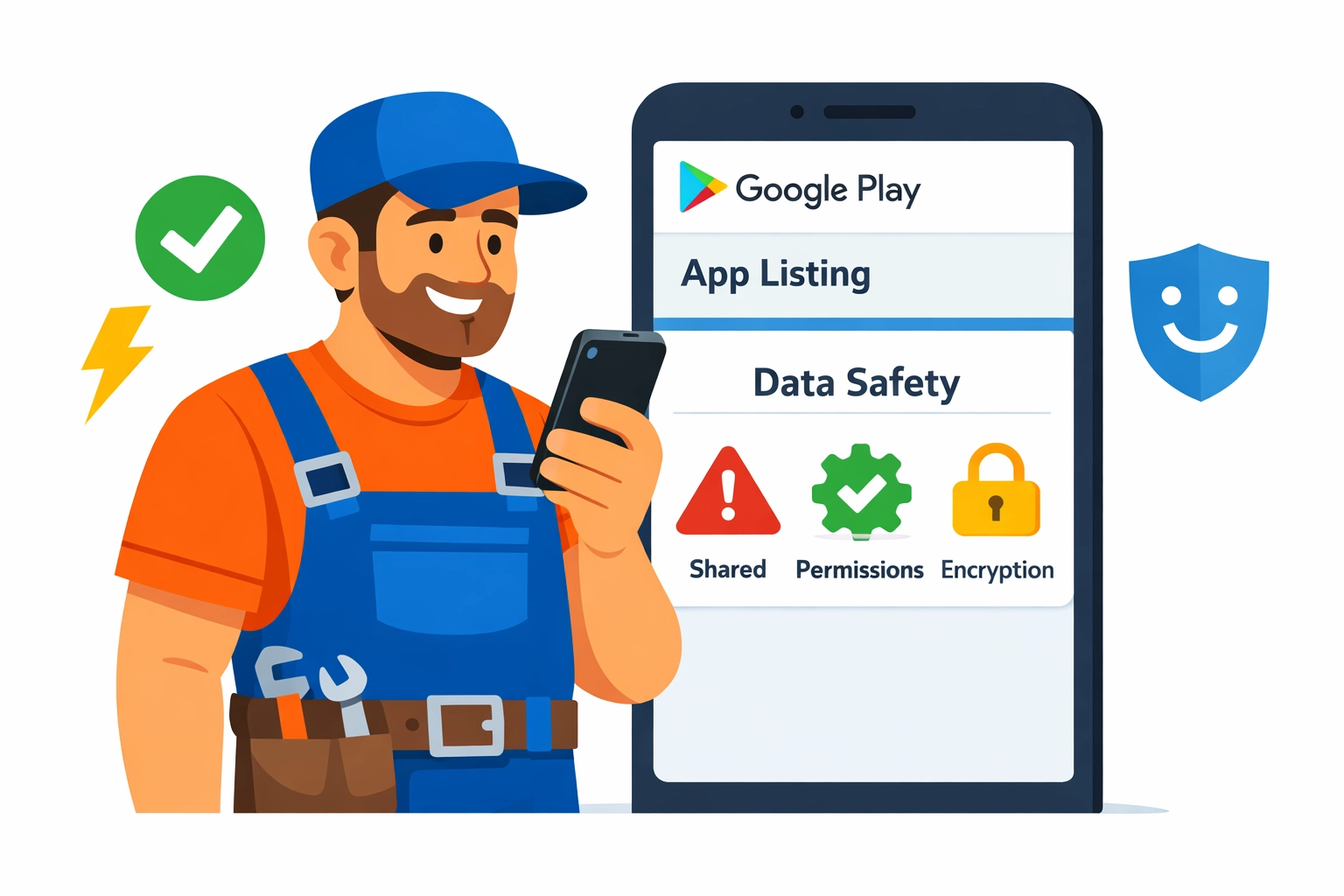
    Illustration of a trade business owner reviewing a Google Play app listing and the Data Safety panel.

    What “business data” are we talking about?

    For trade businesses, app data isn’t abstract.
    It’s your competitive edge.

    Think:

    • Customer list (names, addresses, phone numbers)
    • Job history (notes, diagnoses, parts used)
    • Pricing (rates, margins, discounts)
    • Photos (before/after, equipment labels, serial numbers)
    • Crew info (employee names, schedules, locations)
    • Payment data (invoices, payment status, sometimes card-related metadata)
    • Messages (texts, emails, in-app chat)
    • Location data (tech GPS, route patterns, job density)

    No fluff. No “data is the new oil.” Just this:
    If the wrong app leaks it, you’ll feel it.

    What Google Play collects vs what apps collect

    Let’s separate two things people mix together.

    1) Google Play / Google services (the platform layer)

    If you use Android and the Play Store, Google itself may process data tied to:

    • your Google account
    • device identifiers
    • app installs and updates
    • diagnostics and performance
    • purchase and subscription activity (if applicable)

    This is mostly “platform” stuff.
    It’s big, broad, and not always avoidable.

    2) The apps you install (the app layer)

    This is where trade businesses get exposed.

    The app can collect:

    • what you type into it (customer records, notes, quotes)
    • what you upload (photos, attachments)
    • what it can access (contacts, files, location) if you allow it
    • what it sees through embedded third-party tools (analytics, ads, crash logs)

    No one’s coming for your business specifically.
    But your data can still end up in places you didn’t intend.

    The Data Safety section: helpful, but not a shield

    Google Play’s Data Safety section is a start.
    It’s also easy to misunderstand.

    Here’s how to read it like an operator, not a lawyer.

    “Data collected” doesn’t mean “data sold”… but it might move

    Apps can “collect” data for:

    • app functionality
    • analytics
    • personalization
    • advertising
    • fraud prevention
    • legal compliance

    Those buckets sound fine.
    They’re also broad enough to drive a truck through.

    “Data shared” is the line that matters most

    Shared usually means sent to another company.
    Analytics providers. Marketing tools. Cloud services. Payment processors.

    Sometimes that sharing is necessary.
    Sometimes it’s just convenient for the developer.

    “Data encrypted in transit” is not the finish line

    Encrypted in transit means HTTPS.
    Good. Expected. Not special.

    What you also want to know:

    • Is data encrypted at rest?
    • Who inside the vendor can access it?
    • Do they support role-based access?
    • Do they log admin access?
    • What’s their breach history and response plan?

    Google Play won’t answer that for you.
    You have to.

    The quiet risk: permissions you grant once and forget

    Most data exposure doesn’t come from a dramatic hack.
    It comes from “Allow” taps.

    No scare tactics. No doom. Just common patterns we see.

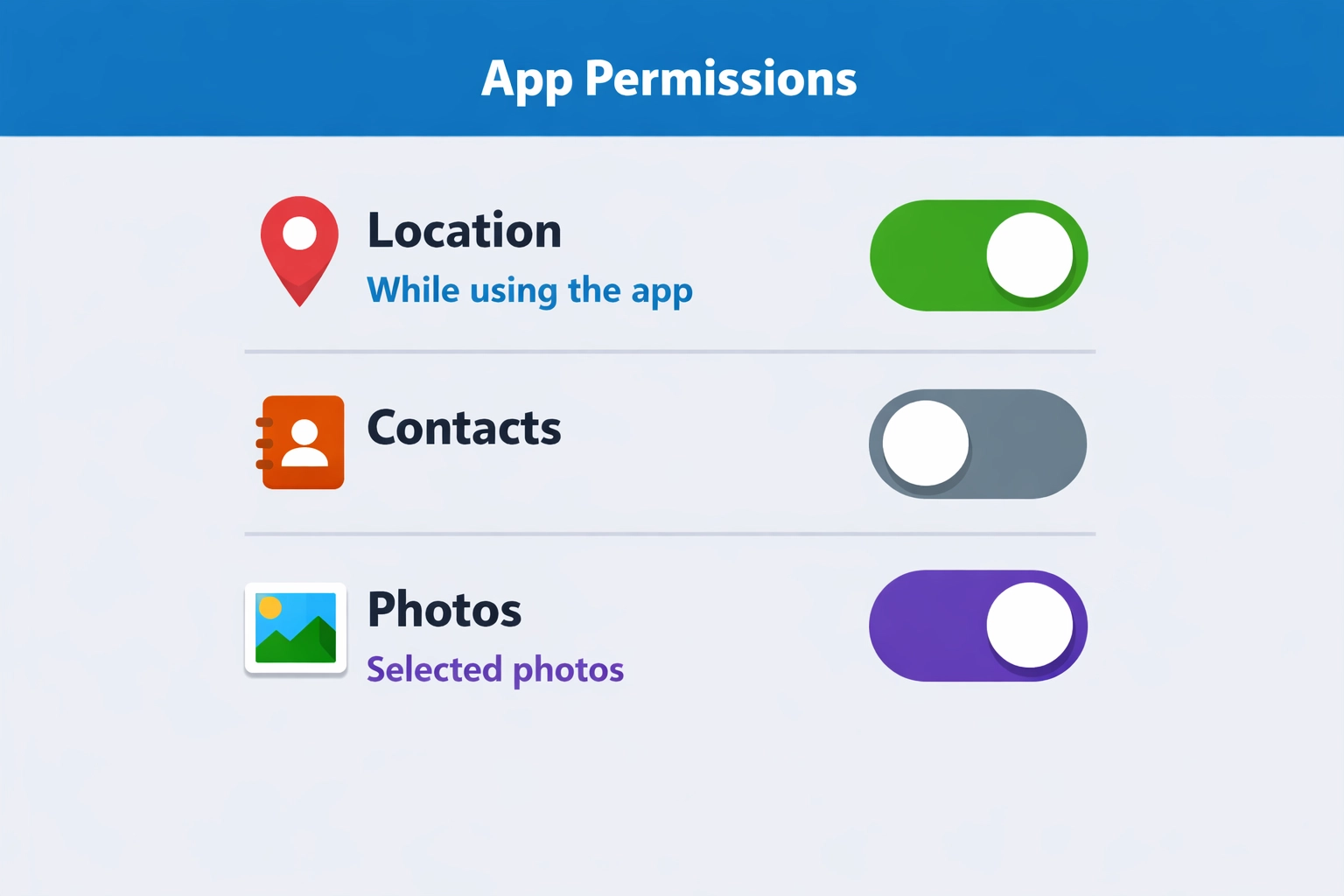
    Location permission (the big one for trades)

    Lots of apps ask for location.
    Sometimes it’s legit (dispatch, arrival ETAs). Sometimes it’s not.

    Risk in plain English:

    • your job density becomes visible in aggregate
    • tech home addresses can be inferred (start/end points)
    • route patterns can reveal high-value accounts

    What to do:

    • Use “While using the app” instead of “Always”
    • Turn off background location unless you truly need it
    • For owner/admin phones, avoid giving location permissions at all

    Contacts permission (customer list leakage)

    Some apps ask to “help you invite customers.”
    That’s code for “we want your address book.”

    If your customer list lives in contacts, that’s a soft target.
    Even “hashed” or “obfuscated” contact uploads can still be sensitive.

    What to do:

    • Don’t store your customer list in personal contacts
    • Don’t grant contacts access unless the app’s core job requires it

    Photos/Files permission (jobsite documentation exposure)

    Trade apps love photos.
    Photos often contain more than you think.

    • addresses on work orders
    • license plates
    • serial numbers
    • faces
    • inside-of-home layouts

    What to do:

    • Keep job photos inside a dedicated system, not random gallery apps
    • Limit file access to “selected photos” where Android allows it
    • Remove old app permissions after you stop using the app

    Illustration of a smartphone screen managing privacy settings and app permissions for a trade business.

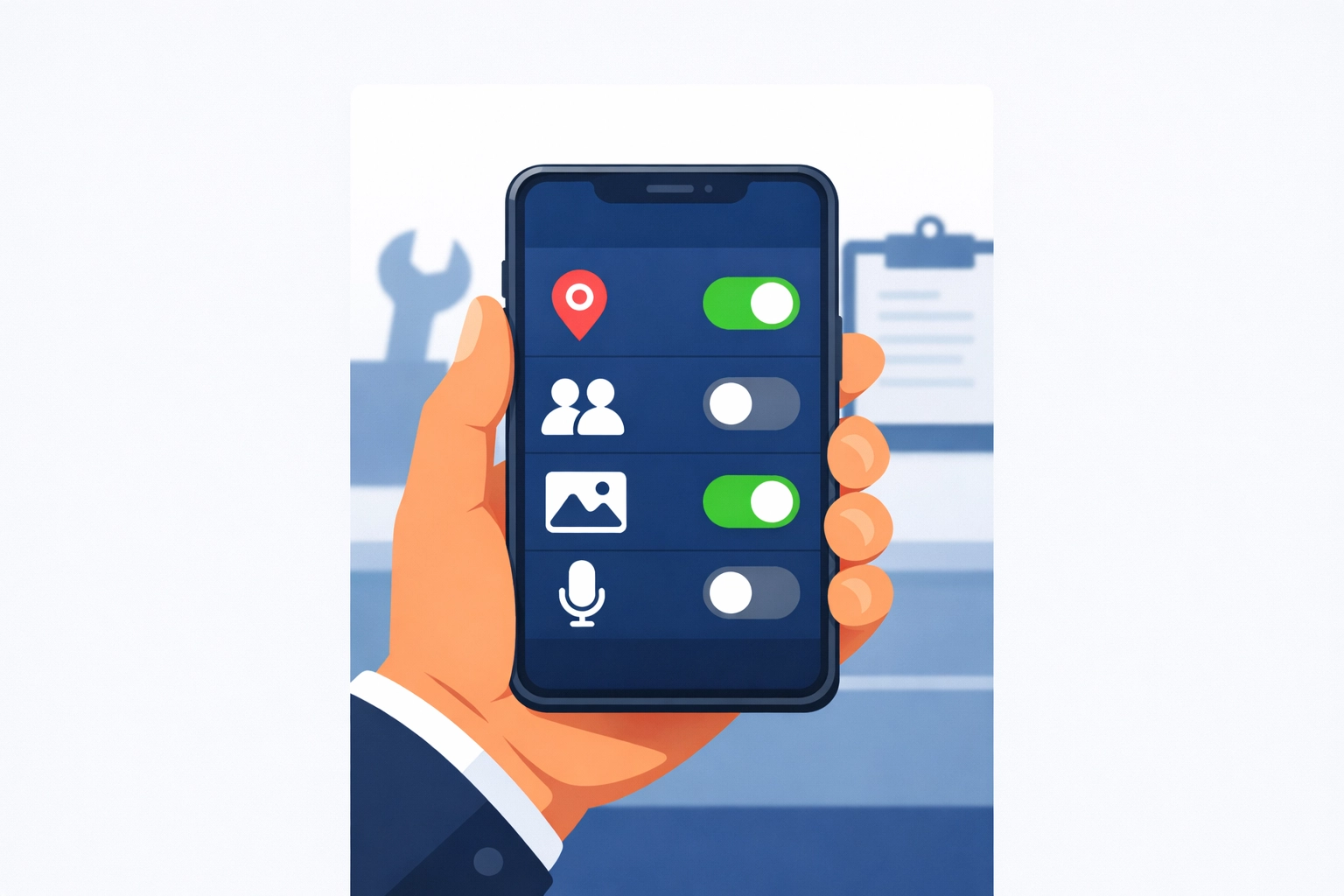
    Illustration of an Android permission toggle screen with Location (While using), Contacts (Off), Photos (Selected).

    The third-party SDK problem (even in “legit” apps)

    Many apps are built with plug-ins.
    Analytics. Crash reporting. Marketing. Chat widgets.

    Those components can collect their own data.
    Sometimes they’re listed. Sometimes they’re buried in policy text.

    Common SDK categories:

    • Analytics (what you click, how long you stay, device info)
    • Attribution (where you came from, campaign tracking)
    • Crash logs (device, app state, sometimes snippets of what was on screen)
    • Ad networks (even if the app “doesn’t run ads,” some frameworks still exist)

    No villain story here.
    It’s just “modern app development.”

    Your job is to decide:
    Is this app a tool… or a data pipeline?

    The “reasonable expectation” trap

    Google’s policies say apps shouldn’t collect data in ways users wouldn’t expect without prominent disclosure and consent.

    But “reasonable expectation” is fuzzy.
    And a disclosure you never read still counts as a disclosure.

    If an estimating app collects:

    • device identifiers
    • usage analytics
    • location “for fraud prevention”
    • email for “marketing”

    …that might be disclosed.
    You still might not expect it.

    So don’t rely on expectation.
    Rely on controls.

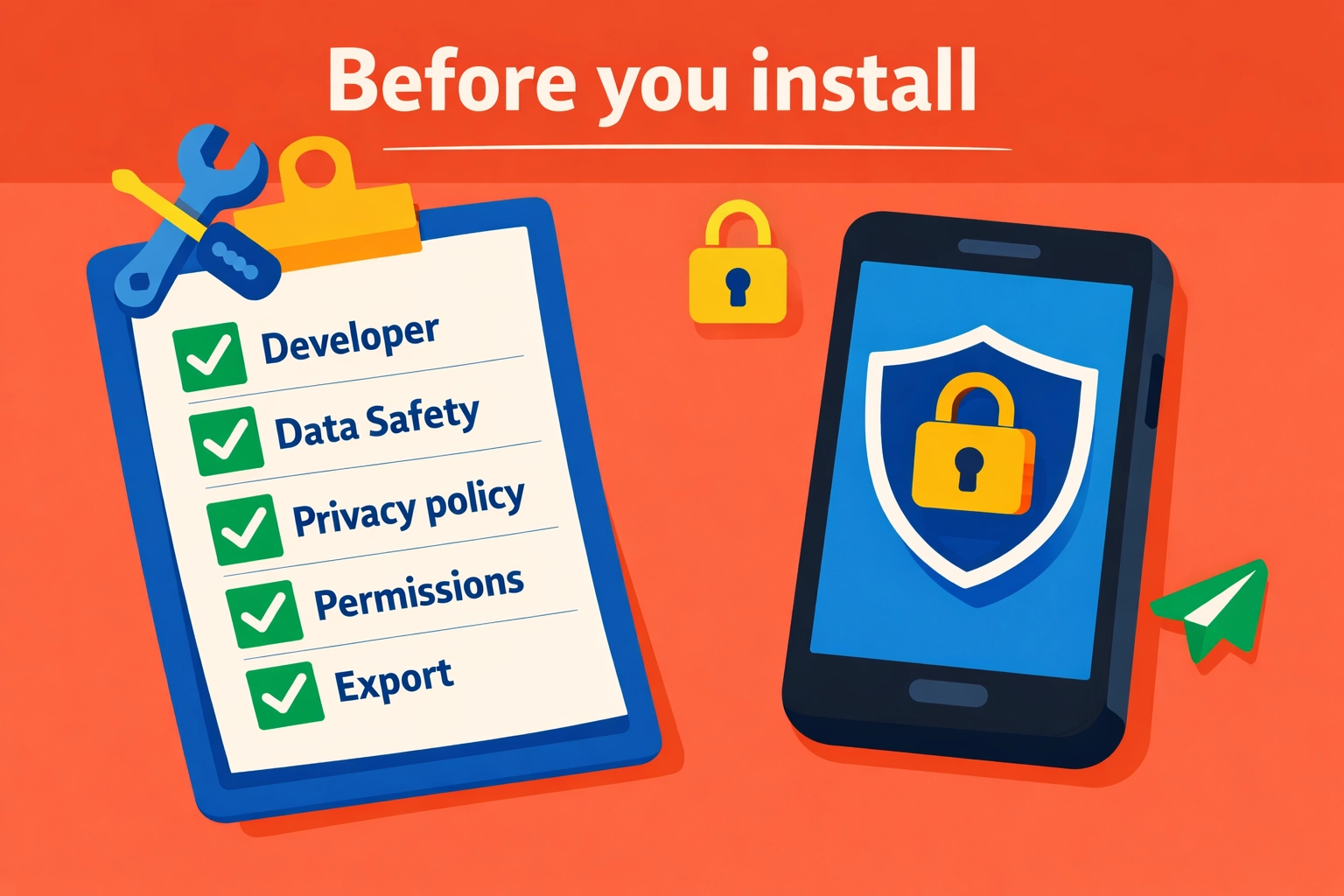
    A practical checklist before you install a Play Store app

    No audits. No enterprise security program. Just a quick filter.

    Illustration of a simple 'Before you install' checklist for vetting Play Store apps.

    1) Check the developer name like you’re hiring them

    Is it:

    • a real company with a track record?
    • a brand-new developer with 2 apps and a Gmail address?
    • a “studio” with no website?

    If it’s hard to identify who they are, that’s the point.
    Skip it.

    2) Read the Data Safety section for “Shared”

    You’re looking for:

    • data shared for advertising
    • data shared with “partners”
    • broad categories like “Personal info” or “Financial info” shared

    Sharing isn’t always wrong.
    But for a trade ops app, advertising sharing should be a red flag.

    3) Open the privacy policy and search for 5 words

    Use find-in-page for:

    • “share”
    • “third party”
    • “partners”
    • “advertising”
    • “sell”

    If you see “we may share with trusted partners” with no list, no purpose, no opt-out?
    That’s not transparency.

    You can also compare to our approach to privacy here:
    https://www.valortek.com/privacy

    4) Look at permissions before install, then verify after install

    The store listing may show permissions.
    But you should verify in Android settings after the first run.

    If it requests:

    • contacts + location + files + microphone
      …and it’s a basic invoicing app?
      Hard pass.

    5) Ask one question: “What happens if we leave?”

    If you can’t export your data easily, you’re trapped.
    And trapped data tends to get messy.

    You want:

    • export of customers, invoices, job history
    • clear retention/deletion policy
    • a way to close the account and remove data

    How to protect your operations (without slowing down the crew)

    This is the part that matters.
    Simple moves. Big payoff.

    Keep business apps off personal phones (when possible)

    No perfection required.
    Just separation.

    Options:

    • company-owned Android phones for techs
    • Android Work Profile / MDM-lite setup
    • a dedicated tablet for invoicing and photos

    When personal and business mix, permissions get sloppy.
    And data spreads.

    Standardize your “approved app list”

    No 30 different apps across 8 techs.
    No “whatever I found on Play Store.”

    Create one short list:

    • scheduling/dispatch
    • estimates/invoices
    • payments
    • job photos (if separate)
    • communication

    Everything else is optional.
    Optional is where the risk hides.

    Remove permissions quarterly (yes, really)

    Set a calendar reminder. 15 minutes.

    • review installed apps
    • uninstall what you don’t use
    • reset permissions for the rest
    • re-grant only what’s needed

    This one habit catches:

    • old apps you forgot
    • permissions that crept in over time
    • “trial apps” that never left

    Turn off ad personalization on work devices

    This doesn’t solve everything.
    But it reduces cross-app profiling.

    On Android, you can:

    • review Google privacy settings
    • limit ad personalization
    • reset advertising ID (where available)

    Again: not magic.
    Just less tracking.

    Treat customer data like you treat tools

    You don’t leave a $2,000 tool unattended on a jobsite.
    Don’t leave your customer list in the hands of unknown apps either.

    • minimize who can export
    • use roles (tech vs admin)
    • keep pricing/rates limited to those who need it

    What we think small trade businesses actually need

    No enterprise security theater.
    No 40-page compliance binder. Just sane defaults.

    At Valortek, we’re not another “download 12 apps and pray” stack.
    We’re not another platform that needs your data to run ads.

    No confusion. No gotchas. Just clear operations tools built for real trade businesses.

    If you want fewer apps, fewer logins, and fewer unknowns touching your data, that’s the direction we’d push you in.

    And if you’re not sure where to start, we’ll tell you straight.
    Even if the answer is “keep what you have, just lock it down.”


    Start Your Free Trial

    Questions? Contact us – we’re happy to help you decide.
  • Appliance Repair in 2026: Why Physical Expertise is Still King

    It’s 2026. Your refrigerator can tell you when the milk is sour. Your washing machine can order its own pods. Your oven can suggest recipes based on what’s in the pantry.

    Everywhere you look, things are getting “smarter.”

    There is a lot of talk about AI doing everything. People say software will eventually run the world. They think that because an appliance is connected to the internet, it can fix itself.

    They are wrong.

    No magic software. No remote-only fixes. Just hard work and expert hands.

    The truth is, as appliances get more complex, the person who knows how to pick up a wrench becomes more valuable, not less. We’re seeing it every day in the industry. The digital side of things identifies the problem. The human side of things actually solves it.

    The AI Blind Spot

    AI is great at data. It can track cycles, monitor temperature fluctuations, and flag a sensor that isn’t reporting correctly.

    But AI has a massive blind spot: the physical world.

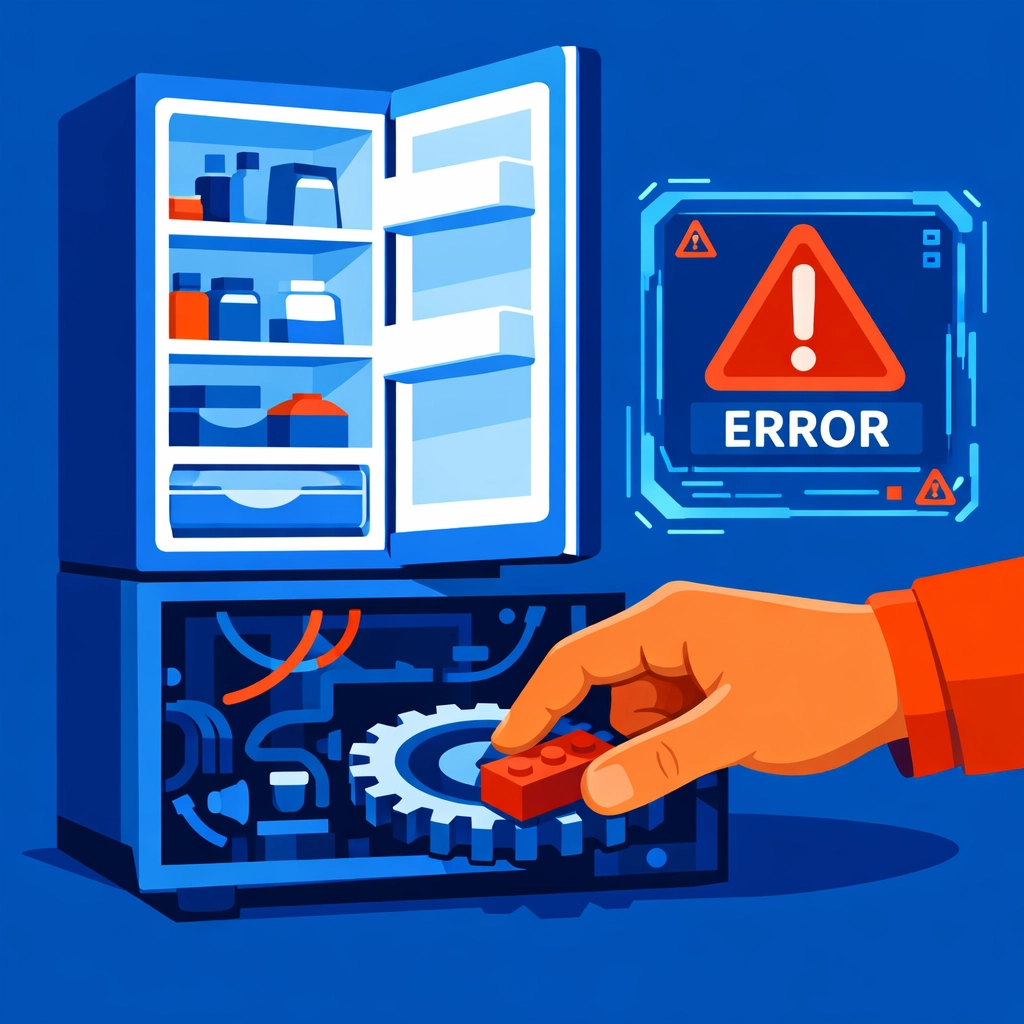
    An AI can tell you that a dishwasher isn’t draining. It might even tell you that the drain pump isn’t receiving enough voltage. What it can’t see is the stray Lego piece wedged in the impeller. It can’t see the hair clog that’s been building up for three years. It can’t see the slight corrosion on a wire that just needs a quick clean.

    Technician manually removing a physical obstruction from a refrigerator gear to fix an error.

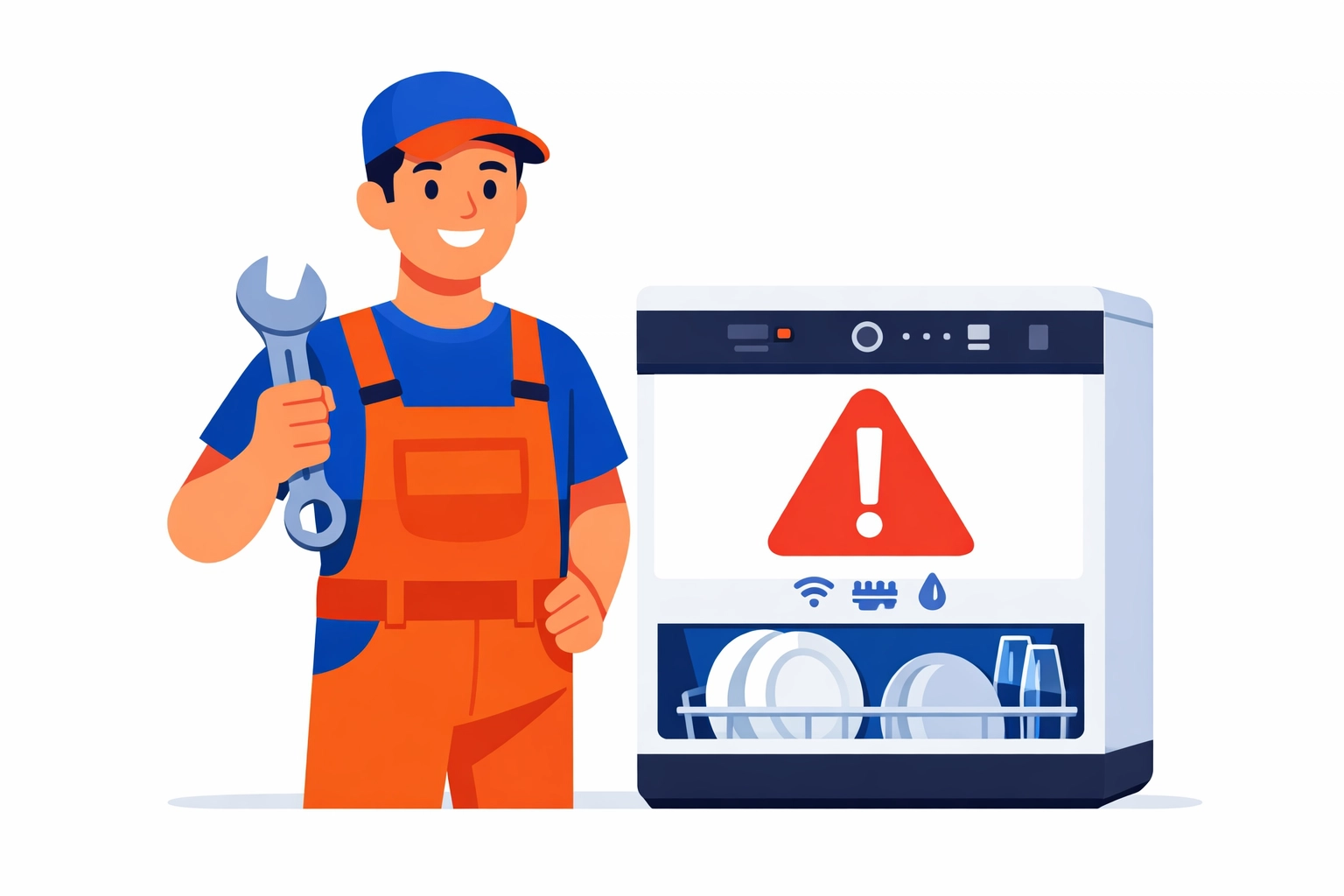
    Appliance repair tech fixing a smart dishwasher with an alert on the screen (flat illustration).

    Physical repair is about more than just following a manual. It’s about intuition. It’s about being able to hear a “thump” and knowing exactly which bearing is starting to go. It’s about the “touch” you develop after five years in the field.

    No algorithm can replicate that.

    We see companies trying to replace technicians with “remote diagnostic experts.” It sounds efficient on paper. In reality? It usually leads to three different parts being shipped to a customer’s house, none of which fix the actual issue because no one laid eyes on the machine.

    The Hybrid Tech Era

    We aren’t saying technology is useless. Far from it.

    Modern appliances are hybrids. They are 50% mechanical systems and 50% IoT (Internet of Things) technology. To be a top-tier technician in 2026, you have to speak both languages.

    You need to understand IoT protocols and mobile app interfaces. You need to know how to troubleshoot a Wi-Fi module that won’t connect to a local mesh network. But you also need to know how to rebuild a compressor.

    This dual requirement is creating a massive gap in the market.

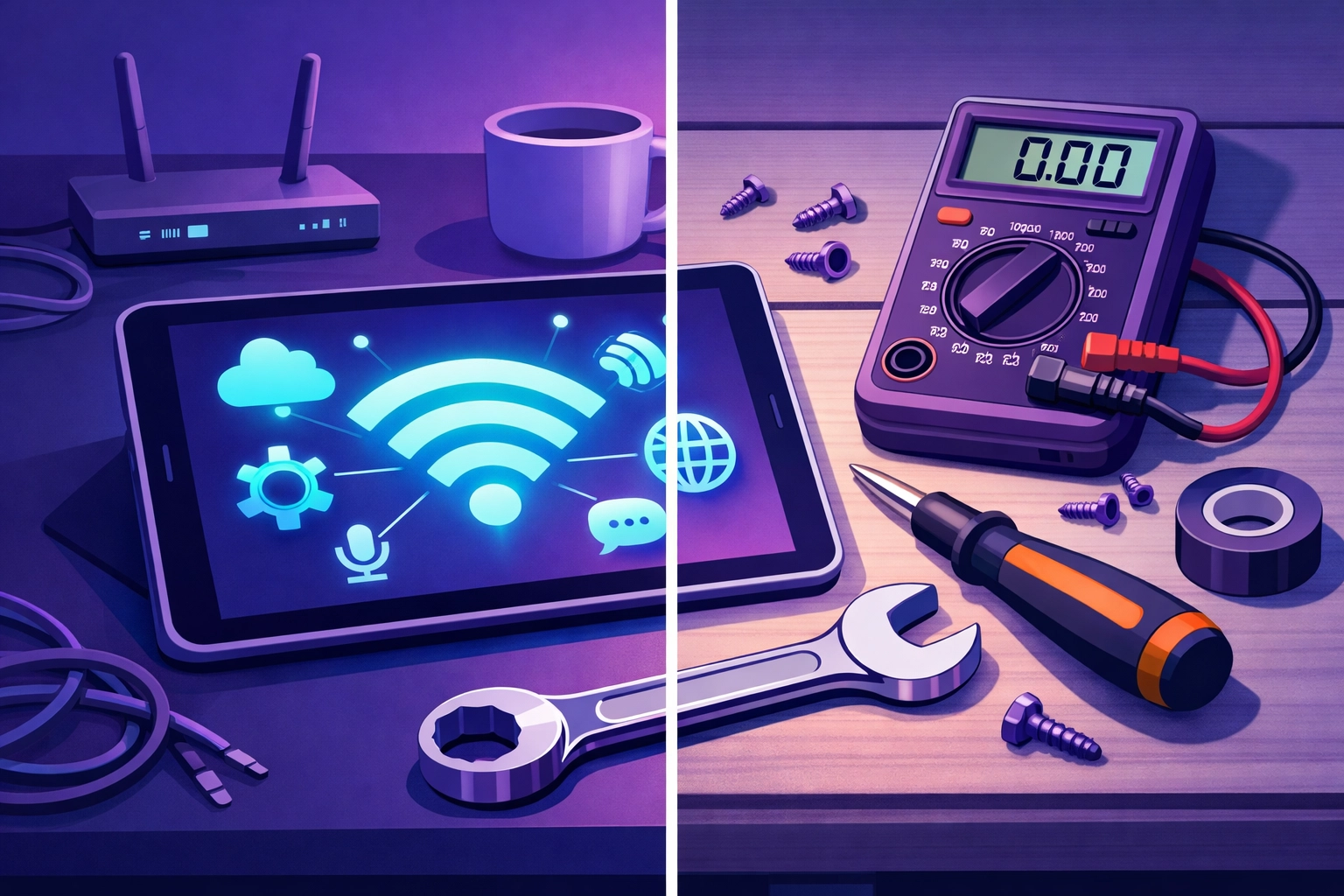
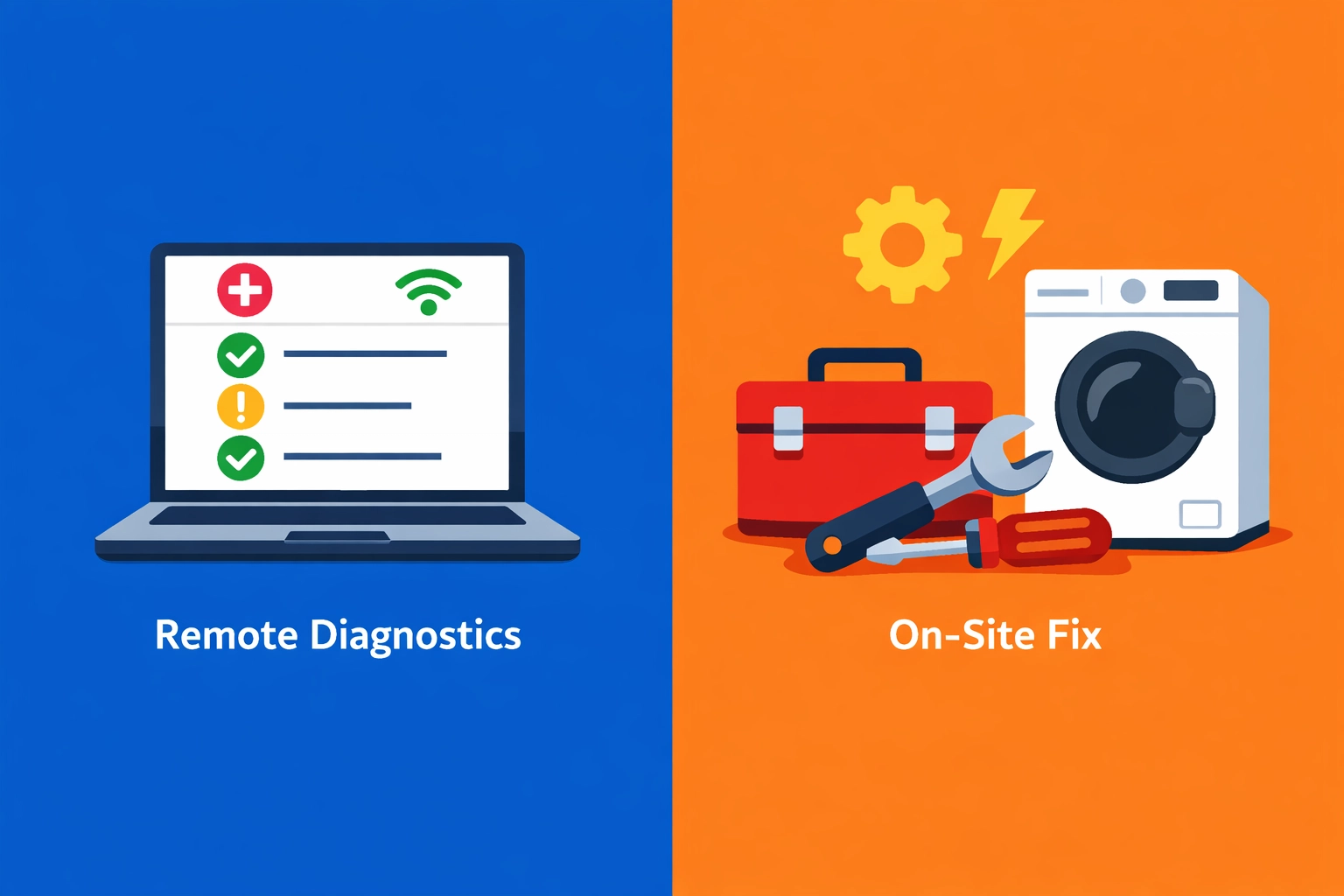
    Modern appliance technician workspace combining digital diagnostics and physical repair tools.

    Split view of remote diagnostics on a laptop vs on-site appliance repair with tools (flat illustration).

    Research shows there is currently a 25% global deficit in qualified technicians. Training programs are struggling. While 32% of service providers now offer some form of remote diagnostics, they are finding that it only scratches the surface.

    The complexity of these units makes DIY repairs almost impossible for the average homeowner. They might be able to reset a router, but they aren’t going to pull apart a $4,000 smart range to find a short in a wiring harness.

    Breakdown repairs are still the most requested service. Why? Because the more complex a machine is, the more ways it can break.

    The $32 Billion Reality

    Let’s talk numbers. Plain and simple.

    The appliance repair industry is a $32 billion worldwide opportunity. The average consumer spends about 15-20% of an appliance’s total cost on repairs every single year.

    That money isn’t going to software subscriptions. It’s going to the person who shows up at the door and gets the machine running again.

    85% of consumers prioritize same-day service. They don’t want a “virtual consultation.” They want their fridge to stop leaking onto their hardwood floors. They want their laundry done before Monday morning.

    Professional service technician with a successfully repaired washing machine for a happy customer.

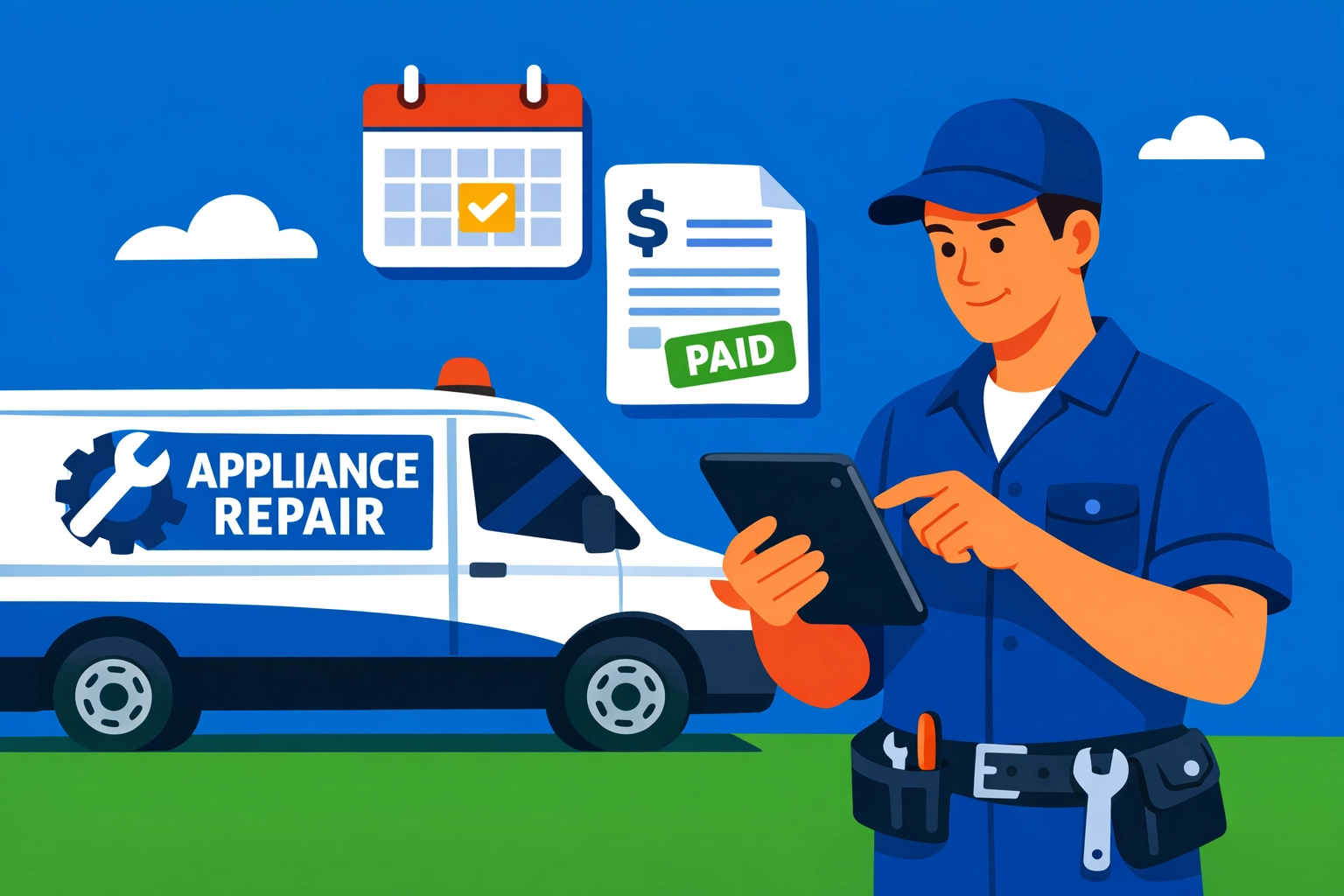
    Field service technician and van using a tablet for scheduling and invoicing (flat illustration).

    Efficiency is the only way to win in this market. 60% of customers express frustration over wait times for replacement parts. If you are the business that has the expertise to diagnose it right the first time and the logistics to get it fixed fast, you win.

    This is where the human element is king. A physical technician can pivot. They can find a workaround. They can identify a secondary issue while they’re already inside the machine, preventing a second service call and building massive trust with the customer.

    Why Your Skills Are Future-Proof

    If you’re running an appliance repair business, you might feel the pressure to “automate” everything. Don’t fall for the hype.

    Automate your scheduling. Automate your invoicing. Automate your follow-ups. But never try to automate the expertise.

    Your value lies in your ability to solve physical problems in a physical world.

    Think about it:

    • AI can’t feel vibration. It can’t tell if a machine is unlevel or if the floor joists are the real problem.
    • AI can’t smell. It doesn’t know the difference between a burnt-out motor and a scorched wire.
    • AI can’t negotiate. It doesn’t know how to explain to a frustrated homeowner why a repair is better than a replacement in a way that builds a long-term relationship.

    We’re seeing a shift toward predictive maintenance. Systems that tell us a part will fail in two months. That’s great. It’s a $4.2 billion emerging market. But guess who has to go out and replace that part before it fails?

    You do.

    Scaling the Human Side of Business

    At Valortek, we don’t believe in replacing people with tech. We believe in using tech to make people more powerful.

    Valortek company logo featuring a bold blue “V” inside a square icon, next to the word “Valortek” in modern blue lettering

    We work with appliance repair businesses to help them scale without losing their soul. Most consulting firms want to give you a 50-page manual and a bunch of buzzwords.

    We’re not another enterprise consulting firm. We’re Valortek.

    We focus on the systems that let your technicians do what they do best: fix things. We look at your operations, your customer flow, and your tech stack. We strip out the junk that’s slowing you down.

    No bloat. No nonsense. Just results.

    If your techs are spending three hours a day on paperwork, they aren’t fixing appliances. If your dispatching system is sending them across town in peak traffic, you’re losing money.

    We help you tighten those bolts.

    The Bottom Line

    Physical expertise is the ultimate competitive advantage in 2026.

    As the world gets more digital, the ability to work with your hands becomes a rare and premium skill. Don’t let the “AI will replace us” crowd get in your head. They’ve never had to troubleshoot a sealed system on a sub-zero fridge at 4:00 PM on a Friday.

    You provide a service that is essential. You keep homes running. You keep families fed.

    Technology is just the assistant. You are the expert.

    Ready to grow your repair business without the headache? Let’s talk about how to make your operations as sharp as your technical skills.

    Start Your Free Trial

    Questions? Contact us – we’re happy to help you decide.

  • The Electrician Advantage: Real-World Problems AI Cannot Touch

    AI can talk about electricity. You deal with it.
    No guesses. No vibes. Just voltage, code, and consequences.

    There’s a lot of noise right now about AI “replacing trades.”
    We’re not buying it.

    Not because AI is useless.
    Because real electrical work isn’t a clean dataset.

    It’s cramped attics. Weird remodels. Mixed circuits. Half-labeled panels.
    And customers who swear “it just started doing that yesterday.”

    This post is simple: the stuff you do every day that AI can’t touch.
    And why that advantage matters for your business.


    AI is great at patterns. Electrical problems aren’t patterns.

    AI wins when the inputs are clean. Electrical systems almost never are.
    No perfect diagrams. No consistent installs. No “standard” anything.

    A model can learn from thousands of textbook cases.
    But your Tuesday job is a Frankenstein system built across three decades.

    Think about what you actually troubleshoot:

    • A flickering light that only happens when the dryer kicks on
    • A GFCI that trips “randomly” after rain
    • A remodel where someone tied neutrals together because it “worked”
    • A service upgrade where half the labeling doesn’t match reality

    That’s not a multiple-choice test.
    That’s a field puzzle.

    You don’t just identify the problem. You define the problem.
    AI can’t do that reliably without perfect sensors, perfect documentation, and perfect history.

    And those don’t exist in most buildings.


    Troubleshooting is judgment. Not lookup.

    The best electricians don’t memorize more. They reason better.
    No script. No checklist-only thinking. Just decisions that fit the situation.

    You notice the small stuff:

    • Heat where there shouldn’t be heat
    • A smell that means “stop right now”
    • A buzzing that isn’t “normal transformer hum”
    • A breaker that’s warm but not tripped (yet)

    That’s experience.
    That’s context.

    AI can recommend a likely cause.
    You decide what’s safe to test, what’s safe to open, and what’s safe to leave alone until power is isolated.

    No instincts. No caution. Just output.
    That’s the limit.


    Real job sites are messy. AI hates messy.

    Electrical work happens in real places. Not lab conditions.
    And real places are full of constraints.

    You deal with:

    • Access issues (tight crawlspaces, finished ceilings, blocked panels)
    • Existing damage (water, rodents, corrosion, DIY fixes)
    • Old materials (knob-and-tube, aluminum branch wiring, brittle insulation)
    • “Just make it work” requests that violate code

    AI can’t “see” the job site the way you do.
    Even if it has a camera, it still can’t feel heat, tension, vibration, or resistance the way a human can.

    And it definitely can’t negotiate the tradeoffs:

    • “We can fish this wire, but the drywall repair won’t be pretty.”
    • “We can replace the device, but the box is undersized.”
    • “We can add a circuit, but your panel is at capacity.”

    That’s not math.
    That’s craft.

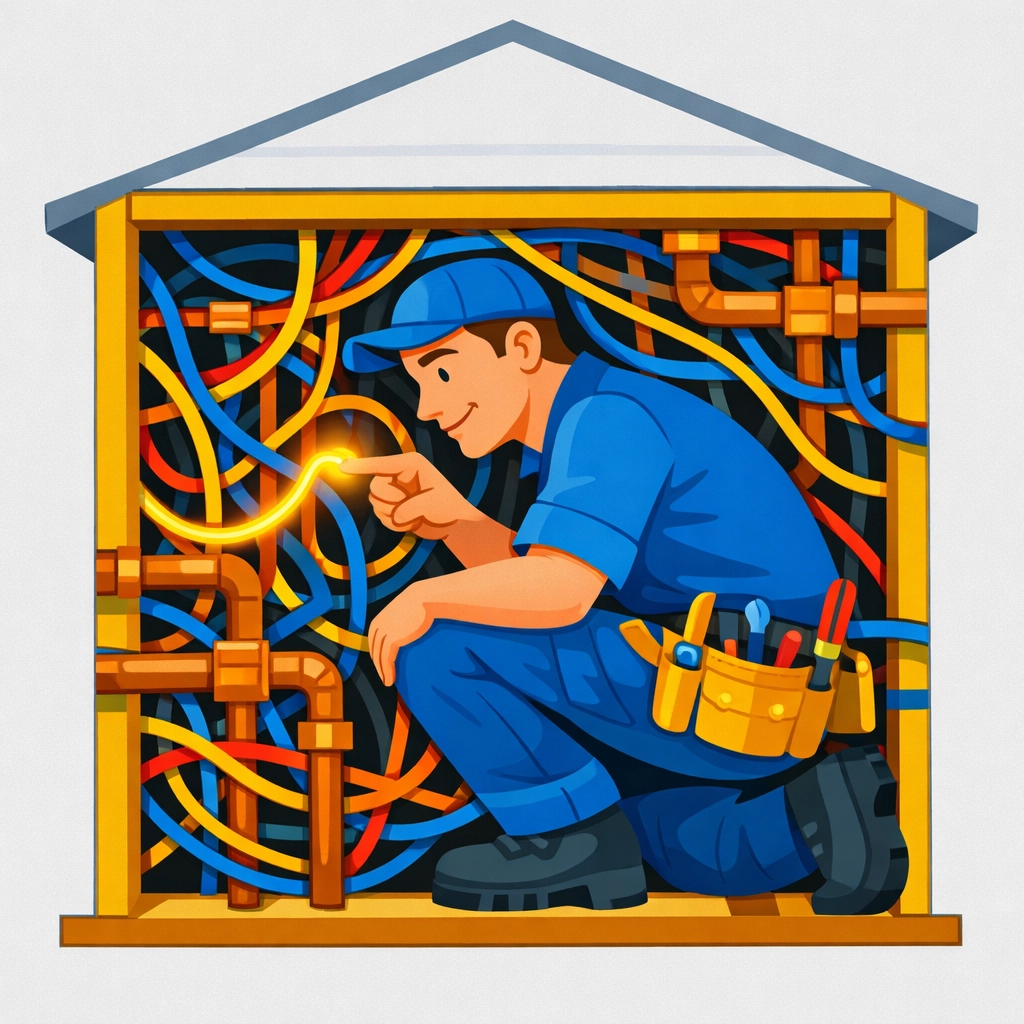
    Electrician troubleshooting complex wiring in a tight wall space, showing human skill in electrical problem-solving.


    Electrical code isn’t just rules. It’s interpretation.

    AI can quote code. You apply it.
    Huge difference.

    The NEC is detailed, but job sites aren’t.
    And local AHJs don’t all enforce the same way.

    You’re constantly balancing:

    • Code requirements
    • Manufacturer specs
    • Load calculations
    • Site constraints
    • Inspection expectations
    • Customer budget (without cutting corners)

    AI can pull the “right” paragraph.
    But when the panel is in a closet, the framing is wrong, and the customer wants it done today, you’re the one making it safe and compliant.

    No accountability. No inspection. Just suggestions.
    That’s not enough for real work.


    Physical labor is the job. AI can’t lift, pull, drill, or sweat.

    Let’s be blunt: electricity is not solved on a keyboard.
    It’s solved with tools, hands, and time.

    AI can’t:

    • Pull wire through a packed conduit run
    • Set anchors in concrete
    • Replace a service mast in wind and snow
    • Terminate conductors correctly under torque specs
    • Cut, bend, mount, and level actual gear
    • Work safely on ladders and lifts
    • Move through a job without damaging finished surfaces

    Even the “robot electrician” idea falls apart fast.
    Because every building is different, every wall is different, every surprise is different.

    No muscles. No mobility. Just talk.
    Talk doesn’t fix a failed neutral.


    Safety isn’t optional. And AI can’t own it.

    Electricians don’t just fix problems. You prevent disasters.
    That’s the part outsiders miss.

    A lot of electrical work is risk management:

    • Arc flash exposure
    • Fault current realities
    • Lockout/tagout discipline
    • Proper PPE choices
    • Knowing when to stop and re-plan

    AI doesn’t feel risk.
    It doesn’t get tired. It doesn’t get rushed. It doesn’t get complacent.

    But it also doesn’t care if it’s wrong.

    You do.

    Because “wrong” can mean:

    • Fire
    • Injury
    • Liability
    • Failed inspection
    • A customer who never calls you again

    No stakes. No consequences. Just probability.
    And probability is a terrible safety plan.


    The customer side is half the job. AI can’t do trust.

    You’re not just wiring circuits. You’re managing people.
    Anxiety, urgency, confusion, skepticism. All of it.

    Customers ask things like:

    • “Is this dangerous?”
    • “Is this going to happen again?”
    • “Why is it so expensive?”
    • “Can you do it today?”
    • “Are you sure we need a new panel?”

    AI can answer.
    But it can’t read the room.

    You can.

    You know when to slow down and explain.
    You know when to draw a quick diagram on a notepad.
    You know when to say, “I’m not leaving this like this.”

    That’s trust.
    And in the trades, trust is your marketing.


    What AI can do for electricians (and we’re fine admitting it)

    We’re not anti-AI. We’re anti-hype.
    No fear. No fantasy. Just useful tools.

    AI is solid at:

    • Summarizing notes into clean job descriptions
    • Drafting customer-facing explanations (that you review)
    • Organizing photos by job and room
    • Spotting trends across lots of jobs (callbacks, parts usage, time sinks)
    • Helping you write faster estimates and follow-ups

    But notice the pattern: AI supports the work. It doesn’t replace it.

    The win is simple.
    You stay in control. You stay accountable. You stay the pro.

    AI handles the busywork.


    The real risk isn’t AI. It’s admin overload.

    Most electricians don’t lose time to the tools. You lose time to the office.
    No offense to “software.” But most of it is built for someone else.

    Here’s what we see over and over:

    • Your schedule is in one place
    • Customer info is in another
    • Estimates are in a spreadsheet
    • Invoices are in accounting software
    • Photos are on your phone
    • Notes are… somewhere
    • And every handoff costs you time

    That’s where businesses leak money.
    Not because the work is hard. Because the workflow is fragmented.

    And that’s where we come in.


    We’re not another “enterprise platform.” We’re the ops layer you actually use.

    Valortek is built to make the business side of your trade simpler.
    No bloated dashboards. No “digital transformation” speeches. Just the basics done right.

    What we care about:

    • Clear scheduling
    • Clean job records
    • Fast estimates and invoices
    • Less re-typing the same info
    • Better visibility on what’s profitable
    • Fewer surprises at the end of the month

    You already have the electrician advantage.
    We help you run it like a business.

    If you want to learn more about how we handle data and privacy, it’s here: https://www.valortek.com/privacy


    The bottom line: your value is in the messy middle

    AI can’t crawl into the attic, read the panel, and make the call.
    You can.

    AI can’t balance safety, code, customer expectations, and physical reality in real time.
    You do that every day.

    So if you’re worried about being “replaced,” don’t be.
    Worry about being buried in admin while you’re out doing the hard work.

    Let software do the paperwork.
    Let humans do the trade.


    Start Your Free Trial

    Questions? Contact us – we’re happy to help you decide.

  • HVAC Diagnostics: Why Your Local Pro Still Beats AI Every Time

    AI is getting better at HVAC diagnostics.
    It’s also not climbing into your attic.

    No ladders. No gauges. No smell test.
    Just data.

    And that’s the whole point of this post.

    We’re not “anti-AI.”
    We’re anti-fantasy.

    If you run an HVAC business, you’ve probably heard the pitch: “AI will diagnose the issue before you arrive.”
    Sometimes it can help.
    A lot of times it can’t.

    Let’s break down where AI is genuinely useful, where it falls apart, and why the best shop in town is still the one with solid techs and good judgment, plus the right tools.


    AI is a tool. Not a technician.

    AI shines when the system is already instrumented.
    Sensors. Telemetry. Clean history. Consistent runtime data.

    That’s not most residential calls.

    Most service work is messy:

    • The homeowner changed settings three times.
    • The filter is a pet hair brick.
    • The outdoor unit is half buried in cottonwood fluff.
    • The thermostat wiring is “creative.”
    • The condensate line is doing its best impression of a swamp.

    AI doesn’t see any of that unless someone measures it, reports it, and feeds it into the system.

    No hands. No eyes. No context.
    Just an algorithm making guesses.

    And in HVAC, guessing gets expensive fast.


    What AI can do well (and you should use it for)

    Let’s be fair. AI isn’t useless.
    Used right, it can make you faster and tighter.

    Here’s where it helps.

    1) It spots patterns in data you’d never stare at all day

    If you’ve got a building automation system, smart thermostats, or solid runtime history, AI can flag trends:

    • Short cycling patterns
    • Abnormal discharge temps
    • Rising static pressure over weeks
    • Compressor run-time drift
    • Weird load patterns by time of day

    Humans can find these.
    We just don’t have the time to babysit charts.

    2) It speeds up troubleshooting

    Some facilities using AI-based fault detection have reported meaningful reductions in troubleshooting time and HVAC operating cost, because the system flags “check this first” faster than a person can.

    AI becomes the second set of eyes.
    Not the final call.

    3) It enables predictive maintenance (when the inputs are real)

    If you’ve got consistent sensor data, predictive alerts can reduce breakdowns.

    That’s valuable in commercial and industrial work.
    It’s less reliable in “my AC stopped and my toddler’s melting” work.

    So yes: AI can be a boost.
    But it needs one thing to work.

    Good inputs.

    And that’s where reality shows up.


    The big limitation: AI can’t inspect anything

    Diagnostics isn’t just “reading the symptoms.”
    It’s verifying the cause.

    AI doesn’t:

    • Check a blower wheel for buildup
    • Put eyes on a cracked heat exchanger
    • Hear a failing bearing
    • Smell a scorched contactor
    • Feel a vibrating line set
    • Notice the return is undersized and starving the system

    And it can’t do the most important part of the job:

    It can’t decide what matters and what doesn’t when the evidence conflicts.

    That’s not a software problem.
    That’s a “you need a human there” problem.

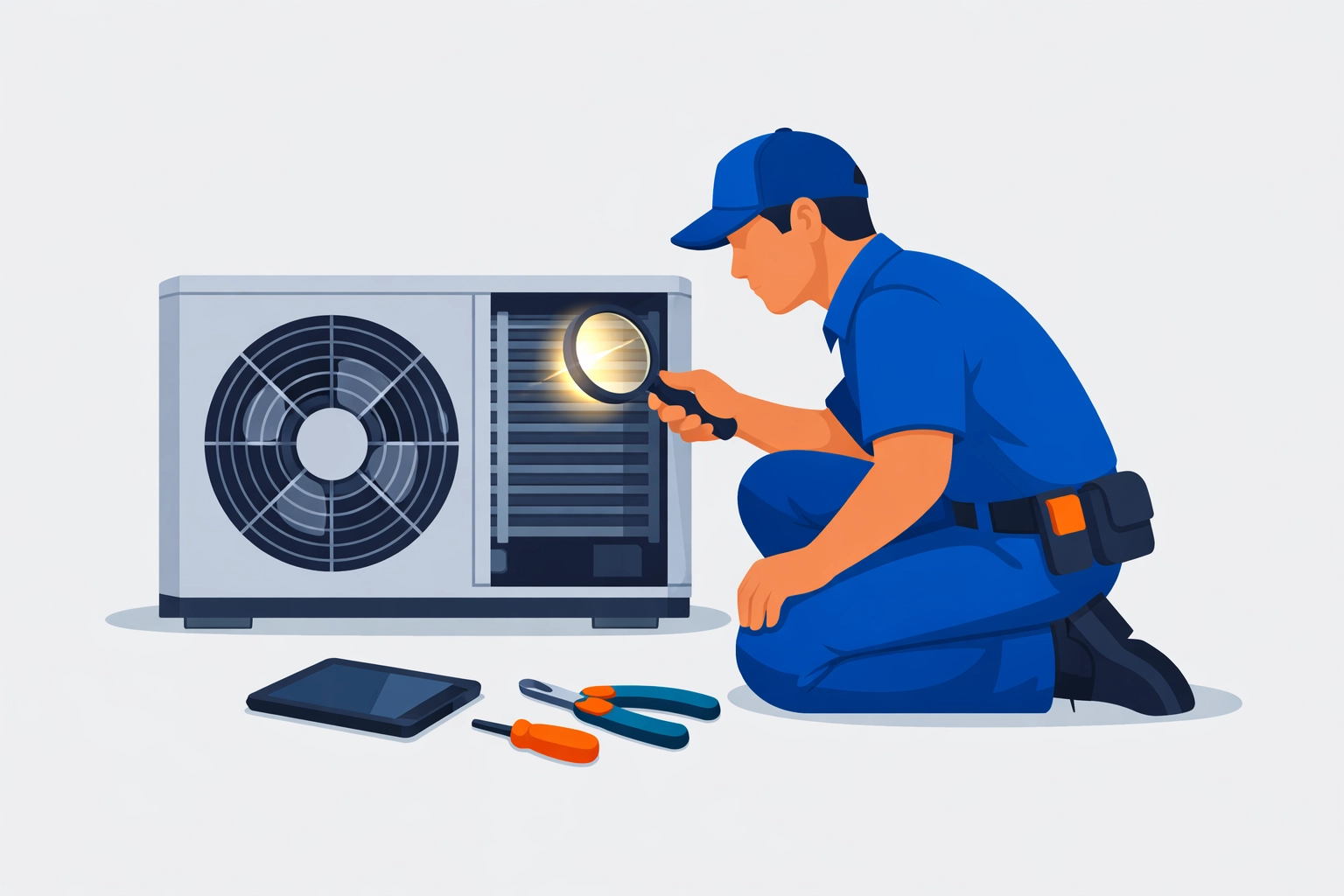
    HVAC technician performing manual AC unit inspection with a magnifying glass for precise diagnostics.


    HVAC is physical. Diagnostics are physical.

    A lot of AI hype assumes HVAC is like software.
    It’s not.

    HVAC systems live in the real world:

    • Dust
    • Water
    • Sun
    • Rodents
    • Bad ductwork
    • Bad installs
    • “Handyman specials”
    • Power issues
    • Home additions with zero load calculation

    Even if AI could perfectly interpret your sensor readings, it still wouldn’t know:

    • The condenser is recirculating hot air because it’s boxed in
    • The return is pulling attic air through a gap
    • The supply trunk is leaking into a wall cavity
    • The coil is freezing because airflow is low, not because refrigerant is low
    • The thermostat is in direct sunlight

    Most failures aren’t “mysterious.”
    They’re contextual.

    And context is what humans are good at.


    The data problem: AI only knows what you measure

    AI needs data.
    Most HVAC calls don’t have it.

    Even on higher-end systems, the data might be:

    • Incomplete (missing sensors)
    • Noisy (bad calibration, drift)
    • Misleading (wrong assumptions)
    • Disconnected (no unified history across equipment)
    • Stale (no recent service notes)

    Garbage in. Garbage out.
    That’s not a slogan. That’s Tuesday.

    And if you’re relying on AI as the first and only brain, you’ll end up with:

    • Wrong parts ordered
    • Wrong diagnosis sold
    • More callbacks
    • Less trust
    • Lower close rates

    You don’t want to be the shop known for “the algorithm said so.”


    HVAC diagnostics aren’t one problem. They’re multiple problems stacked.

    AI tends to do best when one cause leads to one effect.
    HVAC failures often have chains.

    Example: “No cooling.”

    • Low airflow from a dirty filter
    • Which caused coil icing
    • Which caused liquid floodback risk
    • Which caused poor superheat readings
    • Which triggers a technician to think “refrigerant issue”
    • Which leads to topping off instead of fixing airflow
    • Which leads to another callback in two weeks

    AI might catch coil temp anomalies.
    But it won’t automatically understand the messy human behavior around it:

    • Homeowner replaces filter with the wrong size
    • Tech is under time pressure
    • System is oversized
    • Ducts were never balanced

    Diagnostics is not just physics.
    It’s people.


    The “last mile” is where AI breaks

    Even if AI points you in the right direction, the final step still needs a pro:

    • Confirming readings with instruments
    • Verifying airflow
    • Checking electrical under load
    • Inspecting mechanical condition
    • Deciding repair vs replace
    • Explaining tradeoffs to the customer

    This is the part customers remember.

    They don’t remember your dashboard.
    They remember whether you fixed it, how you explained it, and whether it stayed fixed.

    No script. No chatbot. Just trust.
    And trust is earned in person.


    Safety and liability: AI doesn’t sign the invoice

    HVAC isn’t just comfort.
    It’s safety.

    • Gas leaks
    • CO risk
    • Electrical faults
    • Overheated components
    • Combustion air issues
    • Venting issues

    AI can flag anomalies.
    It can’t take responsibility.

    Your tech is the one who decides:

    • “This is unsafe.”
    • “We shut it down.”
    • “Here’s why.”
    • “Here’s the next step.”

    If you’ve ever had to make that call in a living room with a worried homeowner, you know:
    that’s not an algorithm moment.

    That’s a judgment moment.


    “But what about remote diagnostics?”

    Remote diagnostics are real.
    And they can be great.

    Here’s the honest take:

    • Remote diagnostics work best in commercial environments.
    • They work best when the site is already heavily instrumented.
    • They work best when the equipment is standardized.
    • They work best when maintenance is consistent.

    Residential is the opposite of that.

    So if someone’s telling you AI can replace dispatch, replace techs, and replace on-site work…
    they’re selling you a story.

    No truck. No tools. No problem?
    Not in HVAC.


    Where AI helps your HVAC business without pretending to replace you

    This is where we like to live: practical tools that don’t insult your intelligence.

    AI can help in areas adjacent to diagnostics, places where speed and consistency matter, and the risk of “AI hallucinating” won’t fry a compressor.

    ✅ Better triage at intake

    AI can help you standardize what questions get asked on a call:

    • “Is the outdoor unit running?”
    • “Any ice on the line?”
    • “Any burning smell?”
    • “When did it start?”
    • “Any recent work done?”

    Not replacing your dispatcher.
    Just making intake tighter.

    ✅ Cleaner notes and better handoffs

    Tech notes matter.
    AI can help summarize, structure, and clean up notes so:

    • The next tech isn’t guessing
    • Your office can invoice faster
    • You can spot repeat issues

    ✅ Predictive reminders (filters, maintenance, warranties)

    AI isn’t diagnosing the compressor.
    It’s reminding customers to do the basics that prevent breakdowns.

    That’s not hype.
    That’s revenue and fewer emergency calls.

    ✅ Inventory and parts forecasting

    If you track parts usage, AI can help predict what to stock.

    Not magic.
    Just math at scale.


    The best diagnostic system is still a great process

    Here’s what wins in the real world.

    No buzzwords. No “digital transformation.” Just fundamentals.

    A diagnostic workflow your techs actually follow

    • Verify the complaint
    • Check airflow first
    • Check electrical second
    • Check refrigerant last (and only after airflow is confirmed)
    • Confirm with measurements, not vibes
    • Document before/after readings

    A consistent way to capture job data

    If you want AI to help later, you need consistent inputs now:

    • Model/serial
    • Installed date (if known)
    • Photos
    • Static pressure readings (when relevant)
    • Delta T
    • Superheat/subcooling (when relevant)
    • Parts replaced
    • Root cause notes (not just “fixed”)

    AI can’t create discipline.
    But discipline can create data.

    And data can actually help you scale.


    Customers don’t want AI. They want certainty.

    Homeowners don’t call you because they want innovation.
    They call because they want their house comfortable again.

    They want:

    • A clear answer
    • A fair price
    • A fix that lasts
    • A tech who seems competent and calm

    AI can support that.
    It can’t be that.

    The shops that win with AI will be the ones who use it quietly, behind the scenes, to reduce waste, without pretending it replaces craftsmanship.

    No robot techs. No remote miracles. Just better service.
    That’s the lane.


    How we think about it at Valortek

    We’re not another bloated “platform” built for enterprise facilities teams.
    We’re not trying to replace your techs with prompts and dashboards.

    We build tools that help your operation run cleaner:

    • Better scheduling
    • Better job tracking
    • Better customer visibility
    • Better follow-up
    • Better internal accountability

    No complexity for the sake of complexity.
    No features you’ll never use.
    Just a system your team can actually stick with.

    If you want to learn more about who we are, you can poke around here: https://valortek.com


    The bottom line

    AI can flag.
    It can suggest.
    It can accelerate.

    But it can’t crawl into a tight attic and tell you the return’s undersized.
    It can’t look a customer in the eye and explain why replacement is the right call.
    It can’t keep your reputation intact when the easy answer is wrong.

    So yes: use AI.
    Just don’t outsource your judgment.

    That judgment is your edge.
    And your local pros? They’re still the difference.


    Start Your Free Trial

    Questions? Contact us – we’re happy to help you decide.

  • Locksmiths vs. Robots: Why AI Will Not Be Opening Doors Anytime Soon

    You’ve seen the headlines. AI is writing code. AI is diagnosing diseases. AI is even making “art” that looks like a fever dream. It feels like every job on the planet is one software update away from disappearing.

    But then there’s you. You’re standing on a porch at 2 AM. It’s freezing. The lock you’re looking at was manufactured in 1974 and has been painted over six times. The cylinder is seized, the door is sagging, and the homeowner is hovering over your shoulder.

    Can ChatGPT pick that lock? No. Can a robot from a Silicon Valley lab navigate that mess? Not a chance.

    At Valortek Inc, we deal with the digital side of things, but we know where the real work happens. We’re here to tell you why your trade is safe.

    No robots. No algorithms. Just human skill.

    The Tactile Paradox

    AI is great at processing data. It can scan billions of lines of code in seconds. But it has one massive, glaring weakness. It doesn’t have hands.

    And no, robotic “grippers” don’t count. Locksmithing isn’t just about turning a key. It’s about the “feel.”

    When you’re picking a lock, you’re listening with your fingers. You feel the slight click of a pin setting. You feel the resistance of a tension wrench. You know exactly when to push and when to let off.

    This is what we call physical intuition. It’s a feedback loop between your brain and your muscles that takes years to master. AI lacks the sensory nuance to understand the difference between a pin that’s set and a pin that’s just stubborn.

    No sensors. No haptic feedback. Just your touch.

    Locksmith using a pick and tension wrench to open a brass lock with physical intuition.

    The “Real World” Isn’t a Lab

    If every door was perfectly square and every lock was brand new, maybe a robot could compete. But the real world is a nightmare of physics and poor maintenance.

    Doors warp in the humidity. Foundations shift, making latches misaligned. People use the wrong lubricants (looking at you, WD-40 enthusiasts).

    An AI needs a controlled environment to succeed. It needs predictable inputs. A locksmith thrives in the unpredictable. You walk up to a job and immediately notice that the frame is bowed. You realize the strike plate is 2mm too low. You adjust your approach on the fly.

    AI can’t improvise. It follows a script. If the script says “turn left” and the door requires a “jiggle-then-lift-then-turn,” the AI fails.

    You aren’t just a technician. You’re a problem solver in a world that refuses to be neat.

    The Legacy Hardware Reality

    The tech world loves to talk about “Smart Locks.” They want everything connected to the cloud. They want facial recognition and palm vein scanning.

    And sure, those things are growing. Research shows the smart lock market is booming. But here is the secret: someone still has to install them. And someone definitely has to fix them when the battery dies or the Wi-Fi drops.

    Even more importantly, look around. Most of the world is still running on mechanical hardware. There are millions of commercial buildings and homes using locks designed decades ago.

    Big Tech doesn’t care about a 50-year-old mortise lock. They want to sell you a subscription to a doorbell camera. As long as there is old brass and steel in the world, there is a need for a human who knows how it works.

    No updates. No cloud. Just heavy-duty hardware.

    Trust Can’t Be Programmed

    Locksmithing is about more than just opening doors. It’s about trust.

    When someone loses their keys or gets locked out after a breakup, they aren’t just looking for a tool. They’re looking for a professional. They need to know that the person standing at their door is licensed, insured, and ethical.

    Would you trust a faceless robot with the keys to your life? Probably not.

    There is a human element to security that AI can never replicate. You provide peace of mind. You offer a sympathetic ear when a customer is stressed. You make calls on the spot about whether a situation seems “off” or potentially illegal.

    AI doesn’t have a gut feeling. You do.

    Valortek company logo

    Why We Care at Valortek Inc

    You might wonder why a business consulting firm like Valortek Inc is talking about lock-picking and door frames.

    It’s simple. We believe in the power of the trades. We know that while AI is a great tool for managing your back office, it’s a terrible replacement for your front-line skills.

    Our goal is to help you use technology to make your life easier: not to replace you. We want you out in the field doing what you do best, while our systems handle the “boring” stuff like scheduling, billing, and customer data.

    We aren’t another software company trying to automate your job away. We’re partners who want to help you scale your expertise.

    No fluff. No complex jargon. Just better business.

    The Future is Hybrid

    Does AI have a place in your shop? Absolutely.

    It can help you optimize your routes so you aren’t crisscrossing town in traffic. It can help you predict when your tools need maintenance. It can even help you answer basic customer questions on your website while you’re elbow-deep in a safe.

    But it will never be the one holding the tension wrench.

    The future of locksmithing isn’t a robot taking your job. It’s a highly skilled locksmith using smart tools to run a more profitable, efficient business.

    You handle the physical world. Let us help you handle the digital one.

    Professional locksmith with a toolkit next to a digital gear representing smart business efficiency.

    The Verdict

    AI is a wizard at math. It’s a pro at data. It’s a genius at patterns.

    But it’s a total amateur at life.

    It doesn’t understand the nuance of a stuck latch. It doesn’t understand the urgency of a 3 AM lockout. And it definitely doesn’t have the “physical intuition” that defines your career.

    So, take a breath. Your job isn’t going anywhere. In fact, as the world gets more digital, your physical skills become even more valuable. You are the bridge between the digital “smart” world and the physical “secure” world.

    Stay sharp. Keep learning. And remember that a robot can’t replace a master’s touch.

    No gimmicks. No fears. Just the trade.

    If you’re ready to spend less time on your computer and more time on your craft, we should talk. We help tradespeople like you streamline their operations so the business runs itself while you’re out opening doors.

    You do the hard part. We’ll do the smart part.

    Start Your Free Trial

    Questions? Contact us – we’re happy to help you decide.

  • Big Tech is Watching: How Google and Apple Track Your Business Data

    You download an app to manage your plumbing business. You think it’s a tool. Google and Apple think it’s a data goldmine.

    Every time you tap, scroll, or log a job, a digital footprint is created. For small trade businesses, this isn’t just about “privacy” in an abstract sense. It’s about your business intelligence being harvested by the two biggest companies on earth.

    No secrets. No shadows. Just data.

    The Myth of the “Free” Business App

    We’ve all seen the free apps in the Play Store or the App Store. They promise to organize your schedule or track your mileage for zero dollars.

    But there is always a price. If you aren’t paying with a subscription, you’re paying with your data.

    Google and Apple aren’t charities. They are ecosystems designed to keep you inside their walls. They want to know what you do, who you talk to, and how much money your business makes.

    No free lunches. No hidden gifts. Just a data exchange you never signed up for.

    How Google Vacuums Your Information

    Google’s business model is simple: they sell your attention. To do that effectively, they need to know everything about you.

    If you use an Android device for your business, Google is tracking your every move. Through the Play Store, they see which apps you use and how often you open them. Through Google Maps, they know exactly where your service vans are parked.

    They use this information to build a profile. They know your trade, your service area, and your growth trajectory.

    What Google is collecting:

    • Location History: Every job site you visit.
    • Search Queries: What tools or supplies you’re looking for.
    • App Usage: How much time you spend in your CRM vs. your social media.
    • Email Content: If you use Gmail, your invoices and receipts are being scanned for keywords.

    They don’t do this to help you. They do it to sell better ads to your competitors.

    Illustration of a smartphone collecting GPS and trade tool data, representing Google tracking business activity.

    Apple: The “Privacy” Company?

    Apple likes to position itself as the “good guy.” They run ads telling you that “Privacy is a human right.”

    Don’t be fooled. While Apple doesn’t rely on ad revenue the same way Google does, they still collect a massive amount of data.

    Apple’s goal is to sell hardware and services. They track your App Store purchases, your Siri interactions, and your Apple Maps searches to keep you hooked on their hardware.

    They use their “Privacy” features as a weapon against Google. By blocking Google’s tracking, Apple forces developers to use Apple’s own systems. It’s not about protecting you; it’s about controlling the flow of information.

    No altruism. No heroics. Just a different kind of tracking.

    The App Store Toll

    When you download a business app, you’re entering a controlled environment. Both Google and Apple act as “gatekeepers.”

    They see every transaction you make through an app. If you’re a locksmith using an app that processes payments, Big Tech is watching the volume of those payments.

    They collect data on:

    1. Financial Health: How much are you billing?
    2. Customer Retention: How often do your customers return?
    3. Operational Efficiency: How fast do you close tickets?

    This data is incredibly valuable. In the wrong hands, or even in the “aggregated” hands of Big Tech, it can be used to predict market trends that favor large corporations over small, local trades.

    Why Trade Businesses Should Care

    You might think, “I’m just a guy with a truck. Why does Google care about my data?”

    They care because data is the new oil.

    When Big Tech knows that HVAC repairs are spiking in a specific zip code, they raise the price of local service ads. When they see a specific plumbing software gaining traction, they might launch a competing feature.

    Your data is being used to tilt the playing field.

    No fair play. No level ground. Just an algorithmic advantage for the highest bidder.

    Valortek company logo

    The 2025/2026 Shift: Fingerprinting and Regulation

    As of late 2025 and early 2026, the battle for your data has intensified.

    Apple recently doubled down on blocking “fingerprinting”, a sneaky way companies track you even when you say “no.” This has caused a massive rift between Apple and Google’s Chrome team.

    Meanwhile, the European Union’s Digital Markets Act (DMA) has forced these companies to be more transparent. But “transparency” usually just means a 50-page legal document that no one reads.

    They make the rules. They own the stores. You just live in them.

    Is Your Business App Spying on You?

    Not all apps are created equal. Some are designed to be “lean” and respect your boundaries. Others are “heavy,” requesting permissions they don’t need.

    Does your calculator app really need access to your contacts? Does your flashlight app need your GPS location?

    Probably not.

    Every permission you grant is a straw in your business’s data drink. If an app asks for more than it needs to do its job, it’s probably selling the leftovers.

    App icons and a padlock with an eye monitoring trade tools, representing invasive business app permissions.

    How to Protect Your Business Data

    You can’t go off the grid completely. You need technology to compete. But you can be smarter about it.

    1. Audit Your Permissions: Go into your phone settings today. See what apps have access to your location and microphone. Turn off anything that isn’t essential.
    2. Use Privacy-Focused Browsers: Switch from Chrome to something that doesn’t track your every click.
    3. Choose Your Partners Wisely: Work with companies that have clear, simple privacy policies. If the policy is a maze of legal jargon, they’re hiding something.
    4. Limit “Sign in with Google/Apple”: It’s convenient, but it links all your accounts together. Use a dedicated email for your business tools.

    No fluff. No complicated tech. Just basic digital hygiene.

    The Valortek Approach

    At Valortek, we think the “Big Tech” way of doing business is broken.

    We aren’t interested in harvesting your data to sell ads. We aren’t interested in tracking your location to build a profile. We’re a small team building tools for people who actually do the work.

    We believe in transparency. If we collect data, it’s to make your experience better: not to line the pockets of a billionaire in Silicon Valley.

    No enterprise bloat. No hidden agendas. Just honest software for the trades.

    Privacy is Power

    In 2026, information is the most valuable asset you own. Your customer list, your job history, and your pricing models are your competitive edge.

    Don’t give them away for a “free” app.

    When you choose your tech stack, look for partners, not predators. Understand that every “accept” button you click has a consequence.

    You work hard for your business. Make sure your data works for you, not for Google and Apple.

    Contractor standing behind a protective shield to represent secure business data management for trades.

    Final Thoughts for the Trade Owner

    The landscape of business data is changing. Between new regulations and the ongoing war between Apple and Google, it’s easy to feel overwhelmed.

    Don’t be.

    You don’t need to be a cybersecurity expert to protect your business. You just need to be aware. Ask questions. Look at the fine print. And most importantly, don’t assume that because an app is popular, it’s safe.

    We’re here to help you navigate the noise. We believe in the power of small businesses and the importance of keeping your data in your hands.

    Ready to take control?

    Start Your Free Trial

    Questions? Contact us – we’re happy to help you decide.

  • Can AI Fix a Leaky Pipe? The Human Element in Plumbing

    Everyone is talking about AI.

    It writes emails. It creates digital art. It might even be helping you schedule your next service call. But there is one thing AI will never do.

    It will never crawl under a kitchen sink to fix a burst pipe.

    No software. No algorithm. Just grit and a pipe wrench.

    In the trades, the physical world is the ultimate gatekeeper. Whether you’re a plumber, an electrician, an HVAC tech, or a locksmith, your job requires something a computer simply doesn’t have: a body and a brain that works together in real-time.

    At Valortek, we believe technology should support your business, not pretend it can replace your hands.

    The Physical Reality Check

    AI lives in the cloud. You live in crawl spaces.

    Plumbing is a contact sport. It requires manual dexterity. It requires the ability to squeeze into tight corners, climb shaky ladders, and manipulate heavy tools with precision.

    Current AI technology lacks a physical form that can navigate a standard American home. Think about your last job. You probably had to navigate around a stack of boxes, avoid a sleeping dog, and reach behind a water heater that was installed backward in 1982.

    No robot can do that.

    To make a robot that could navigate a “normal” house, we’d have to rebuild every house to fit the robot’s map. That isn’t happening. Your ability to move through unpredictable environments is your greatest asset.

    No sensors. No pre-programmed paths. Just human movement.

    A professional plumber navigating a tight crawlspace to perform a manual pipe repair.

    Intuition is Not an Algorithm

    AI works on patterns. It looks at a million photos of a leak and tries to guess where the water is coming from.

    You don’t guess. You listen. You feel the vibration in the wall. You smell the dampness in the basement.

    Years of experience have given you an intuition that an algorithm can’t replicate. We call it a “gut feeling,” but it’s actually your brain processing thousands of variables at once.

    An electrician doesn’t just see a tripped breaker. They sense the underlying tension in an outdated panel. A locksmith doesn’t just see a stuck bolt; they feel the resistance in the cylinder.

    AI needs perfect data to work. The trades are rarely perfect.

    You deal with the “what ifs.” You deal with the “I’ve never seen this before, but I know how to fix it.” AI fails the moment it sees something it hasn’t been trained on.

    The Chaos of the Real World

    If every plumbing system followed a perfect blueprint, AI might stand a chance. But they don’t.

    Homes are built by different people in different decades. They’ve been renovated, patched, and modified. Most of the time, the original plans are long gone or were never followed in the first place.

    This is where the human element shines.

    You are a creative problem solver. When a pipe doesn’t line up with the new fixture, you don’t crash. You adapt. You find a work-around. You use your spatial reasoning to visualize a solution that doesn’t exist on a screen.

    No blueprints. No schematics. Just on-the-spot ingenuity.

    Human hands applying expert problem-solving skills to complex plumbing pipe assembly.

    Why “Good Enough” Doesn’t Work in Trades

    In the world of AI, an 80% success rate is often considered a win. If an AI writes a blog post and gets 80% of the facts right, an editor can fix the rest.

    In plumbing, 80% means your house is still flooding.

    In electrical work, 80% means a fire hazard.

    In HVAC, 80% means a frozen coil in the middle of July.

    The trades require 100% precision. There is no “beta version” of a gas line repair. You get it right the first time, or people get hurt and property gets destroyed.

    Human judgment is about risk management. You know when a pipe is too corroded to save. You know when a furnace is a safety risk rather than a simple repair. AI doesn’t understand the consequences of being wrong. It just calculates probabilities.

    You carry the weight of responsibility. A computer carries nothing.

    Trust Cannot Be Automated

    When a customer calls a plumber at 2:00 AM, they aren’t just looking for a fix. They are looking for peace of mind.

    They are letting a stranger into their home during a moment of crisis. They want to see a professional who looks them in the eye and says, “I’ve got this.”

    AI can’t build rapport. It can’t empathize with a homeowner whose basement is ruined. It can’t explain a complex repair in a way that makes a customer feel safe.

    Service is about relationships. At Valortek, we know that your brand isn’t just your logo; it’s the trust you build on every doorstep. No matter how advanced technology gets, people will always prefer a person over a program when their home is on the line.

    No bots. No auto-replies. Just real human connection.

    A plumber and homeowner shaking hands to build professional trust and human connection.

    AI is a Tool, Not a Replacement

    We aren’t saying technology is useless. Far from it.

    At Valortek Inc, we help trade businesses use tech to work smarter. But we use it for what it’s good at: the “boring” stuff.

    AI is great at:

    • Scheduling your appointments so you don’t have to play phone tag.
    • Predicting when a customer’s HVAC unit might need maintenance based on age.
    • Organizing your invoices so you actually get paid on time.
    • Routing your trucks so you spend less time in traffic.

    By letting technology handle the back-office chaos, you are free to do what only you can do: the actual work.

    Think of AI like a high-end power tool. It makes the job faster and easier, but it still needs a master craftsman to hold the handle.

    We’re not another “enterprise” consulting firm trying to sell you a dream of a fully automated business. We’re people who understand that your value is in your hands and your head.

    The Future of the Trades

    The “AI Revolution” is making a lot of white-collar workers nervous. Copywriters, coders, and data entry clerks are worried about their jobs.

    If you’re a plumber, an electrician, or a technician, you should feel confident. Your skills are more valuable now than ever. As more of the world moves into the digital space, the people who can actually maintain the physical world become the most essential workers in society.

    You can’t download a new faucet. You can’t 3D print a functional sewer line in an emergency.

    The human element isn’t a weakness. It’s your superpower.

    Our job at Valortek is to make sure your business side is as sharp as your technical side. We help you streamline your operations so you can focus on the leaks, the wires, and the customers.

    No fluff. No jargon. Just a better way to run your trade.

    Start Your Free Trial

    Questions? Contact us – we’re happy to help you decide.

  • Scaling Without Stress: How an Appliance Repair Shop Grew from 1 to 5 Techs

    When Growth Becomes Your Biggest Problem

    Mike Torres had a good problem.

    Too many customers. Not enough hours in the day. His one-man appliance repair shop in Phoenix was turning away business every single week.

    So he hired a second technician. Then a third.

    That’s when things got messy.

    The Chaos of Coordinating Multiple Techs

    Mike thought adding techs would solve his problems. Instead, it created new ones.

    Scheduling became a nightmare. Who was where? Who had which parts? Which jobs were done and which were still pending?

    Overwhelmed appliance repair shop owner struggling with chaotic scheduling and communication across multiple technicians

    He tried spreadsheets. They broke down immediately. Too many moving parts. Too many updates needed in real-time.

    He tried group texts. Complete disaster. Messages got lost. Techs showed up at the wrong houses. Customers called asking why no one came.

    Mike was working 14-hour days just managing his team. Not fixing appliances. Not growing the business. Just… coordinating.

    Sound familiar?

    The Software Shopping Nightmare

    So Mike did what we all do. He went software shopping.

    He found tools that charged per technician. $50 for tech one. $50 for tech two. Before he knew it, his software bill would be $250/month with five techs.

    Other platforms wanted $300+ per month for “enterprise” features he didn’t need.

    Some had the features but required a PhD to operate. His techs wouldn’t use them. Back to square one.

    Mike needed something simple. Something his team would actually use. Something that wouldn’t cost more every time he grew.

    The Valortek Difference

    That’s when Mike found Valortek.

    $99 per month. Flat. For his entire team.

    No per-user fees. No surprise charges when he hired tech number four and five. Just straightforward pricing that made sense.

    But price wasn’t the game-changer. The simplicity was.

    Clean job management dashboard showing organized service calls and technician schedules for appliance repair business

    Mike set up his account in 30 minutes. No implementation consultant. No training seminars. Just a clean dashboard that made sense immediately.

    He created his first job. Assigned it to a tech. The tech got a notification. Done.

    No complicated workflows. No unnecessary features. Just the essentials that actually matter when you’re running a repair business.

    Job Management That Actually Works

    Here’s what changed for Mike’s team:

    Morning Chaos → Morning Clarity

    Before Valortek, Mike spent his first hour every day fielding calls and texts from techs asking about their schedule. Now everyone opens the app and sees their day. That’s it.

    Lost Parts → Tracked Inventory

    Mike’s techs were constantly running to the supply house mid-day because they didn’t know they needed a part. Now they check the job details before they leave. Parts are tracked. Time is saved.

    Customer Confusion → Customer Confidence

    Customers used to call asking “When is your guy coming?” Mike had no good answer. Now every job has a status. Mike knows. The customer knows. Everyone’s happy.

    Before and after comparison showing transformation from disorganized operations to streamlined appliance repair workflow

    End of Day Madness → End of Day Simplicity

    Mike used to spend 45 minutes every evening reconciling what happened. Which jobs were done? Which need follow-up? Who collected payment?

    Now it takes five minutes. Everything’s in the system. Updated in real-time. Clean records automatically.

    The Growth That Followed

    Within six months of implementing Valortek, Mike’s business transformed.

    He hired techs four and five. His software bill? Still $99.

    His revenue? Up 280%.

    His stress level? Way down.

    He’s not spending his days playing dispatcher anymore. He’s actually working on his business. Marketing. Training. Building systems.

    His techs are happier too. They’re not confused about where to go or what to do. They just open the app, see their jobs, and get to work.

    Customer satisfaction scores went up. Reviews got better. Referrals increased.

    All because the operational chaos disappeared.

    Why This Works for Small Teams

    Here’s the thing about scaling from one to five techs. You’re not big enough for enterprise software. But you’re too big for spreadsheets.

    You need something that actually fits your size.

    Confident appliance repair technician checking daily job schedule on mobile app beside service van

    Most software companies don’t get this. They build for either solo operators or 50-person teams. Nothing in between.

    We built Valortek for exactly this stage. The awkward middle. The growth phase where you need real tools but can’t afford enterprise complexity or pricing.

    That’s why we don’t charge per user. That’s why we keep it simple. That’s why Mike’s not the only repair shop owner who’s scaled stress-free with us.

    What Mike Wishes He’d Known Earlier

    I asked Mike what advice he’d give his past self. His answer was simple:

    “Don’t wait until you’re drowning to get organized.”

    He waited until he had three techs and complete chaos before looking for help. If he’d implemented Valortek earlier, he could have avoided months of stress.

    The best time to set up job management? Before you need it desperately. When you can think clearly and build good habits.

    The second best time? Right now.

    No Gimmicks. Just Tools That Work.

    We’re not going to promise you’ll 10x your business overnight. We’re not going to claim Valortek will solve every problem you have.

    What we will say: if coordinating your team is eating your time and sanity, we can help.

    If you’re tired of software that charges more every time you grow, we’re your alternative.

    If you want something your techs will actually use without a training manual, we’ve got you covered.

    Business growth chart showing appliance repair company scaling from one to five technicians successfully

    Mike’s story isn’t unique. It’s the story of hundreds of service businesses that hit the same wall at the same stage.

    The difference is what happens next. Stay stuck in chaos. Or get organized and keep growing.

    Your call.


    Start Your Free Trial

    Questions? Contact us – we’re happy to help you decide.