Blog

  • Housecall Pro Vs QuickBooks: Why Small Trades Are Paying $300+/Month (And How to Cut That in Half)

    Housecall Pro vs QuickBooks cost comparison for small trade businesses

    You're getting killed by software costs.

    Not because you picked the wrong tools. Because you're forced to buy two of them.

    Housecall Pro handles your field ops. QuickBooks handles your books. And together? They're bleeding you dry at $300+ per month.

    Let's break down why this happens: and how smart trades are cutting that number in half.

    The $300+ Trap (And How You Got Here)

    Here's what most 1-10 employee trade businesses are paying right now:

    Housecall Pro: $79-$169/month depending on your plan and user count.

    QuickBooks Online: $90-$200/month for Simple Start through Advanced plans.

    Add them together? You're looking at $170-$370 per month. And that's before you factor in payment processing fees, add-ons, or extra users.

    Trade business owner managing Housecall Pro and QuickBooks with rising monthly software costs

    Most trades land somewhere around $300/month for both platforms combined. That's $3,600 per year just to schedule jobs and track invoices.

    For a crew of five? That's brutal.

    Why You Need Both (Or Think You Do)

    Here's the problem: Housecall Pro isn't an accounting platform. QuickBooks isn't field service software.

    Housecall Pro gives you:

    • Job scheduling and dispatching
    • Customer communication
    • Mobile apps for technicians
    • Job tracking and GPS
    • Estimates and invoicing

    QuickBooks gives you:

    • General ledger and chart of accounts
    • Expense tracking
    • Financial reporting
    • Tax prep features
    • Payroll integration

    They don't overlap. They complement.

    So you buy both. Because running a plumbing or HVAC business without scheduling software is chaos. And filing taxes without proper books is a nightmare.

    You're stuck paying for two separate subscriptions because no single tool does it all.

    The Integration Illusion

    "But wait: they integrate with each other!"

    Yeah. Sort of.

    Housecall Pro does sync with QuickBooks. Invoices flow from one system to the other. On paper, it sounds seamless.
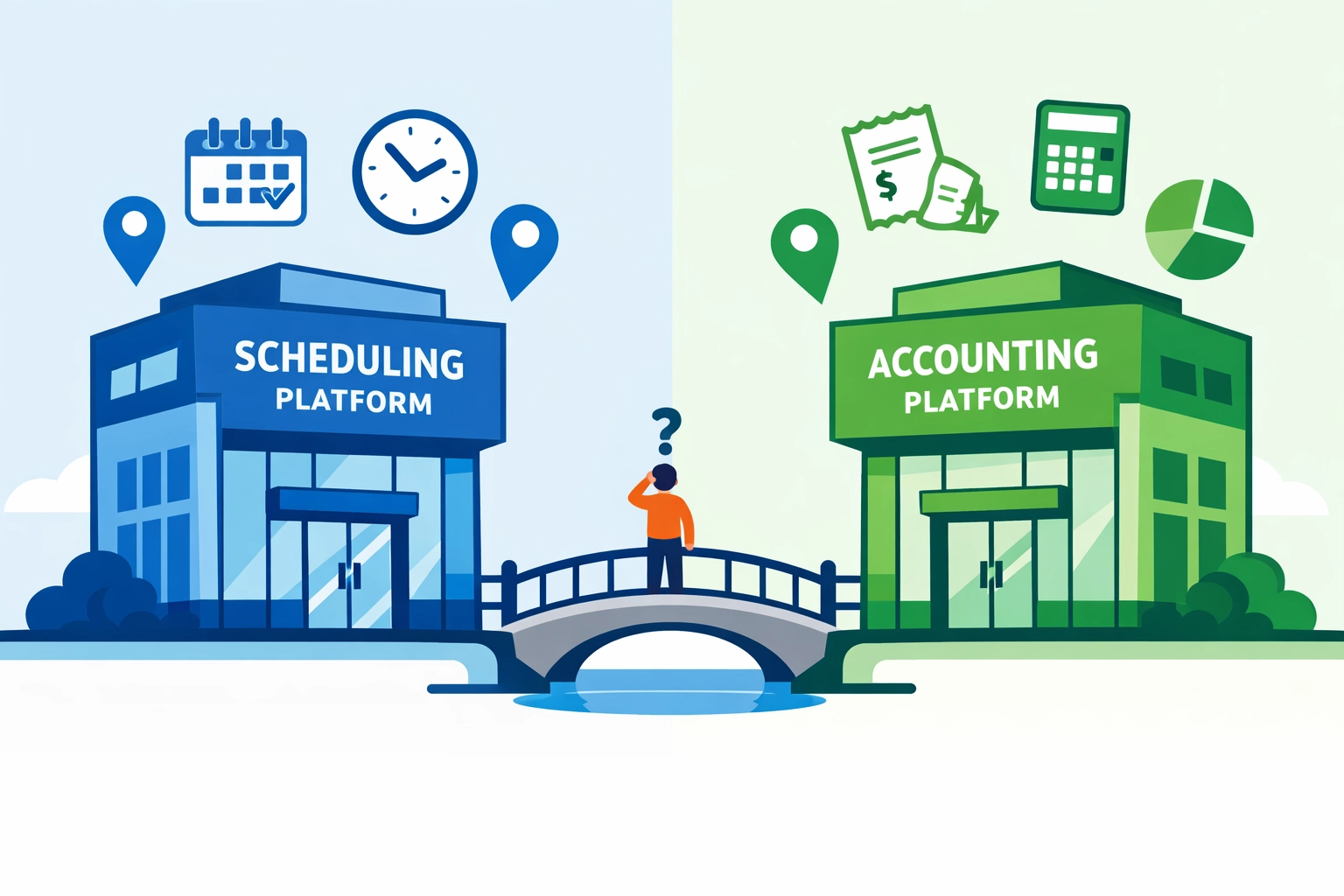
    Housecall Pro and QuickBooks integration showing two separate platforms connected by bridge

    In reality?

    You're still logging into two different platforms every day. You're still managing two sets of user permissions. You're still troubleshooting when the sync breaks (and it will break).

    And you're still paying full price for both tools.

    The integration doesn't save you money. It just makes the double payment slightly less painful.

    The Real Cost of Running Dual Systems

    Let's talk about what $300+/month actually costs your business beyond the subscription fees.

    Time:
    Jumping between two systems eats 15-30 minutes per day. That's 5-10 hours per month. If your time is worth $75/hour, that's another $375-$750 in lost productivity.

    Training:
    Every new hire needs to learn two systems. That doubles your onboarding time and complexity.

    Error risk:
    Manual data entry between systems (even with integration) creates opportunities for mistakes. Missed invoices, duplicate entries, reconciliation headaches.

    Mental overhead:
    Keeping track of where information lives: job notes in Housecall Pro, expense receipts in QuickBooks: creates friction every single day.

    The subscription cost is just the start. The hidden costs add up fast.

    How Small Trades Are Cutting Costs in Half

    Here's what the smart operators figured out: you don't need two separate systems.

    You need one platform that handles both field operations and financial management.

    That's exactly what we built at Valortek.

    Trade business team using unified scheduling and accounting software on single platform

    No separate scheduling software. No separate accounting platform. Just one system that does both.

    Our combined Ops and Finance package runs $149/month. That includes:

    • Complete job scheduling and dispatch
    • Customer management and communication
    • Mobile field tech apps
    • Invoicing and payments
    • Full accounting and bookkeeping
    • Financial reporting and tax prep
    • Expense tracking
    • Everything synced in real-time

    One login. One system. One price.

    The Math That Actually Matters

    Let's put real numbers on this:

    Traditional Setup:

    • Housecall Pro Essentials: $169/month
    • QuickBooks Online Plus: $90/month
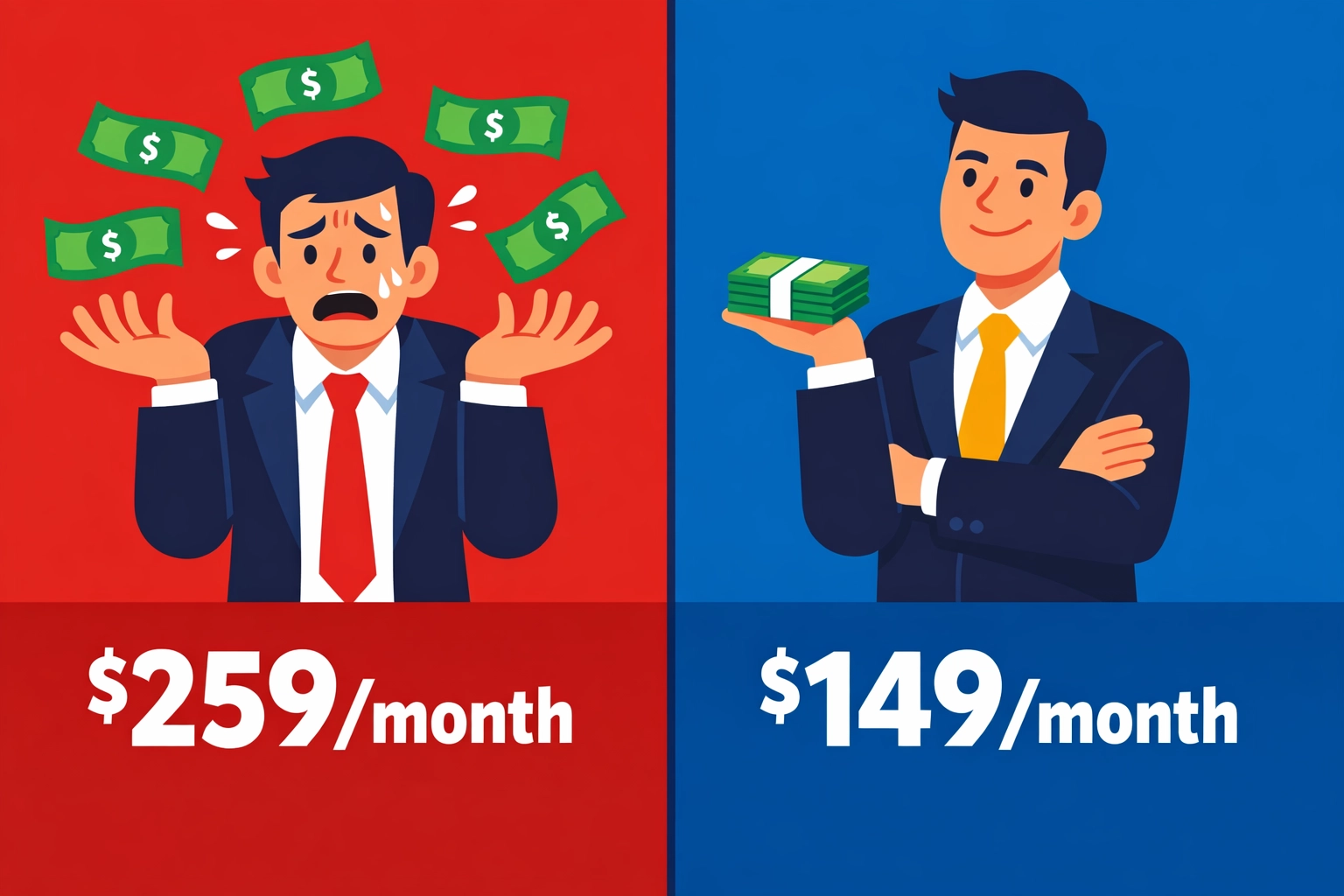
    • Total: $259/month ($3,108/year)

    Valortek Setup:

    • Ops + Finance: $149/month
    • Total: $149/month ($1,788/year)

    You save $110 per month. That's $1,320 per year.

    For a small trade business with thin margins, that's not pocket change. That's a used truck payment. That's another employee's health insurance. That's real money.

    And you get better integration because everything lives in one platform from the start.

    Who This Actually Works For

    This isn't for everyone. Let's be clear about that.

    This works great if you:

    • Run a trade business with 1-10 employees
    • Handle field service work (plumbing, HVAC, electrical, etc.)
    • Need both scheduling and accounting functionality
    • Want to simplify your tech stack
    • Care about keeping costs reasonable

    This probably isn't for you if you:

    • Run a massive enterprise operation
    • Need ultra-specialized accounting features for complex corporate structures
    • Already have a massive tech ecosystem you're locked into
    • Have an accounting team that lives inside QuickBooks

    We built Valortek for the small trade business that's tired of paying enterprise prices for basic functionality.

    Making the Switch

    Moving from two systems to one sounds painful. It doesn't have to be.

    We migrate your customer data, job history, and financial records. Your team gets trained on one simple platform instead of two complicated ones.

    Most trades are fully operational on Valortek within a week. And they're saving $110+/month from day one.
    Cost comparison showing $259/month dual software vs $149/month unified platform savings

    No long-term contracts. No surprise fees. No "contact us for pricing" nonsense.

    It's $149/month for everything. That's it.

    The Bottom Line

    You're probably paying $300+/month right now because you think you need both Housecall Pro and QuickBooks.

    You don't.

    You need one system that handles operations and finance together. And you need it to cost less than the two-platform setup you're running today.

    That's Valortek. Ops and Finance for $149/month. Built specifically for small trades who are tired of getting nickel-and-dimed by software subscriptions.

    Want to see how much you'd actually save? Let's talk.

    Ready to cut your software costs in half?

    Check out Valortek at https://valortek.com or reach out to our team. We'll show you exactly how the numbers work for your specific business.

    No sales pitch. Just honest math and a platform that actually works the way small trades need it to.

    Start Your Free Trial

    Questions? Contact us – we're happy to help you decide.
  • Best HVAC Scheduling Software for Small Teams: 10 Things You Should Know Before You Buy

    Best HVAC Scheduling Software for Small Teams: 10 Things You Should Know Before You Buy

    Author: Warren Peterson
    Category: Operations

    You're running a small HVAC team. Your current scheduling system is probably a mess of sticky notes, text messages, and that one dry-erase board in the shop.

    You know you need software. But you're looking at price tags like $300+ per month and wondering if you're being ripped off.

    You are.

    Here's what actually matters when picking scheduling software for your team. No sales pitch. No fluff. Just the stuff that'll save you money and headaches.

    1. Most "Top Picks" Cost Way More Than They Should

    Let's talk money first.

    Jobber and Housecall Pro are the names everyone throws around. They're decent. They also cost between $199 and $349 per month for small teams.

    That's $2,388 to $4,188 per year.

    HVAC scheduling software cost comparison showing expensive vs affordable pricing options

    For what? A calendar that talks to your phone? Automatic reminders? GPS tracking?

    Those are table stakes now. Not premium features.

    The software industry loves charging small businesses enterprise prices. They bundle a bunch of features you'll never use and call it "comprehensive."

    We're not doing that at Valortek. We built our tools for small teams who need the core features without the bloated price tag. Same functionality. Half the cost.

    2. Mobile Matters More Than Desktop

    Your techs aren't sitting at a desk. They're in trucks.

    If your software doesn't work perfectly on a phone, you're fighting an uphill battle. Your team will resist using it. You'll end up with half the jobs logged and constant back-and-forth calls.

    ServiceM8 gets this right. It's mobile-first. Everything works better on a phone than on a computer.

    That's how field service software should work in 2026.

    Check this before you buy: Download the app. Try to log a job, assign a tech, and send an invoice: all from your phone. If it takes more than 2 minutes or feels clunky, keep shopping.

    3. Setup Time Is a Hidden Cost

    Some platforms take weeks to set up properly.

    FieldEdge is powerful. It's also complicated. You'll need training. Your team will need training. You might need to hire someone just to manage the software.

    Small teams can't afford that.

    HVAC technician using mobile scheduling app on smartphone in service truck

    Housecall Pro and ServiceM8 can be up and running in a day. That's what you want.

    At Valortek, we designed our onboarding to take under an hour. You plug in your service areas, add your techs, and you're dispatching jobs. No certification courses required.

    4. The Features Everyone Has

    Here's what every platform will give you:

    • Drag-and-drop calendar
    • Real-time job updates
    • Automatic customer reminders
    • Technician assignments
    • GPS dispatching
    • Basic invoicing

    These aren't differentiators anymore. They're the baseline.

    Don't let a sales rep act like their GPS feature is revolutionary. It's 2026. Every platform has this stuff.

    What matters is how well it works and how much you're paying for it.

    5. QuickBooks Integration Isn't Optional

    You're probably using QuickBooks. Most small businesses do.

    If your scheduling software doesn't sync with it automatically, you're creating double work. Your bookkeeper is going to manually enter every job. That's billable hours you're wasting.

    Jobber syncs well with QuickBooks. So does Housecall Pro.

    Valortek syncs too. Automatically. Every invoice, every payment, every expense: it flows straight into your books without you lifting a finger.

    6. Automation Is Worth Paying For (If It's Actually Good)

    Good automation saves you hours every week.

    • Customer gets an appointment reminder automatically
    • Tech gets the job details and customer history on their phone
    • Invoice goes out when the job's marked complete
    • Payment reminder sends if they don't pay in 3 days

    Complex software setup vs simple onboarding comparison for small HVAC teams

    That's automation worth having.

    Bad automation just creates more work. You're constantly fixing mistakes and overriding the system.

    Test it in the trial period. Set up a fake job and watch what happens automatically. If it doesn't feel seamless, it's not good enough.

    7. Reporting Depends on Your Team Size

    If you're running 2-3 techs, you probably don't need advanced analytics.

    You know how busy everyone is. You can see the revenue trends. Complex reports are overkill.

    But if you're at 5+ techs and planning to grow, you'll want deeper insights. Which tech is most profitable? Which service areas are busiest? Where are you losing money on drive time?

    Most small teams overpay for reporting features they'll never use.

    At Valortek, we give you what matters: job completion rates, revenue per tech, and customer satisfaction scores. Clean dashboards. No PhD required to read them.

    8. Plan for Growth (But Don't Overpay Now)

    Here's the trap: Sales reps will tell you to buy the "scalable" enterprise plan now so you don't have to switch later.

    Translation: Pay for 10 techs when you have 3.

    That's terrible advice.

    Buy what you need today. Most platforms let you upgrade when you're ready. If they don't, that's a red flag.

    Valortek scales with you. You add users as you hire. Your monthly cost grows with your revenue. Not before.

    9. Residential vs Commercial Changes Everything

    This is huge.

    Housecall Pro is built for residential service calls. Quick jobs. Homeowners. Simple invoicing.

    If you're doing commercial work: multi-day projects, change orders, complex billing: it'll frustrate you.

    BuildOps handles commercial better. But it's expensive and complicated for residential-only shops.

    Automated HVAC scheduling workflow from customer booking to payment completion

    Figure out where 80% of your revenue comes from. Buy software designed for that work.

    We built Valortek to handle both. But we're honest about it: if you're 100% commercial with huge projects, there might be better specialized tools out there.

    10. Free Trials Are Non-Negotiable

    If a software company won't give you a free trial, run.

    They're betting you won't actually use the product before buying. That's a bad sign.

    Every legit platform offers at least 14 days free. Take them up on it.

    During your trial:

    • Add 3 real jobs
    • Have your techs use the mobile app for a full day
    • Run one invoice from start to payment
    • Try to pull a simple report

    If anything feels broken or confusing, move on. There are too many options to settle for clunky software.

    What This Actually Means for Your Business

    You're not picking software. You're picking a tool that'll either save you 5-10 hours per week or waste your time.

    The big-name platforms aren't bad. They're just overpriced for what small teams actually need.

    You don't need enterprise features. You need:

    • Easy scheduling
    • Mobile that actually works
    • Automatic invoicing
    • Real-time updates
    • QuickBooks sync

    That's it.

    At Valortek, we're not trying to be everything to everyone. We're building for small HVAC, plumbing, and electrical teams who are tired of overpaying for bloated software.

    We charge $149 per month for up to 5 users. Everything included. No hidden fees. No year-long contracts.

    Residential vs commercial HVAC service work environments and software needs

    If you want to try it, we'll set you up with a 14-day trial. No credit card required.

    If you want to stick with Jobber or Housecall Pro, that's fine too. Just make sure you're getting what you're paying for.

    Ready to stop overpaying for scheduling software? Check out what we're building at Valortek or reach out directly. We're real people who actually respond to emails.

    Start Your Free Trial

    Questions? Contact us – we're happy to help you decide.

  • Field Service Management Software for 1–10 Employees: What are reasonable prices for a subscription service?

    HERO: Field Service Management Software for 1–10 Employees: Which One Won't Nickel-and-Dime You?

    You have a locksmith business with four techs. Or maybe you run a three-person HVAC crew. You need software that schedules jobs, sends invoices, and tracks who’s where.

    Simple, right?

    Then you start shopping. And the pricing makes your head spin.

    $29 per user. Plus processing fees. Plus the “premium” features that should be standard. Plus the texting add-on. Plus, plus, plus.

    Suddenly your $99/month estimate turns into $400/month. For a team of five people.

    That’s the game most field service software companies play. We’re breaking it down so you can spot the traps and find something that actually fits a small operation.

    The Per-User Pricing Trap

    Here’s how they get you.

    They advertise “$29/month” in huge letters. You think that sounds reasonable. Then you read the fine print: per user, per month.

    You’ve got six people who need access. That’s $174/month before you’ve even turned on a single feature.

    Then they hit you with the add-ons. Want two-way texting? That’s another $50. Payment processing? Another 3% plus fees. Advanced reporting? Move up to the $49/user tier.

    Now you’re at $350/month. For basic scheduling and invoicing.

    For a 1-10 employee business, per-user pricing is designed to maximize what you pay as you grow. It punishes success.

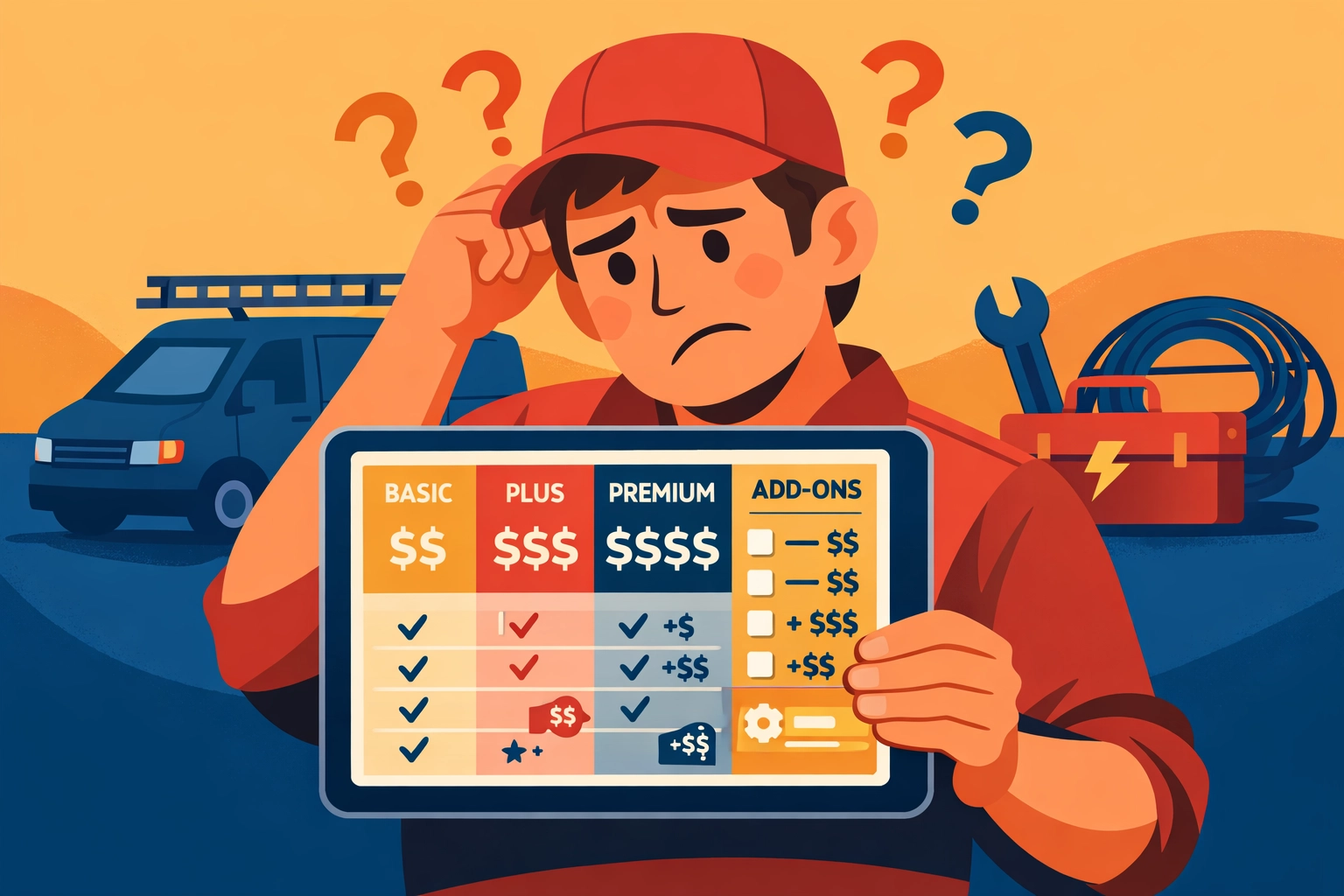
    Small business owner confused by complex field service software pricing tiers and hidden fees

    What Actually Matters for Small Teams

    You don’t need enterprise dashboards. You don’t need AI-powered insights. You definitely don’t need a “customer success manager.”

    You need five things:

    Scheduling that doesn’t suck. See who’s booked, drag jobs around, done. No seven-step process to move an appointment.

    Invoicing you can send from your truck. Close the job, tap three times, invoice is in the customer’s inbox. Payment link included.

    Job tracking that shows you what’s happening. Who’s on the clock. Who’s late. What jobs are still open. One screen.

    No hidden fees for basic features. Texting customers shouldn’t cost extra. Neither should accepting credit cards (beyond standard processing). If it’s essential to running a field service business, it should be included.

    A price that makes sense. Flat monthly rates. Not per-user. Not tiered based on arbitrary feature bundles you’ll never use.

    That’s it. Everything else is noise.

    The “Free Plan” Illusion

    Let’s talk about the free options because they sound tempting.

    Kickserv and Workiz both offer $0/month plans. And they’re not terrible for solo operators testing the waters.

    But here’s what you lose:

    Limited jobs per month. Limited customer records. Limited team members (usually just one or two). No integrations. Stripped-down mobile apps.

    The free plan is bait. It gets you in the door, gets you reliant on the system, then forces you to upgrade the moment you hire your second employee or book your 26th job of the month.

    At that point, you’re paying $100-200/month anyway. And you’ve already done all the setup work, so switching feels impossible.

    Free isn’t free if it costs you time migrating later.

    What “Flat Pricing” Actually Costs

    Jobber advertises $49/month. Housecall Pro says $65/month.

    Sounds great until you realize that’s just the base tier. Here’s what you don’t get at those prices:

    • Jobber’s $49 plan limits you to one user and 20 clients. Want your whole team on there? That’s $249/month for up to 15 users.
    • Housecall Pro’s $65 plan is also single-user. Add your team and you’re at $229/month for their “Essentials” plan.

    The advertised price is functionally useless for any business with employees.

    This is the game. Show you a low number. Make you click. Reveal the real price three screens later.

    Essential field service management features: scheduling, invoicing, mobile access, and pricing

    The Real Cost Breakdown (Be Honest Math)

    Let’s do real math for a five-person team across the main players:

    Housecall Pro: $229/month for up to 15 users. Plus 2.7% + $0.10 per credit card transaction.

    Jobber: $249/month for up to 15 users. Plus their payment processing fees (2.9% + $0).

    ServiceTitan: Don’t even bother. They don’t list pricing publicly because it’s custom enterprise pricing. Think $500-2,000+/month depending on features and users.

    Workiz: Around $149/month for unlimited users after you outgrow the free plan.

    Kickserv: $89/month for up to 5 users.

    Now compare that to straightforward pricing: $99/month for your entire operations setup. Scheduling. Invoicing. Job management. Customer tracking. Mobile access.

    No per-user fees. No surprise upgrades. No “contact sales for a quote.”

    Just $99/month. Whether you’ve got two employees or ten.

    What This Actually Looks Like in Practice

    You’re a three-person appliance repair outfit. You book 80-100 jobs a month. You need to schedule them, show up on time, bill quickly, and get paid.

    With per-user pricing: You’re paying $87-150/month just for user seats. Then add processing fees. Then add the texting bundle because customers expect updates. You’re at $200+/month.

    With flat pricing that actually includes what you need: You’re at $99/month. Period.

    Over a year, that’s $1,200 saved. For a small business, that’s real money.

    You can hire a part-time admin. Buy another van. Take your team to lunch every month. Actually invest in growth instead of feeding software companies.

    The Features Nobody Talks About (But You Actually Use)

    Everyone lists the same boring features. Scheduling ✓ Invoicing ✓ Mobile app ✓

    Here’s what matters day-to-day:

    Can you text a customer from inside the job without switching apps? Most systems make you jump to a separate messaging panel or use a third-party integration.

    Can your tech close a job and collect payment on-site without cell service? Offline mode matters when you’re in a basement.

    Can you duplicate last month’s invoice in two taps? For recurring maintenance contracts, this saves hours.

    Does the calendar actually sync with Google/Apple without weird delays? Half the platforms claim “sync” but it’s a 15-minute lag that causes double-bookings.

    Can you see profit per job without running a custom report? If you can’t see your margin in real-time, you’re flying blind.

    These are the details that separate “works on paper” from “works in your truck.”

    Comparison of complex software billing versus simple flat-rate pricing for contractors

    For Locksmiths, Plumbers, HVAC, Electricians, and Appliance Repair

    Each trade has quirks.

    Locksmiths need fast emergency dispatch and mileage tracking for service calls spread across town.

    Plumbers need photo documentation for before/after and easy parts ordering integration.

    HVAC teams need maintenance contract tracking and seasonal scheduling.

    Electricians need detailed job notes for permit compliance and multi-day project tracking.

    Appliance repair needs service history per appliance (not just per customer) and warranty tracking.

    Generic field service software treats everyone the same. You end up hacking together workarounds or paying for customization.

    Better option: software built for how trade businesses actually operate, not how software companies think you should operate.

    What to Avoid (Red Flags in the Sales Process)

    If they do any of these, run:

    • “Let me connect you with our sales team to discuss pricing.” Translation: We’re going to negotiate based on how desperate you seem.
    • “Our enterprise plan includes…” You’re not an enterprise. You’re ten people in trucks.
    • “Most customers also add our Premium Texting Bundle.” If texting is extra, everything else will be too.
    • Free trial that requires a credit card upfront. They’re betting you forget to cancel.
    • Contract minimums longer than month-to-month. You should be able to leave anytime if it’s not working.

    Good software sells itself. It doesn’t need a sales team to convince you.

    The Bottom Line

    You don’t need software that does everything. You need software that does the essential things well and doesn’t punish you for growing.

    Per-user pricing is designed to extract maximum revenue as you hire. Tiered plans are designed to upsell you every quarter. Free plans are designed to trap you.

    Flat pricing for 1-10 employees is rare because it’s harder for software companies to scale revenue. But it’s honest. And it’s what small trade businesses actually need.

    $99/month. Full operations platform. No user limits. No surprise fees.

    That’s the model that makes sense when you’re trying to run a business, not fund a software company’s growth targets.

    If you’re tired of pricing games and want straightforward tools that just work, we built our Operations app for exactly that.

    No sales calls. No custom quotes. No nickel-and-diming.

    Just tools that help you schedule jobs, send invoices, and get paid. For one flat price.

    Check it out at valortek.com or reach out if you have questions. We’re real people building for real businesses.

    Start Your Free Trial

    Questions? Contact us – we’re happy to help you decide.
  • Field Service Scheduling Software in 2026: Do You Really Need to Spend $250+ Per Month?


    Field Service Scheduling Software in 2026: Do You Really Need to Spend $250+ Per Month?

    Time to talk about the elephant in the room.

    Field service software companies are charging you $250, $300, even $400+ per month. And for what? Scheduling. Dispatching. Basic job tracking.

    The same features you could get for a fraction of that cost.

    We’re not here to trash the big players. But we are here to ask the obvious question nobody else seems to be asking: Why are you paying premium prices for essential tools?

    The Software Pricing Game Nobody Talks About

    Here’s how it works.

    Big software companies bundle everything together. CRM. Marketing automation. Customer portals. Advanced analytics. AI-powered forecasting. Remote assistance modules.

    Sounds impressive, right?

    But here’s the thing, most small to mid-sized trade businesses don’t need 80% of that stuff.

    You need scheduling that works. Dispatching that’s fast. Job tracking that’s simple. Maybe some basic invoicing and client communication.

    That’s it.

    Complex field service software dashboard compared to simple scheduling calendar interface

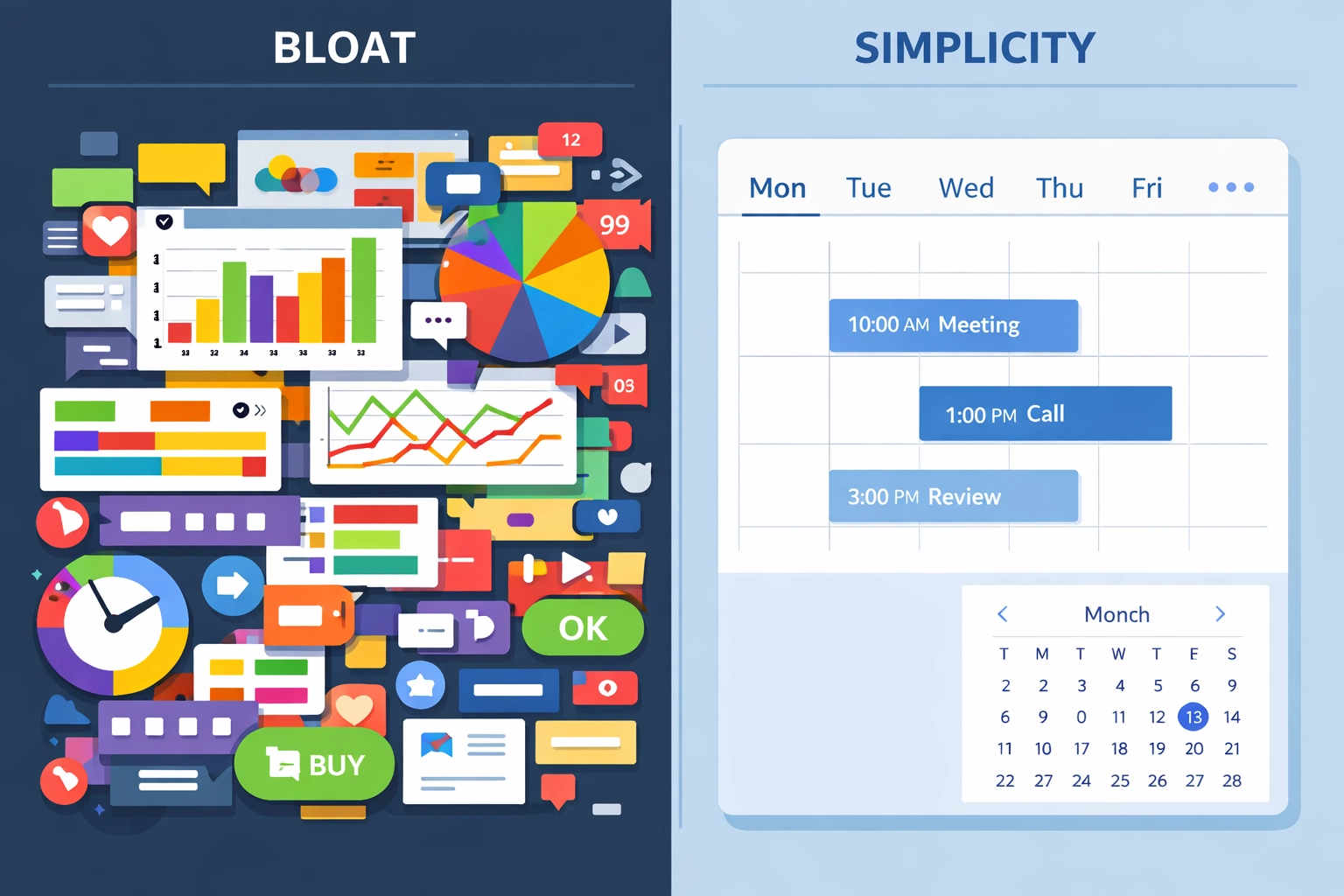
    The rest? It’s bloat. Features you’ll never use, sold to you at prices that make zero sense for a 5-person HVAC crew or a 10-person plumbing operation.

    What You Actually Need (Versus What They’re Selling You)

    Let’s break this down.

    What you need:

    • Simple scheduling and calendar management
    • Quick dispatch to your field team
    • Mobile app for technicians
    • Job tracking and status updates
    • Basic invoicing and payments
    • Client communication (texts, emails)

    What they’re selling you:

    • Enterprise-grade AI scheduling algorithms
    • Predictive maintenance forecasting
    • Multi-location inventory management across 50+ sites
    • Advanced workforce optimization dashboards
    • Custom API integrations
    • Dedicated account managers and onboarding specialists

    See the gap?

    Most field service businesses are paying for a Ferrari when they need a reliable pickup truck.

    The Real Cost Breakdown

    Let’s get specific.

    Some of the big names in field service software charge $95-$105 per user per month. If you’ve got 5 technicians, that’s $475-$525 monthly. Add in the main office user and you’re pushing $600.

    Per month.

    That’s $7,200 per year. For scheduling software.

    Other platforms start lower but nickle-and-dime you with add-ons. Want text message reminders? Extra $30/month. Need online booking? Another $50. Advanced reporting? You guessed it, more money.

    Before you know it, you’re at $250+ monthly for features that should be standard.

    Service van beside luxury car showing field service software pricing mismatch

    Enter Valortek: $99/Month, Flat

    We built our Ops app differently.

    No per-user pricing. No hidden fees. No “contact sales for a quote” nonsense.

    $99 per month. Period.

    You get scheduling, dispatching, job tracking, mobile apps, client communication, and basic invoicing. Everything a small to mid-sized trade business actually needs.

    No enterprise bloat. No features you’ll never touch. Just the essentials, done right.

    But Isn’t Cheap Software… Cheap?

    Fair question.

    Let’s clear something up: affordable doesn’t mean low-quality.

    We’re not cutting corners on the tech. We’re cutting out the unnecessary stuff. The features that look good in a sales demo but collect dust in real-world use.

    Our Ops app is built specifically for trades. Plumbers. HVAC techs. Electricians. Contractors who need tools that work, not software that requires a PhD to operate.

    Simple doesn’t mean simplistic. It means intentional.

    We focused on the 20% of features that deliver 80% of the value. Then we priced it honestly.

    Field technician using mobile scheduling app for HVAC and plumbing jobs

    What $99 Actually Gets You

    Let’s be transparent about what’s included:

    Scheduling & Dispatch

    • Drag-and-drop calendar
    • Quick dispatch to mobile devices
    • Real-time status updates
    • Job priority tagging

    Mobile App

    • iOS and Android support
    • Offline mode for basements and remote sites
    • Photo uploads from job sites
    • Digital signature capture

    Client Management

    • Customer database
    • Service history tracking
    • Automated appointment reminders
    • Basic invoicing and payment collection

    Team Communication

    • Internal notes and updates
    • Push notifications
    • Job status tracking
    • Simple reporting dashboard

    That’s not a stripped-down version. That’s the full product.

    When You Might Actually Need to Spend More

    Look, we’re not going to lie to you.

    If you’re running 50+ technicians across multiple states with complex inventory management and need custom integrations with your existing ERP system, yeah, you probably need one of those enterprise solutions.

    If you need AI-driven route optimization that factors in traffic patterns, weather, and historical job duration data, okay, fair enough.

    But if you’re a growing trade business with under 20 team members who just needs reliable scheduling and job tracking? You’re overpaying.

    The $250+ tier is designed for large operations with complex needs. Don’t let a sales rep convince you that you need enterprise features when you don’t.

    Mobile field service scheduling app with drag-and-drop calendar and appointments

    The Hidden Costs Nobody Mentions

    Here’s what the expensive platforms don’t tell you upfront:

    Implementation fees: $500-$2,000 to get set up
    Training sessions: $150-$300 per session
    Data migration: Another $500+
    Annual contract lock-in: Can’t leave without penalties
    Price increases: Rates go up every renewal

    Suddenly that $250/month is actually $350+ when you factor in the real costs.

    We don’t play those games. $99/month includes setup, basic training, and month-to-month flexibility. You can leave anytime if it’s not working for you.

    Making the Switch

    Switching software sucks. We get it.

    That’s why we made migration as painless as possible. Export your data from your current system (customer list, job history, whatever you need), and we’ll help you import it.

    No complicated APIs. No tech support nightmares. Just straightforward file uploads and we handle the rest.

    Most of our customers are fully switched over in under a week.

    The Bottom Line

    You don’t need to spend $250+ per month on field service software.

    You need tools that work. Software that’s actually built for how you run your business, not how some enterprise company thinks you should run it.

    Valortek’s Ops app gives you everything essential for $99/month. No contracts. No hidden fees. No BS.

    We’re not trying to be everything to everyone. We’re trying to be exactly what trade businesses need: nothing more, nothing less.

    Ready to stop overpaying for software?

    Check out what we’re building at valortek.com. See if it makes sense for your operation.

    And if it doesn’t? No hard feelings. At least you’ll know you explored a better option.

    Questions? Want to see a demo? Just reach out. We’re real people who actually answer emails.

    Let’s build something better together.

    Start Your Free Trial

    Questions? Contact us – we’re happy to help you decide.